pop-up
One-Stop PCB Factory: Prototype to Mass Production

For hardware startups and OEMs, getting high-quality PCBs quickly and reliably is critical. MC PCB is a one-stop contract PCB manufacturer supporting prototypes to volume builds—backed by experienced engineering support and rigorous QA.

MC PCB Co., Ltd.
Began in 2005
pop-up
One-Stop PCB Factory: Prototype to Mass Production

For hardware startups and OEMs, getting high-quality PCBs quickly and reliably is critical. MC PCB is a one-stop contract PCB manufacturer supporting prototypes to volume builds—backed by experienced engineering support and rigorous QA.

MC PCB Co., Ltd.
Began in 2005

When is it more cost-effective to use flex PCB vs stiffeners with rigid boards?

Learn when flex PCBs beat rigid boards with stiffeners. Compare connectors, assembly touch time, yield, and rework with real build scenarios.

If you’re picking between flex, stiffeners, and rigid boards, don’t start with the PCB quote. Start with what usually blows budgets in real builds: connector count, assembly touch time, yield, and rework loops. A board that looks cheaper can turn into a line-stopper once you add cables, hand routing, extra test steps, and field failures.

This is the lens most OEMs, EMS teams, and design-to-manufacturing shops use. They care about total delivered cost and time-to-stable production, not just “cheapest board.”

If you’re sourcing from a China B2B PCB factory that supports fast prototyping and reliable assembly, you usually land on one of these paths:

  • Flex PCB used as a controlled “built-in cable”
  • Rigid PCB + stiffeners + connectors/cables
  • Rigid-flex PCB (rigid islands connected by flex bridges)

You can explore the full manufacturing scope on the homepage: China PCB B2B factory: fast prototyping, reliable assembly.

When is it more cost-effective to use flex PCB vs stiffeners with rigid boards

Flex PCB vs rigid PCB with stiffeners: cost-effective decision factors

Here’s the simple rule: cost-effective means fewer surprises after EVT/DVT.

Focus on these levers:

  • BOM risk: every connector is a potential RMA story
  • Touch labor: the more hands involved, the more variance you get
  • Yield: tight mechanical stackups can crush first-pass yield
  • Reworkability: can your tech actually reach the failure point?
  • DFM/DFT speed: can you stabilize quickly without redesigning the whole interconnect?

If you’re already planning assembly, it helps to align the PCB choice with your build flow: turnkey PCB assembly and PCB fabrication.

When is it more cost-effective to use flex PCB vs stiffeners with rigid boards

Cost drivers: connectors, assembly touch time, yield, and rework

Connector count and harnessing complexity

Connectors aren’t “free.” Even when the part price looks fine, connectors add:

  • mating and retention issues
  • fretting in vibration environments
  • extra assembly stations (plug, route, tie, label, inspect)
  • more test points and more failure modes

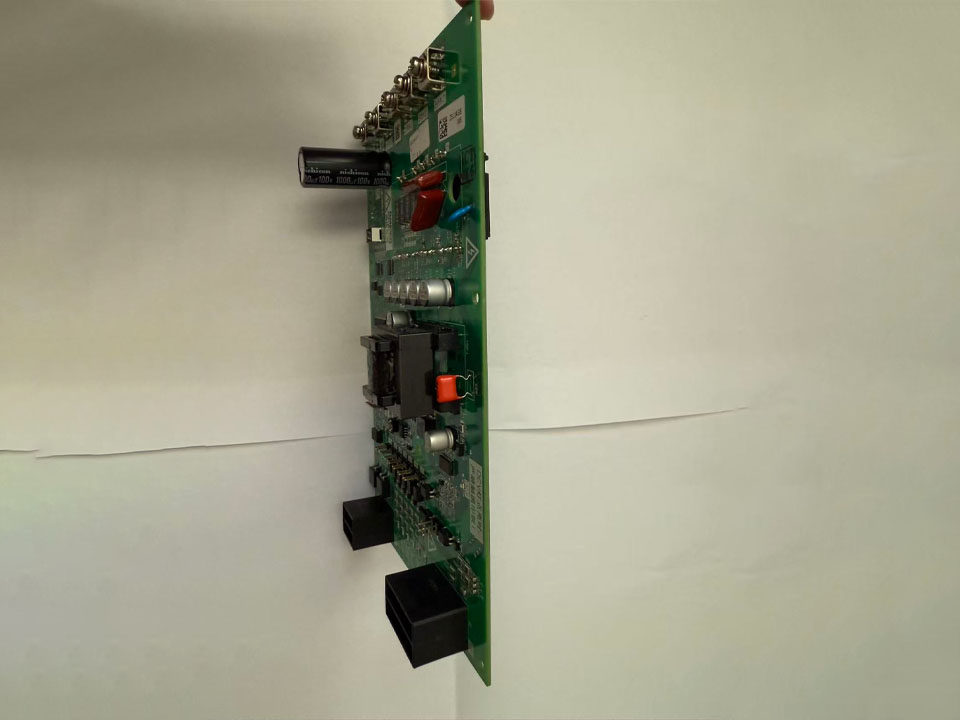
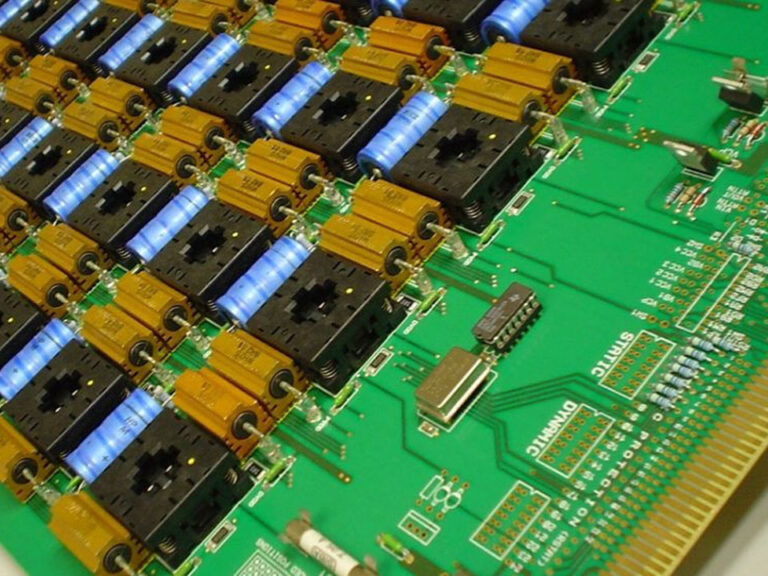
If your design looks like a “connector forest,” your costs often hide in the harnessing and the debug time. This is common in modular control boxes and industrial systems. A real example pattern is a connector-rich control PCB layout, where the PCB itself is fine but the interconnect workload grows fast: connector-rich control PCB example.

Assembly touch time and line variability

Ask one question: Does your interconnect require skilled hands?

  • Cables that must be dressed perfectly add operator variance.
  • Flex that drops into a consistent path reduces line wobble.
  • Too many small steps turn your line into a “human fixture.”

If you’re building for wholesale volume, reducing touch time is often the fastest way to keep delivery stable.

Yield and rework loop

The real pain isn’t one bad board. It’s the loop:

  1. failure shows up late (after enclosure build)
  2. teardown takes time
  3. root cause is intermittent (connector, bend zone, strain)
  4. re-test eats capacity

You want designs that fail loudly and early, and that are easy to rework.

When is it more cost-effective to use flex PCB vs stiffeners with rigid boards

Flex PCB with stiffeners: when it’s the better buy

Flex PCB with stiffeners cost

Flex with stiffeners usually makes sense when the flex section is mostly a signal highway, and you only need rigidity at specific zones:

  • ZIF insertion area
  • gold finger reinforcement
  • connector solder pads
  • screw or clamp regions

In plain terms: you’re buying local stiffness, not a full rigid-flex stackup.

If your product needs compact routing, fast iteration, or custom shapes, this path is common for OEM devices: custom FPC flexible PCB for OEM devices.

ZIF stiffener and gold finger reinforcement

ZIF and edge-contact areas fail when the flex can’t hold geometry. A stiffener keeps:

  • insertion thickness stable
  • pad alignment consistent
  • contact wear predictable over repeated cycles

This is where flex + stiffener feels “cheap and smart” because you reinforce only the high-stress areas instead of upgrading the whole architecture.

Flex as a cable in tight packaging

Flex gets cost-effective fast when your alternative is a messy harness:

  • wearables with tight ID/OD constraints
  • handheld devices with rotating or sliding parts
  • compact IoT nodes with stacked boards
  • robotics where movement and vibration punish connectors

Flex doesn’t just connect boards. It controls routing geometry. That reduces assembly variance and cuts down intermittent contact issues.

If you want a concrete pattern, look at a build that combines a flex circuit and a control board in a prototype-friendly setup: PCB prototype with flex circuit and control board.

Bend radius DFM and coverlay alignment

Flex becomes expensive when bend zones are treated like normal routing. A few DFM basics avoid scrap and returns:

  • keep copper out of the tightest bend line
  • route traces with the bend, not across it
  • leave strain relief near pads and stiffener edges
  • lock down coverlay openings so you don’t expose copper by accident

If your design sees repeated motion, treat it like a fatigue problem, not a layout trick.

When is it more cost-effective to use flex PCB vs stiffeners with rigid boards

Rigid PCB with stiffeners and connectors: when it wins

Rigid PCB stiffener for connector support

Rigid boards with local stiffeners work well when you need:

  • a solid mounting surface
  • easy probing and rework
  • modular field replacement

This is common for industrial controllers, power modules, and serviceable equipment.

Rigid PCBs also make it easier to build stable test fixtures. ICT and pogo-pin access are usually cleaner, and rework techs can actually reach parts.

Modular rigid boards and serviceability

If your customer expects repairs and spares, connectors can be a feature, not a bug.

Typical cases:

  • industrial maintenance teams swapping boards in the field
  • OEMs with multiple SKUs sharing modules
  • EMS lines that already run standardized cable processes

In these situations, rigid + connectors keeps the system flexible in a business sense. You can swap modules without rebuilding the whole interconnect.

Rigid-flex PCB: when it pays back

Rigid-flex PCB total cost and connector elimination

Rigid-flex starts paying back when it lets you delete stuff:

  • fewer connectors and mating operations
  • fewer harness routing steps
  • fewer intermittent failures tied to vibration and movement

If your enclosure is tight and you’re trying to remove connector height, rigid-flex often becomes the cleanest mechanical solution.

A typical use case is foldable layouts with rigid islands and flex bridges: rigid-flex PCB for foldable flex circuits.

Double-sided SMT assembly limitations with stiffeners

If you need double-sided SMT in the same zone, stiffeners can complicate the build:

  • uneven support during print and placement
  • extra handling steps
  • higher risk of warp and misalignment

Rigid-flex handles component-dense rigid zones more like standard SMT, which can simplify assembly planning.

Rigid-flex registration and stack-up control

Rigid-flex is less forgiving. You need tighter control on:

  • layer-to-layer registration
  • rigid-to-flex transition geometry
  • outline profiling and depanel strategy
  • bend line definition and keepouts

If you lock mechanical constraints early, rigid-flex becomes predictable. If you keep changing the fold path late, it gets painful.

Quick decision table: flex PCB vs rigid PCB stiffeners vs rigid-flex PCB

Decision factorFlex PCB + stiffenersRigid PCB + stiffeners + connectors/cablesRigid-flex PCB
BOM complexityMediumHigh (connectors add risk)Low to medium
Assembly touch timeLow to mediumMedium to highLow
Rework accessMediumHighMedium
Tight packaging and foldingStrongMediumStrongest
Vibration and intermittent riskMediumMedium to highLower
Best-fit scenariosZIF zones, gold fingers, flex-as-cableModular, serviceable systemsConnector elimination, foldable layouts

DFM checklist for OEM/ODM, wholesale, and EMS builds

DFM for bend zones, stiffeners, and panelization

Use this checklist to avoid the common “it works on the bench, fails in production” story:

  • Connector strategy: cut unnecessary connectors early. Don’t let BOM blow up.
  • Bend zones: define bend radius rules and keepouts from day one.
  • Stiffener plan: keep materials and thicknesses consistent when you can.
  • Panelization: protect flex sections during processing and shipping.
  • DFT plan: decide test access before you lock enclosure constraints.

If you want buyers to trust your QA story, back it with a clear process: quality control and the factory scope: manufacturing capabilities.

Bottom line: choosing the cost-effective PCB structure

Pick flex PCB with stiffeners when you need a controlled interconnect and only want rigidity at specific contact points. Pick rigid boards with stiffeners and connectors when space is fine, serviceability matters, and your line can handle harnessing cleanly. Pick rigid-flex PCB when connector elimination, tight folding, and stability under motion are worth the tighter process control.

If you want more practical build notes like this, you can publish them here: PCB blog.

Contact Us
MC PCB Co., Ltd logo
About
Contact
Capabilities
Services
Application
Products
Quality
Blog
Printed Circuit Boards
PCB Prototype
Flexible PCB
High Frequency PCB
Thick-Copper PCB
PCB Assembly
Metal core PCB
Thick-Copper PCB
0755-2889 4567
Room 1803, lA Building, Longwan, Nanhuai Road, Shajing, Bao'an District,Shenzhen City
No. 2, Lane 11, Wenming Road, Fourth Industrial Zone, Nanzha, Humen Town, Dongguan City

© 2026 MC PCB Co., Ltd.