One-Stop PCB Factory: Prototype to Mass Production
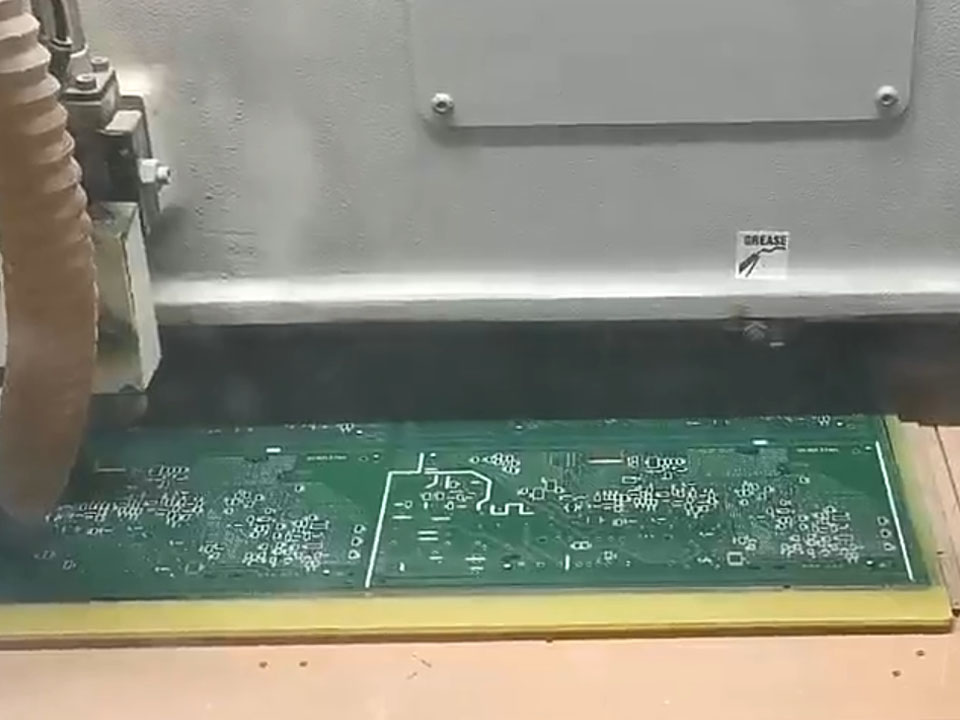
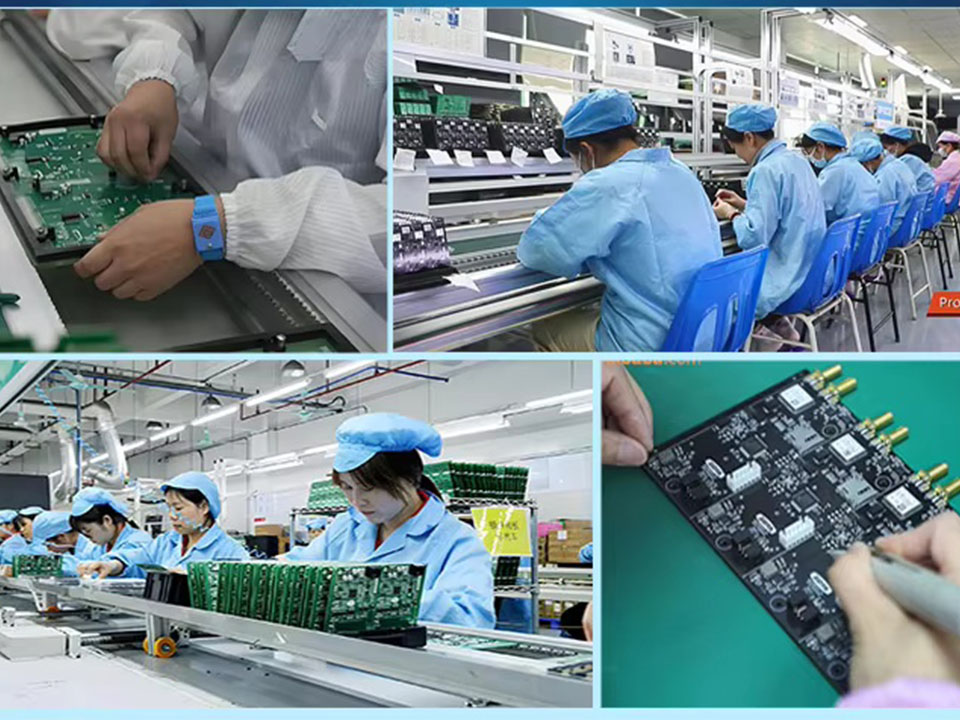
For hardware startups and OEMs, getting high-quality PCBs quickly and reliably is critical. MC PCB is a one-stop contract PCB manufacturer supporting prototypes to volume builds—backed by experienced engineering support and rigorous QA.
MC PCB Co., Ltd.
Began in 2005
One-Stop PCB Factory: Prototype to Mass Production
For hardware startups and OEMs, getting high-quality PCBs quickly and reliably is critical. MC PCB is a one-stop contract PCB manufacturer supporting prototypes to volume builds—backed by experienced engineering support and rigorous QA.
MC PCB Co., Ltd.
Began in 2005
No. 2, Lane 11, Wenming Road, Fourth Industrial Zone, Nanzha, Humen Town, Dongguan City
If you’ve ever built a board that worked great on the bench, then fell apart the moment you tried to scale, you already know the punchline: prototype success doesn’t equal production readiness. Prototype PCBs and production PCBs look similar on a Gerber viewer, but they live in different worlds once you hit the fab floor and the SMT line.
At a China PCB B2B factory like ours, we see both sides every day: quick-turn builds for R&D teams, and stable volume runs for OEM/ODM brands, EMS partners, design houses, labs, and startup teams shipping real hardware. You can start at the homepage here: China PCB B2B factory: fast prototyping, reliable assembly.
Below is the practical breakdown, with real production keywords, real shop-floor constraints, and real “don’t learn this the hard way” lessons.
Prototype PCB vs production PCB
A prototype PCB exists to answer one question fast: does this design work? A production PCB has a different mission: can we build it the same way, every time, without yield headaches?
That shift changes how you design, how you test, and how you pick materials, suppliers, and process controls.
Design intent: functional validation vs manufacturability
Iteration speed and re-spin reality
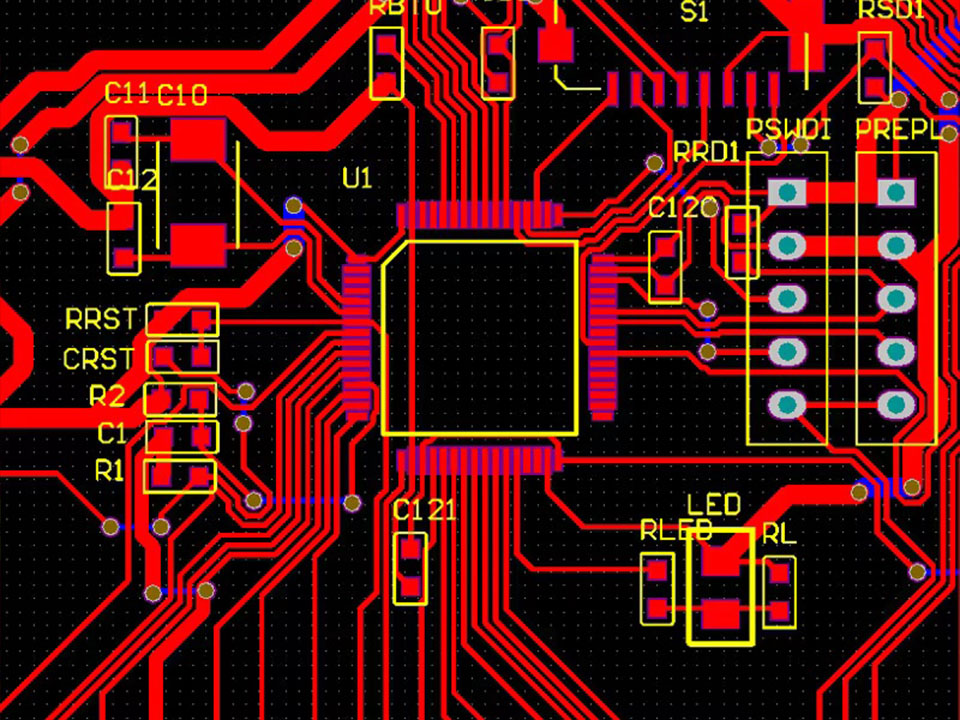
Prototype layout often prioritizes speed. You add headers, extra jumpers, oversized pads, and generous test points because you want quick debug. That’s normal. It’s also why prototypes tend to tolerate “good enough” decisions.
Production layout flips the priorities:
You tighten footprints for pick-and-place repeatability.
You control solder mask and paste behavior to avoid bridges.
You plan for automated inspection, rework access, and stable assembly flow.
In prototypes, extra test points feel like free insurance. In volume, every extra pad can become:
a placement keepout problem
a contamination trap
a mechanical collision risk
a cost and time drag in inspection
A common approach is simple: keep the test access you truly need for production test, and delete the rest before mass build.
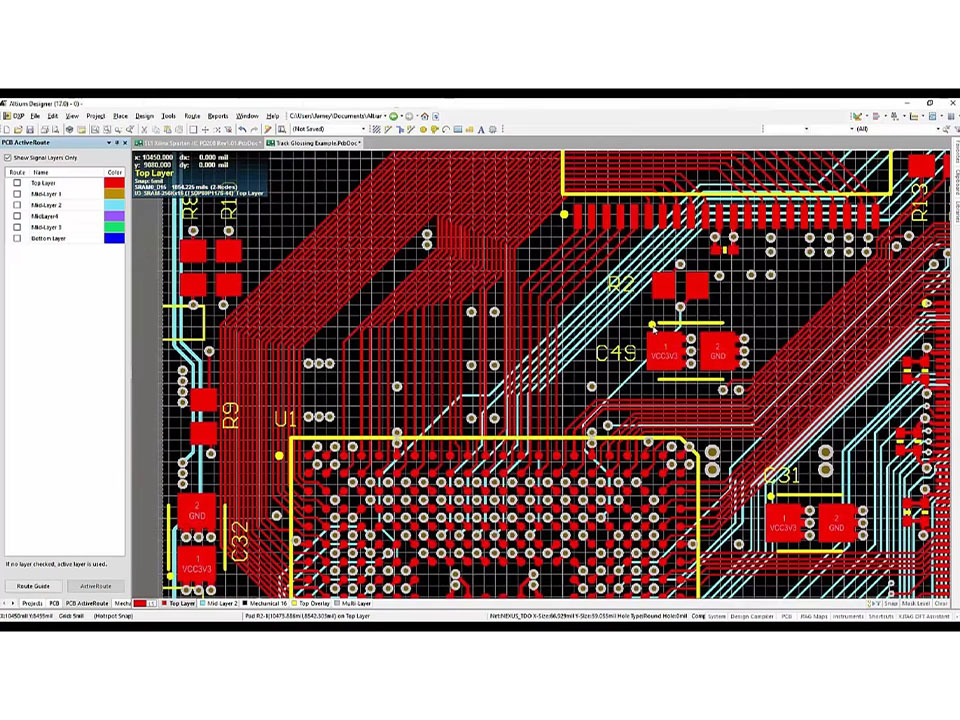
DFM (Design for Manufacturability) and DRC rules
DFM is a design choice, not a factory favor
A lot of prototype designs “pass” because a fab can babysit them. Volume runs don’t have that luxury. Production wants clean rules, clean data, and fewer exceptions.
In practice, DFM touches everything:
trace/space that stays stable across process variation
annular ring and drill hits that won’t blow out yield
solder mask clearance that won’t cause opens or shorts
consistent stackup decisions that don’t drift between lots
If you want the high-level view of what your factory can actually hold, the right place to anchor your DFM assumptions is your manufacturer’s capability sheet, like this: PCB capabilities.
Documentation gets stricter in production
Prototype builds might survive on “Gerbers + a quick note.” Production builds usually need a tighter pack:
fab notes (stackup, impedance targets, controlled dielectric choices)
test requirements (what you measure, how you accept)
That paperwork isn’t bureaucracy. It’s how you prevent the classic “same files, different outcome” problem.
Panelization and assembly line requirements
Panelization stops being optional
A single prototype board can ship as a single unit. Production almost never does. Once you run SMT at volume, panelization becomes part of the design:
rails so conveyors can grip the panel
fiducials so vision systems lock placement
breakaway tabs and tooling holes for stable handling
array layout that improves throughput and reduces scrap
This is also where design teams get surprised: a board that’s easy to hand-solder might be a nightmare on the line unless the panel is designed for flow.
Stencil, paste, and reflow behavior matters more than you think
Prototype hand assembly can hide weak paste behavior. In production, the stencil and the paste print define your defect profile. You’ll care about:
aperture tuning on fine-pitch parts
paste release on small pads
tombstoning risk on passives
thermal balance on large copper zones
When you’re ready to tie layout to stable manufacturing, it helps to look at both sides of the flow: PCB fabrication and PCB assembly.
Testing strategy: flying probe, ICT, AOI, X-ray
Prototype testing focuses on finding bugs fast
Prototype testing often leans on quick methods:
basic continuity checks
functional bring-up with bench tools
targeted probing on key nets
fast debug loops with firmware changes
That’s perfect for R&D.
Production testing focuses on catching drift
In mass production, you need test coverage that scales. Common production patterns include:
AOI for placement and solder joint screening
X-ray for hidden joints (BGA/QFN)
ICT/fixture-based checks for rapid repeatability
functional test rigs that match real operating conditions
The key idea: prototypes hunt design flaws. Production hunts process variation.
Materials, stackup, controlled impedance, and reliability
Materials are flexible in prototypes, locked in production
Prototype teams sometimes swap laminates or accept substitutions to hit schedule. Production wants the opposite: material locking so electrical behavior stays stable across lots.
This matters a lot for:
high-speed digital links
RF front ends
tight EMC targets
high-power thermal paths
If your project has RF or fast edges, your “prototype vs production” gap can widen fast. A realistic example category is a high frequency prototype PCB.
Reliability targets change how you design
Production boards often need stronger reliability discipline:
solder joint fatigue management
creepage/clearance that matches real environments
stable impedance control, not “close enough”
tighter QA gates
For how we frame QC on our side, you can anchor that discussion here: Quality control.
Supply chain and documentation for mass production
Supply chain becomes a real engineering constraint
In prototypes, buying parts is annoying. In production, sourcing becomes a system constraint. One missing part can stop the whole SMT schedule. That’s why OEM/ODM and EMS teams push for:
AVL discipline (approved vendor list)
alternates validated before ramp
packaging and moisture rules enforced (MSL handling)
traceability for sensitive programs
Production loves boring, stable choices
“Exotic” parts can work fine in a lab build. Then you hit volume and discover lead time spikes, allocation, or inconsistent reels. Production likes proven footprints, standard packages, and clean supply planning.
Comparison table: design and manufacturing differences
Difference area
Prototype PCB (typical)
Production PCB (typical)
What usually breaks if you ignore it
Practical source cue
Build goal
Prove function, iterate fast
Stable repeatability, ship-ready
Works once, fails at scale
Prototype and volume service split
DFM discipline
Flexible, exceptions happen
Tight rules, fewer exceptions
Low yield, rework storms
Capability baseline
Debug features
Extra test points, headers
Only what production test needs
Space pressure, extra defects
Assembly planning
Panelization
Often single board
Optimized arrays, rails, fiducials
Handling issues, throughput loss
Fabrication + assembly flow
Test approach
Quick checks, bench debug
AOI/X-ray/ICT + functional rigs
Escapes, customer returns
Quality gates
Materials
Substitutions can happen
Materials locked and validated
Electrical drift, RF surprises
Capability + QC discipline
Controlled impedance
Sometimes “nice to have”
Often mandatory for consistency
Timing/EMI/RF failures
High-frequency category
Documentation
Light notes are common
Full fab + assembly pack
Misbuilds, delays
Services scope
Supply chain
Small buys, manual fixes
AVL, alternates, traceability
Line stops, unstable output
OEM/ODM workflow fit
Key takeaways
Prototypes help you learn fast. Production helps you repeat results.
Treat the prototype phase like a fast feedback loop. Treat production like a controlled process.
You can’t treat DFM as a later problem.
If your DRC rules don’t match real capability, you’ll pay it back in scrap, delays, and redesign.
Your test plan changes at scale.
Bench debug doesn’t scale. Production needs repeatable coverage and clear accept/reject rules.
Panelization stops being optional.
Once you run real SMT throughput, the panel becomes a manufacturing tool, not just a shipping format.
Supply chain becomes a real engineering constraint.
Your BOM choices decide whether your build schedule stays calm or turns into a daily fire drill.
Real-world scenarios: where the differences hit you
OEM/brand owner ramping a new product
You start with a fast prototype run to validate function. Then you tighten DFM, lock materials, and align test coverage before you hand it to volume. That transition is where most schedules slip.
EMS/ODM transfer build
The design may look done, but the factory needs it in a buildable form: panel rules, stencil strategy, inspection access, and stable part sourcing. If you skip this alignment, you’ll see NPI churn.
Labs, universities, and research teams
You’ll value speed and flexibility first. Still, it helps to design prototypes with “production-friendly” footprints when you think the project might leave the lab later. You’ll save yourself a full layout redo.
If you want to browse common end-use categories and match them to board types (rigid, flex, rigid-flex, RF, metal-core), start here: PCB applications.
Prototype to production PCB: a practical handoff checklist
Freeze the stackup and impedance targets before you scale.
Run a DFM pass against real manufacturing limits.
Decide panelization early, especially for fine-pitch and connector-heavy layouts.
Define production test coverage, not just “it boots on my desk.”
Align BOM, alternates, and packaging rules before the line goes live.
Keep QC gates consistent from pilot to mass build.
If you’re planning an NPI ramp and want one factory to cover both stages, the cleanest path is usually: prototype build first, then shift into stable runs through the same end-to-end flow of PCB fabrication and PCB assembly.
MC PCB.,Ltd, alongside Dongguan MaoChang Printed Circuit Board Limited,has focused on PCB manufacturing over 20 years. MaoChang Printed Circuit Board Limited, a professional PCB factory for Quick Turn PCB, Prototype PCB and High Mix Low Volume fabrication. With UL certification for Rigid FR-4 / High Frequency / Aluminum Based PCB production.
Company
About
Contact
Capabilities
Services
Application
Products
Quality
Blog
Products
Printed Circuit Boards
PCB Prototype
Flexible PCB
High Frequency PCB
Thick-Copper PCB
PCB Assembly
Metal core PCB
Thick-Copper PCB
Contact
0755-2889 4567
Room 1803, lA Building, Longwan, Nanhuai Road, Shajing, Bao'an District,Shenzhen City
No. 2, Lane 11, Wenming Road, Fourth Industrial Zone, Nanzha, Humen Town, Dongguan City