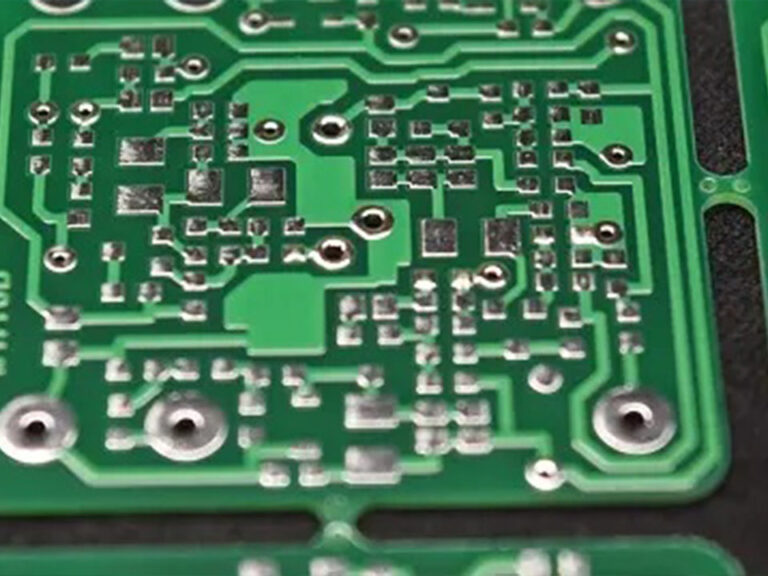
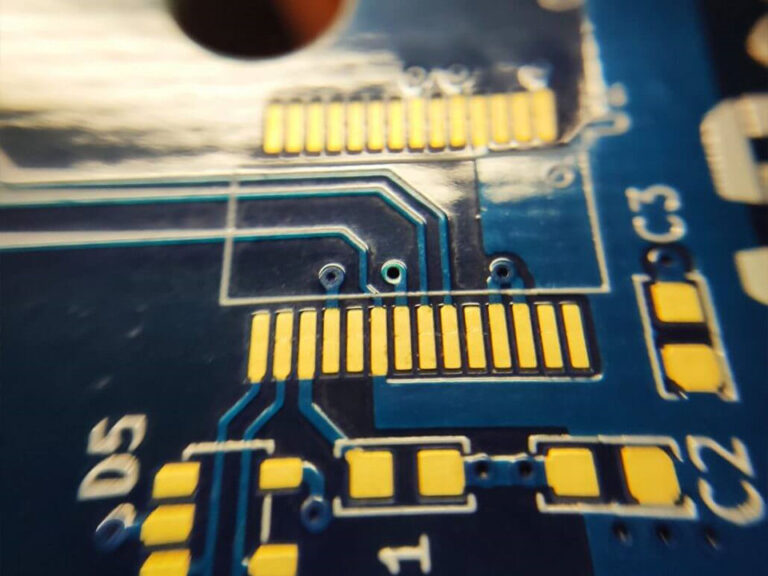
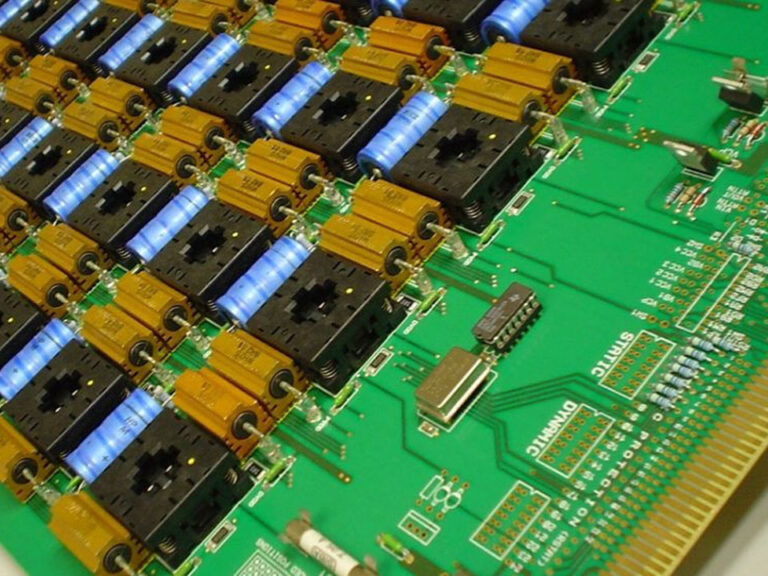
One-Stop PCB Factory: Prototype to Mass Production
For hardware startups and OEMs, getting high-quality PCBs quickly and reliably is critical. MC PCB is a one-stop contract PCB manufacturer supporting prototypes to volume builds—backed by experienced engineering support and rigorous QA.
MC PCB Co., Ltd.
Began in 2005
One-Stop PCB Factory: Prototype to Mass Production
For hardware startups and OEMs, getting high-quality PCBs quickly and reliably is critical. MC PCB is a one-stop contract PCB manufacturer supporting prototypes to volume builds—backed by experienced engineering support and rigorous QA.
MC PCB Co., Ltd.
Began in 2005
No. 2, Lane 11, Wenming Road, Fourth Industrial Zone, Nanzha, Humen Town, Dongguan City
What surface finish works best on aluminum core PCBs?
Aluminum core PCBs (MCPCBs) need the right surface finish for yield and reliability. Compare ENIG, lead-free HASL, OSP, immersion silver, and tin in SMT builds.
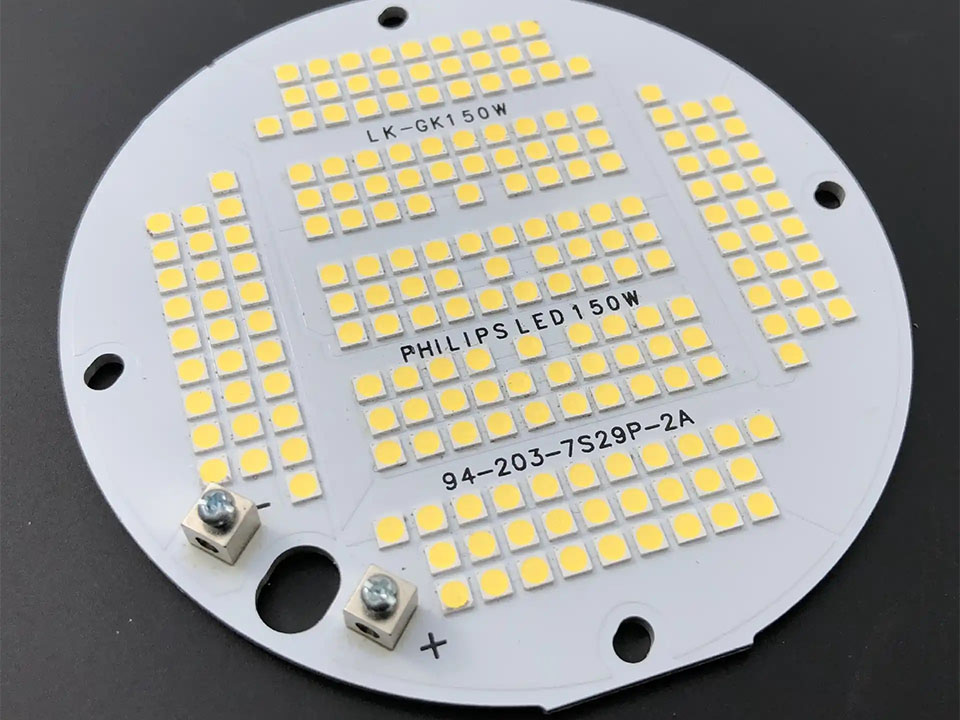
If you’re building an aluminum core PCB (also called MCPCB or IMS PCB), the surface finish isn’t a “nice-to-have.” It decides how your pads wet, how tight your SMT window is, and how many surprises you’ll fight during reflow.
We build for B2B buyers who care about schedule and yield: fast prototyping, mass production, and PCB assembly with strict quality control and on-time delivery worldwide. You’ll see a lot of OEM/ODM and wholesale workflows across LED lighting, industrial control, and embedded hardware on our site, so let’s talk about surface finish the same way your CM and QA team will talk about it: in terms of risk, yield, and reliability. The internal links I use below come from the site link list in PCB.json .
Aluminum core PCB surface finish: what really drives the choice
Most “finish debates” come down to four variables:
Pad flatness and coplanarity: Can your stencil print consistently, especially on fine-pitch pads?
Solderability and storage life: Will the boards still solder cleanly after shipping and sitting in inventory?
Thermal stress during processing: Aluminum core constructions move heat differently. Some finishes add process heat or add another risk layer.
Your assembly reality: Hand-solder vs reflow, single reflow vs multiple reflows, nitrogen vs air, AOI coverage, and so on.
If you want the short version: choose the finish that protects your yield first, then tune cost and lead time around that. If you’re also sourcing fabrication plus SMT, align the finish with your line capability early. Our PCB fabrication and PCB assembly teams usually confirm finish selection during DFM for exactly this reason.
ENIG on aluminum core PCBs
ENIG: flatness for fine-pitch and stable SMT yield
ENIG (Electroless Nickel / Immersion Gold) usually wins when you care about flat pads and repeatable solder joints. On aluminum core boards, that matters a lot when you run dense LED arrays, tight pad-to-pad spacing, or anything that’s sensitive to solder volume.
What ENIG does well in real builds:
Cleaner stencil printing: flatter pads help keep paste deposits consistent.
More predictable wetting across a panel: helpful when you’re chasing uniform LED brightness or tight electrical variation.
Better fit for fine-pitch footprints: less “pad topography” to fight.
Where ENIG can bite you:
It’s not the cheapest route.
Nickel adds a layer, so you want solid process control and clear acceptance criteria.
If your product screams “don’t mess this up,” ENIG is usually the safer bet. You’ll often see ENIG paired with demanding designs elsewhere too, like tight pitch builds shown on our fine-pitch HDI fabrication page and high-frequency multilayers that need controlled pad quality.
Lead-free HASL on aluminum core PCBs
Lead-free HASL: practical, available, but watch the flatness
Lead-free HASL (Hot Air Solder Leveling) is a common, cost-friendly finish. It can work on aluminum core boards, especially when your pads are larger and your assembly process has some tolerance.
Why buyers still choose it:
Broad supply chain: lots of factories can run it.
Good solderability right out of the box.
Fits rugged, lower-density layouts without drama.
The trade-offs you should plan for:
Pad flatness isn’t its strong point. If you’re running tight pitch, HASL can shrink your process window.
Reflow profile sensitivity: aluminum core builds can respond differently to heat. When you stack that with a finish that already involves thermal processing, you want your fab and SMT teams aligned on handling and profile.
If you’re building something like a straightforward control board that values throughput and robustness, HASL can still make sense. You can also sanity-check finish choices against real assembly expectations on our Quality page, since inspection and acceptance criteria should match the finish you pick.
OSP on aluminum core PCBs
OSP: low process stress and fast-turn friendly
OSP (Organic Solderability Preservative) is a thin organic coating that protects copper from oxidation. Teams like it when they want a simple, clean finish and a fast path from fab to SMT.
Where OSP shines:
Good for quick-turn builds that move straight into assembly.
Lower process heat compared to some alternatives, which can help when you’re cautious about thermal stress in metal-core constructions.
Nice option for cost-sensitive runs without forcing you into the HASL flatness conversation.
Where OSP needs discipline:
Shelf life and handling matter more. Fingerprints, humidity, and long storage can turn into solderability headaches.
If your boards will sit in a warehouse “until the next build,” OSP can punish that plan.
OSP often works well for short-cycle OEM programs and pilot runs. If your team does frequent spins, it pairs naturally with a quick prototyping workflow like what we outline on our Services page.
Immersion Silver on aluminum core PCBs
Immersion silver: solid electrical performance and good pad planarity
Immersion silver is often chosen when teams want good planarity and strong electrical characteristics. It can be a practical middle ground when ENIG feels like overkill but you still want a flatter surface than HASL.
What it does well:
Flat pads that behave nicely under a stencil.
Stable contact surface for many SMT scenarios.
What to control:
Packaging and storage: keep it clean, keep it dry, avoid contamination.
Be clear about acceptable surface appearance. Silver can look “different” over time even when solderability stays fine, and that can confuse incoming inspection if you don’t set expectations.
If your aluminum core board also lives near RF or sensitive signaling, you may already be looking at specialized stacks. In that case, you might also browse our Capabilities page to align finish choice with the rest of the process controls.
Immersion Tin on aluminum core PCBs
Immersion tin: flat pads, but reliability needs a hard look
Immersion tin can give you very flat pads, which looks attractive for SMT. But on aluminum core boards, many engineers treat it as “use carefully” because long-term reliability can become a bigger discussion.
Why teams consider it:
Excellent planarity for printing and placement.
Why teams hesitate:
Tin whisker risk and stress behavior can show up depending on operating environment and thermal cycling.
If the product runs hot, cycles a lot, or has a long service life target, you’ll want real validation, not assumptions.
If you’re building for automotive lighting or industrial duty cycles, don’t pick immersion tin just because it’s flat. Pick it only if your reliability plan supports it.
Surface finish comparison table for aluminum core PCBs
Here’s a practical summary you can drop into a sourcing doc, a DFM checklist, or an RFQ note.
Surface finish (keyword)
Specific argument (claim)
What it protects
Typical scenario (use case)
Argument source
ENIG (immersion gold)
Flatter pads improve fine-pitch SMT consistency
Stencil print stability, solder joint uniformity
Dense LED arrays, tight pad spacing, higher reliability builds
If you’re buying as an OEM, EMS, design house, or distributor, you can also bundle this into your RFQ notes. It reduces back-and-forth and speeds up DFM. If you want us to review your finish choice against your footprint density and reflow profile, start from the Contact Us page and send your Gerbers plus BOM.
So, what surface finish works best on aluminum core PCBs?
Pick ENIG when you want the safest route for fine-pitch pads and repeatable SMT yield.
Pick lead-free HASL when you need a practical, widely available option and your design can tolerate less pad flatness.
Pick OSP when you move fast and control storage and handling.
Consider immersion silver when you want flat pads and solid electrical behavior without committing to ENIG.
Treat immersion tin as “flat but verify,” especially for hot-running or long-life products.
If you tell us your minimum pitch, expected storage time, and whether you’re running single or double reflow, we can usually narrow it down to two finishes quickly and keep your build out of the rework loop.
MC PCB.,Ltd, alongside Dongguan MaoChang Printed Circuit Board Limited,has focused on PCB manufacturing over 20 years. MaoChang Printed Circuit Board Limited, a professional PCB factory for Quick Turn PCB, Prototype PCB and High Mix Low Volume fabrication. With UL certification for Rigid FR-4 / High Frequency / Aluminum Based PCB production.
Company
About
Contact
Capabilities
Services
Application
Products
Quality
Blog
Products
Printed Circuit Boards
PCB Prototype
Flexible PCB
High Frequency PCB
Thick-Copper PCB
PCB Assembly
Metal core PCB
Thick-Copper PCB
Contact
0755-2889 4567
Room 1803, lA Building, Longwan, Nanhuai Road, Shajing, Bao'an District,Shenzhen City
No. 2, Lane 11, Wenming Road, Fourth Industrial Zone, Nanzha, Humen Town, Dongguan City