One-Stop PCB Factory: Prototype to Mass Production
For hardware startups and OEMs, getting high-quality PCBs quickly and reliably is critical. MC PCB is a one-stop contract PCB manufacturer supporting prototypes to volume builds—backed by experienced engineering support and rigorous QA.
MC PCB Co., Ltd.
Began in 2005
One-Stop PCB Factory: Prototype to Mass Production
For hardware startups and OEMs, getting high-quality PCBs quickly and reliably is critical. MC PCB is a one-stop contract PCB manufacturer supporting prototypes to volume builds—backed by experienced engineering support and rigorous QA.
MC PCB Co., Ltd.
Began in 2005
No. 2, Lane 11, Wenming Road, Fourth Industrial Zone, Nanzha, Humen Town, Dongguan City
Should I use RA (rolled annealed) or ED (electrodeposited) copper for flex circuits
RA or ED copper for flex circuits? Learn when bend-life matters, when fine-line etching wins, and how to spec copper for OEM, ODM, and EMS builds—fast DFM tips.
If you’ve ever had a flex cable crack right at the bend after a few weeks in the field, you already know this isn’t a “nice-to-have” decision. Picking RA copper or ED copper can make the difference between stable shipments and painful RMA churn.
I’ll keep it practical. You’ll get the core trade-offs, real build scenarios, and a spec-ready checklist you can drop into your fab notes.
RA copper vs ED copper for flex circuits
Think of it like this:
RA (rolled annealed) copper: built for bending and repeated flexing. It’s the safer bet for anything that moves.
ED (electrodeposited) copper: built for process control and fine features. It’s often easier for tight etch work and can be a solid choice when the flex only bends during install.
If you’re sourcing from a China PCB B2B factory that supports quick-turn prototyping, volume builds, and assembly, you’ll usually see both options offered under flexible circuit builds—especially in OEM/ODM and EMS workflows (DFM first, yield always). You can start from the site’s home page and route straight into PCB fabrication or PCB assembly depending on whether you need bare flex or turnkey PCBA.
Dynamic flex life and bend cycles
If your flex sees repeated motion, treat that as “dynamic flex” and prioritize fatigue resistance.
Typical dynamic flex scenarios
Hinge flex in foldables
Camera module flex that moves during focus/zoom mechanics
Wearables with constant micro-bending
Robotics cable chains (drag chain vibe, even if it’s tiny)
In these cases, RA copper usually wins because it tolerates cyclic strain better. ED can work in mild motion, but it’s more likely to develop crack initiation at the outer bend radius when the bending repeats and the radius gets tight.
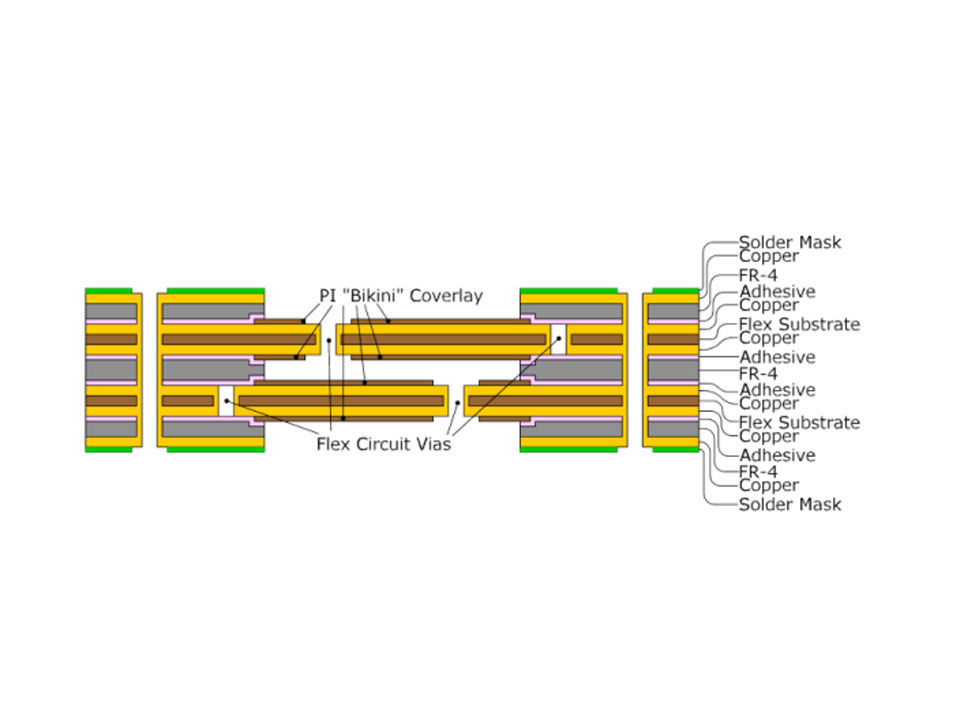
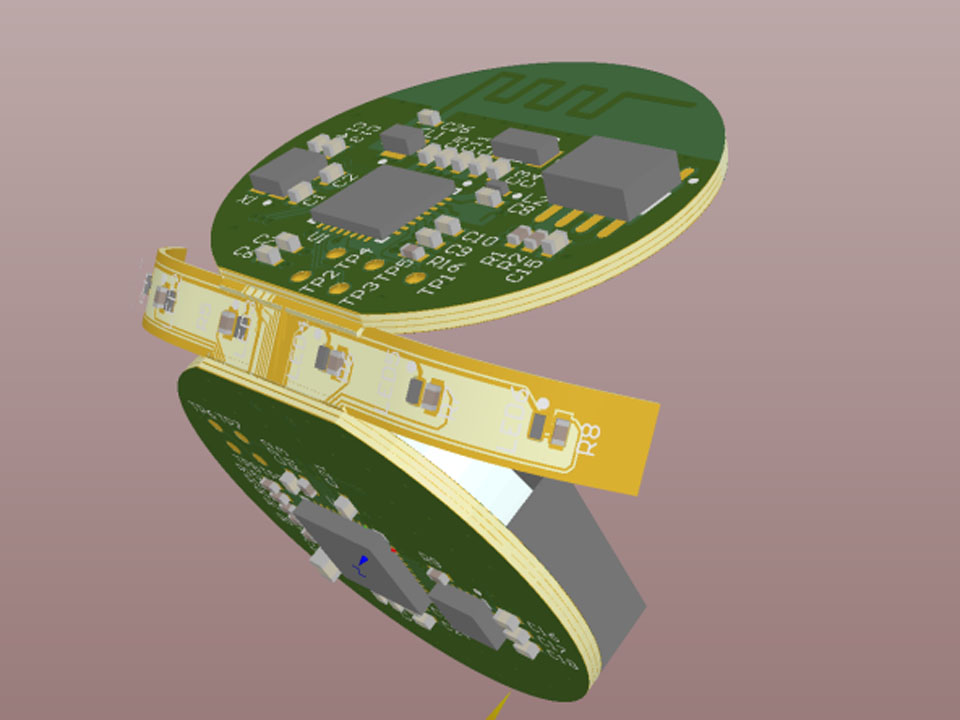
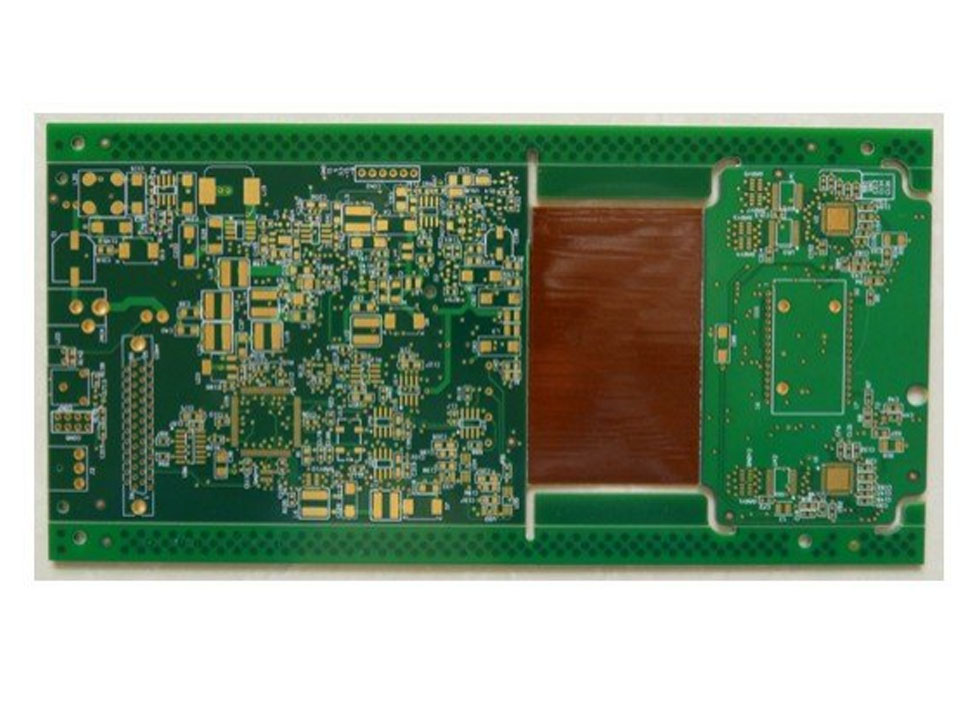
If your product looks like a foldable structure, check out a rigid-flex direction like rigid-flex PCB for foldable flex circuits so you can align stack-up, stiffeners, and bend zones early—before layout locks you in.
Copper grain structure: rolled annealed vs electrodeposited
This is the “why” behind the bend performance.
RA copper is mechanically rolled and annealed. Its structure tends to behave more “bend-friendly,” so it handles repeated strain without failing as quickly.
ED copper is plated up. It can behave more brittle under cyclic bending, especially in tight radii, because microscopic weaknesses can line up with the stress direction.
You don’t need to turn this into a metallurgy class. Just remember: grain behavior shows up as bend reliability. If your QA team keeps seeing failures at the bend line, switching to RA is often the fastest way to stop the bleed.
Etching, fine-line capability, and yield
Now flip the situation.
If your flex is mostly static and you’re pushing fine-line / fine-pitch, ED copper can make life easier in production because it often supports cleaner etch control.
Typical “etch-control-first” scenarios
Dense connector fanouts on flex tails
Tight pitch board-to-board interconnects
Compact sensor modules with routing congestion
In these builds, yield becomes your daily KPI. You care about consistent line edges, predictable undercut, and fewer opens/shorts at AOI.
If your project is clearly a flexible circuit product line (OEM devices, flex tails, FPC modules), this page fits the intent: custom FPC flexible PCB manufacturer for OEM devices. It’s a good landing page to align material callouts and DFM expectations before you release Gerbers.
Copper surface roughness and high-frequency loss
If you route high-speed signals on flex, you’ll care about this more than you think.
Rougher copper can increase conductor loss at higher frequencies (skin effect doesn’t love jagged surfaces).
Smoother copper generally helps keep insertion loss calmer.
This doesn’t mean “always pick RA.” It means you should call out the copper type + roughness class when signal integrity actually matters. Otherwise, you’ll get whatever is standard for the shop’s default flow, and your lab may see more loss than you budgeted.
If you’re building mixed-technology designs (rigid, flex, RF, HDI), it helps to align the whole program under one capability scope like capabilities so the copper choice doesn’t fight the rest of the stack-up.
Adhesion, peel strength, and reliability in reflow
Flex circuits don’t live in a vacuum. They go through lamination, drilling, plating, soldering, reflow, and sometimes harsh thermal cycles.
Here’s the practical angle:
If your build needs stronger mechanical “bite” into the dielectric, ED copper often pairs well with adhesion strategies.
If you need bend performance first, RA is still a go-to, but you’ll want process controls that protect peel strength and reduce delam risk.
When buyers complain about “pads lifting” or “weird delam after reflow,” the fix is rarely just copper. You’ll also look at adhesive systems, coverlay design, stiffener placement, and your reflow profile window. Still, copper choice can move the needle.
For customers who need consistent outbound quality (OEM, EMS, batch wholesale), tie this back to your supplier’s quality control expectations early so you don’t debug reliability after you’ve already shipped.
Rolling direction and layout tips for RA copper
If you choose RA copper, don’t ignore rolling direction. This is one of those quiet details that can wreck bend life if you get it wrong.
DFM-friendly tips
Mark bend zones clearly (mechanical layer + fab notes).
Keep traces out of the highest strain area when possible (neutral axis thinking).
Avoid sharp corners and stress risers near the bend.
Ask your fab to confirm rolling direction control when the bend life is critical.
If you want to keep communication clean—especially across time zones and multi-party builds—route questions through a single channel like contact us so the fab notes, stack-up, and mechanical drawings stay aligned.
RA copper vs ED copper comparison table
Decision factor
What you’ll see on the bench
RA (rolled annealed) copper
ED (electrodeposited) copper
Dynamic flex life
Fewer bend cracks over repeated cycles
Strong choice
Riskier in tight/repeated bends
Static flex (one-time bend)
Usually stable after install
Works
Works well
Fine-line etching
Cleaner edges, less undercut headaches
Can be tougher
Often easier to control
High-frequency loss sensitivity
Lower loss prefers smoother copper
Often favorable
Depends on roughness class
Adhesion / peel robustness
Less pad lift and delam risk
Needs good process control
Often easier to build adhesion margin
Cost / sourcing simplicity
Procurement wants fewer exceptions
Can be higher effort
Often simpler as a default
Quick decision matrix for OEM/ODM and EMS buyers
Use this when you’re in a meeting and someone asks, “So… which copper do we pick?”
Choose RA copper when: it bends often, it bends tight, or failure at the bend would kill the product (field returns, warranty pain, brand risk).
Choose ED copper when: it’s mostly static, you need fine features, and you care about smooth manufacturing flow and stable yield.
Escalate the spec when: it’s high-speed, or the bend zone sits next to dense routing. In that case, call out copper type, roughness target, and bend-zone rules in your fab notes.
If you want a broader overview of build options (prototypes to volume, OEM/ODM, and assembly), the site’s services hub is a clean starting point.
How to spec RA or ED copper on your fab notes
Copy-paste friendly checklist:
State RA copper or ED copper explicitly for the flex layers.
Define dynamic flex or static flex usage.
Mark bend zones and specify minimum bend radius (don’t leave it vague).
Add routing rules in bend areas (trace direction, spacing, keepouts).
Call out any impedance control or high-speed constraints.
Specify inspection and reliability expectations (AOI focus zones, peel checks, bend test requirement if needed).
If you want, I can rewrite the above into a one-page “Flex Copper Selection” PDF-style spec sheet layout (still in markdown), but I’ll keep it matched to your product mix and buyer types (OEM/brand, EMS, design houses, labs, startups).
MC PCB.,Ltd, alongside Dongguan MaoChang Printed Circuit Board Limited,has focused on PCB manufacturing over 20 years. MaoChang Printed Circuit Board Limited, a professional PCB factory for Quick Turn PCB, Prototype PCB and High Mix Low Volume fabrication. With UL certification for Rigid FR-4 / High Frequency / Aluminum Based PCB production.
Company
About
Contact
Capabilities
Services
Application
Products
Quality
Blog
Products
Printed Circuit Boards
PCB Prototype
Flexible PCB
High Frequency PCB
Thick-Copper PCB
PCB Assembly
Metal core PCB
Thick-Copper PCB
Contact
0755-2889 4567
Room 1803, lA Building, Longwan, Nanhuai Road, Shajing, Bao'an District,Shenzhen City
No. 2, Lane 11, Wenming Road, Fourth Industrial Zone, Nanzha, Humen Town, Dongguan City