One-Stop PCB Factory: Prototype to Mass Production
For hardware startups and OEMs, getting high-quality PCBs quickly and reliably is critical. MC PCB is a one-stop contract PCB manufacturer supporting prototypes to volume builds—backed by experienced engineering support and rigorous QA.
MC PCB Co., Ltd.
Began in 2005
One-Stop PCB Factory: Prototype to Mass Production
For hardware startups and OEMs, getting high-quality PCBs quickly and reliably is critical. MC PCB is a one-stop contract PCB manufacturer supporting prototypes to volume builds—backed by experienced engineering support and rigorous QA.
MC PCB Co., Ltd.
Began in 2005
No. 2, Lane 11, Wenming Road, Fourth Industrial Zone, Nanzha, Humen Town, Dongguan City
How do I prevent PCB warping during manufacturing and assembly?
Stop PCB warping by balancing copper and stackup, choosing high-Tg materials, controlling moisture, tuning reflow, and using fixtures for printing and soldering.
If you’ve ever watched a PCB “potato-chip” in reflow, you know the pain. Warpage (often measured as bow and twist) doesn’t just look bad. It breaks stencil gasketing, shifts fine-pitch parts, and turns BGA solder joints into a rework party.
On a B2B line, this hits fast-turn prototypes and mass production in different ways. Prototypes suffer because designs change weekly. Volume suffers because tiny variation stacks up across panels, ovens, and shifts. The good news: you can control warpage if you treat it like a system problem, not a single-process mistake.
If you’re building with a China-based B2B partner that does quick-turn prototyping and PCB assembly, you’ll get the best results when your design rules + material calls + SMT process controls all line up. Start here: the factory-side view from our homepage
PCB warpage and bow and twist
Most teams talk about “warpage” like it’s one thing. In reality, you’re dealing with:
Bow: the board curves like a shallow arc.
Twist: corners lift in different directions.
You want a measurable spec, because “looks flat” fails the moment a different operator checks it.
IPC-TM-650 2.4.22 bow and twist measurement
A practical way to manage risk is to define bow-and-twist limits in your incoming QC and assembly spec. Many SMT programs use ≤0.75% for assembled boards, while some non-SMT use looser limits like ≤1.5%. Don’t copy numbers blindly. Match your product: BGA density, board size, thickness, and your reflow process window.
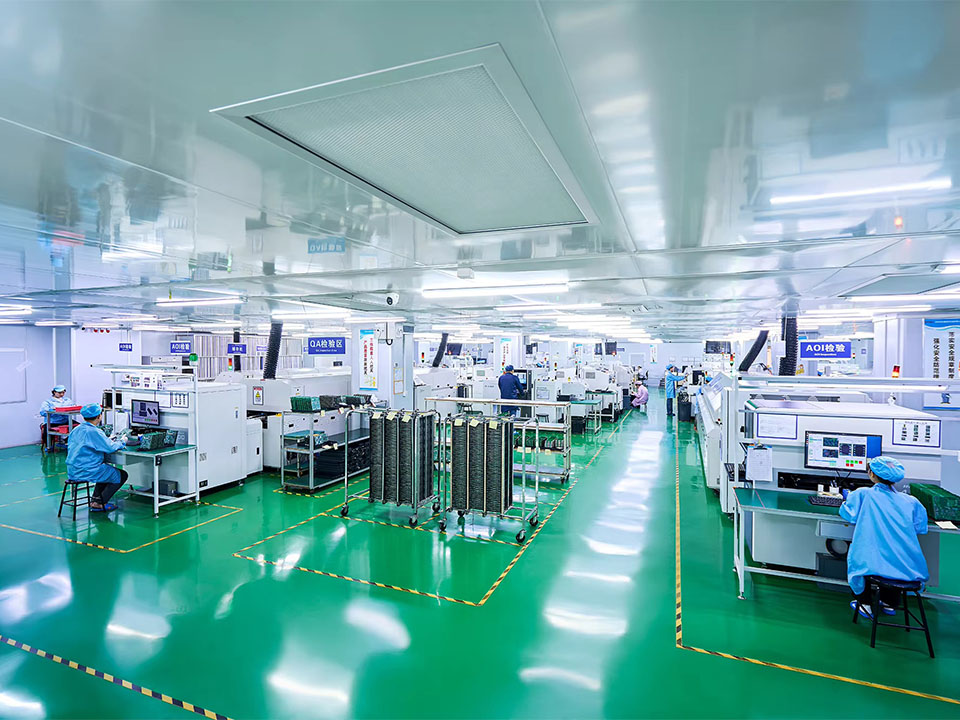
If you already run strict inspection and traceability, align warpage control with your overall quality process so the fab and SMT teams use the same yardstick.
Copper balance and symmetric stackup
If you only fix reflow, you’ll keep chasing symptoms. Design imbalance creates built-in stress, then heat makes it show up.
Symmetric stackup
A symmetric stackup means the layers above and below the centerline mirror each other in copper weight and dielectric thickness. When one side expands more than the other in heating, the board bends. Symmetry keeps the forces closer to neutral.
Copper distribution balance
Copper balance is the quiet killer. Here’s what “bad” looks like:
Top layer is a solid ground pour.
Bottom layer is sparse routing.
Inner planes are uneven because you “just needed one extra plane.”
That’s a warpage recipe, especially on larger panels. Use copper thieving, plane balancing, and keep heavy copper areas matched across layers.
If you’re doing complex builds, route the discussion through your manufacturer’s capabilities page and stackup review process early, not after your first warped batch.
High Tg FR-4 material and CTE
When the board heats up near or above Tg, the resin softens. That’s when gravity, component weight, and conveyor support start to matter a lot more.
High Tg FR-4 for multiple reflow cycles
If you run double-sided SMT, selective solder, or multiple reflow passes, consider high Tg FR-4. It won’t magically prevent warpage, but it gives you a wider process window before the board behaves like a warm noodle.
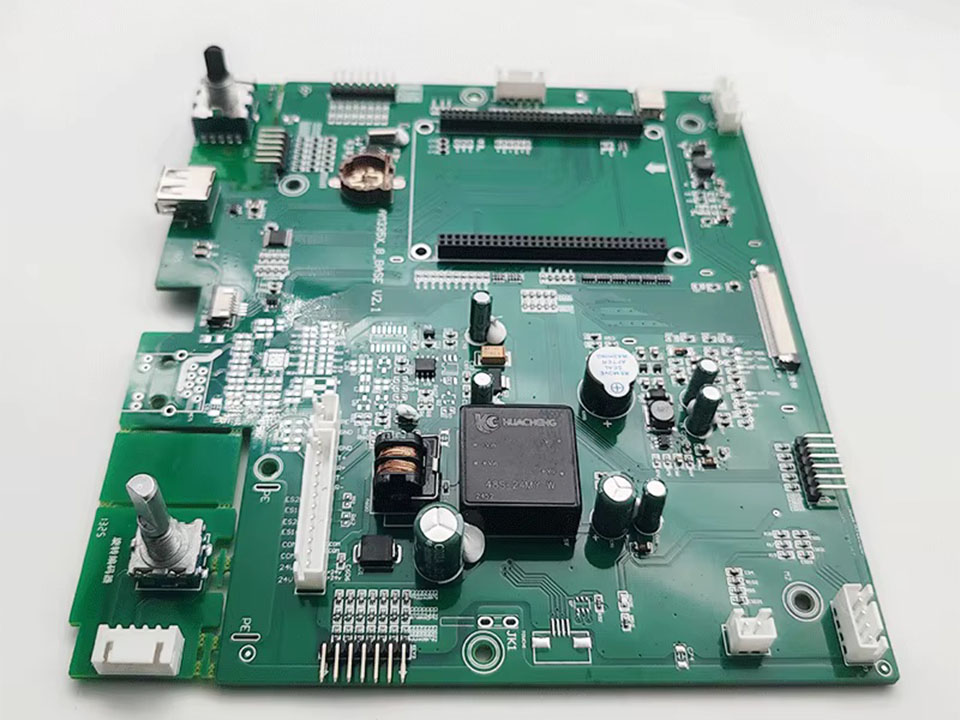
A real shop-floor example: a TV mainboard with big copper planes and connectors can stay flat in fab, then warp during assembly because the thermal cycle is harsher than the fabrication bake. High Tg helps, and so does better support during reflow.
You’ll see this come up often in high-layer-count and fine-pitch builds. If that’s your world, check the advanced PCB scope and make material selection part of the RFQ package.
CTE matching
CTE mismatch (especially through-thickness) increases stress during heat-up and cool-down. You don’t need a PhD to manage this. Just avoid “surprise substitutions,” and lock the laminate system in your build notes for OEM/ODM and repeat orders.
Moisture control and PCB baking
Moisture sneaks in during storage and shipping. Then reflow turns it into pressure. Even if you don’t see delamination, moisture can amplify warpage because the material response becomes less stable.
Dry pack and floor life discipline
Use dry pack, desiccant, and sensible floor-life rules. If your boards sit open in a humid room for days, they’re basically pre-loading the next reflow cycle with extra stress.
Pre-bake before assembly
Pre-bake isn’t a cure-all, but it helps when:
boards have long storage time,
you run high-temp lead-free profiles,
you see inconsistent warpage from lot to lot.
Talk to your assembly partner about what they standardize in their PCB assembly service flow so baking doesn’t become “tribal knowledge.”
Reflow profile and board support fixtures
Even a perfect stackup can warp if the oven setup is sloppy. Heat makes stress visible.
Reflow profile uniform heating
You’re trying to reduce temperature gradients across the panel. Big gradients mean one area expands while another lags, so the board bends.
Simple moves that help:
keep soak stable,
avoid aggressive ramp rates when you don’t need them,
don’t cool too fast if it triggers sudden stress lock-in.
Board support, pallets, and rails
Support matters most when the PCB is soft at peak temperature. Use rails, pallets, or dedicated support tooling for thin boards, large panels, and connector-heavy assemblies.
If you build mixed products, document fixture rules by board family. Otherwise the night shift will “make it work,” and your warpage graph will look like a rollercoaster.
Stencil printing gasketing and vacuum tooling
This is where warpage shows up first on most SMT lines.
Stencil gasketing
A warped PCB doesn’t seal well against the stencil. That creates paste smears, insufficient deposits, and bridging. People blame the stencil. The real issue is contact consistency.
Vacuum support for flatness
Vacuum tooling (or well-designed mechanical support) pulls the PCB flat during print. It’s a straightforward fix when you can’t redesign the stackup right away, like during a fast prototype sprint.
If you’re iterating quickly, keep your fab + SMT loop tight through PCB fabrication + assembly feedback, so you stop re-learning the same lesson every build.
Depanelization and stress relief
Panel design can either stabilize your process or trap stress until it explodes in reflow.
Depanelization strategy
V-score, tab-route, mouse-bites—each choice changes how stress distributes. In some builds, selective depanelization between reflow steps helps reduce constraint and lets the board relax.
Stress relief after first thermal cycle
If you see repeatable warpage only after the first reflow pass, your panel constraints may be locking the board into an unhappy shape. Adjust rails, tab locations, or support points so the board can expand and contract without fighting the panel frame.
For high-mix OEM programs, it helps to keep examples and lessons learned in your internal knowledge base. If you share public notes, your blog can also act as a lightweight playbook for your buyers and CM partners.
Warpage control checklist for manufacturing and assembly
Here’s a quick table you can drop into a DFM/DFT report. It gives you clear actions, plus named sources (standards and industry papers) without sending readers to external links.
Control point (keyword)
What you do on the floor
What it prevents
Source you can cite
Bow and twist spec
Set bow/twist limit and measure consistently
“Flat to me” arguments, inconsistent QC
IPC-TM-650 2.4.22; IPC-6012 (warpage limits used in industry)
Optimize tabs/rails, relieve constraint when needed
Warpage that appears only after reflow
Panelization and stress constraint analyses
Practical scenarios that usually trigger warpage
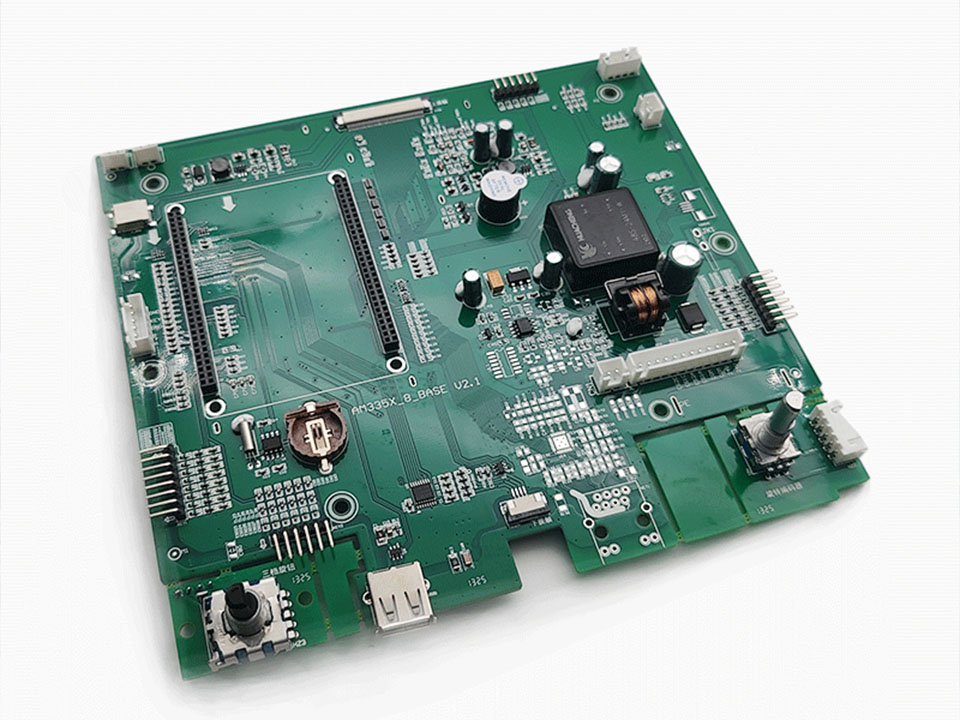
Large control boards with connector forests: heavy parts act like weights at peak temp. Support points matter more than you think.
Fine-pitch BGA + thin FR-4: even mild warp can open joints or cause head-in-pillow style failures.
Heavy copper power boards: copper imbalance becomes obvious, and reflow gradients get worse.
Rigid-flex and flex builds: different materials, different behavior. Treat them as a special case, not “just another PCB.”
If you’re sourcing for OEM/ODM, bulk buys, or repeat wholesale orders, lock these controls into your RFQ and drawing notes. Then route the execution through the right teams: services, products, and a clear handoff to contact us when you need a fast DFM check.
A flat PCB isn’t luck. You earn it by balancing the design, choosing stable materials, and keeping SMT support and profiles under control. That’s how you protect yield, keep rework down, and ship on time—especially when you’re running quick-turn prototypes today and mass production tomorrow.
MC PCB.,Ltd, alongside Dongguan MaoChang Printed Circuit Board Limited,has focused on PCB manufacturing over 20 years. MaoChang Printed Circuit Board Limited, a professional PCB factory for Quick Turn PCB, Prototype PCB and High Mix Low Volume fabrication. With UL certification for Rigid FR-4 / High Frequency / Aluminum Based PCB production.
Company
About
Contact
Capabilities
Services
Application
Products
Quality
Blog
Products
Printed Circuit Boards
PCB Prototype
Flexible PCB
High Frequency PCB
Thick-Copper PCB
PCB Assembly
Metal core PCB
Thick-Copper PCB
Contact
0755-2889 4567
Room 1803, lA Building, Longwan, Nanhuai Road, Shajing, Bao'an District,Shenzhen City
No. 2, Lane 11, Wenming Road, Fourth Industrial Zone, Nanzha, Humen Town, Dongguan City