One-Stop PCB Factory: Prototype to Mass Production
For hardware startups and OEMs, getting high-quality PCBs quickly and reliably is critical. MC PCB is a one-stop contract PCB manufacturer supporting prototypes to volume builds—backed by experienced engineering support and rigorous QA.
MC PCB Co., Ltd.
Began in 2005
One-Stop PCB Factory: Prototype to Mass Production
For hardware startups and OEMs, getting high-quality PCBs quickly and reliably is critical. MC PCB is a one-stop contract PCB manufacturer supporting prototypes to volume builds—backed by experienced engineering support and rigorous QA.
MC PCB Co., Ltd.
Began in 2005
No. 2, Lane 11, Wenming Road, Fourth Industrial Zone, Nanzha, Humen Town, Dongguan City
If you’ve ever sent the same Gerber to a factory twice—first for a tiny batch, then for a bigger run—you already know the vibe: the design didn’t change, but the quote sure did. That “gap” isn’t magic. It comes from how PCB fabrication and PCB assembly (PCBA) behave when you spread fixed work across more units.
This guide explains what really shifts between ordering five boards and ordering a hundred boards, using practical shop-floor logic and buyer-side pain points. It also fits the way a China-based B2B PCB manufacturer supports fast prototyping, mass production, and reliable assembly with strict quality control and on-time delivery worldwide.
PCB unit cost vs order quantity
Fixed setup work dominates tiny orders
Even when you order five boards, the factory still has to do the same “front-end” work: CAM review, DFM checks, tooling decisions, process routing, and basic paperwork. In assembly, you also pay for line setup: programming, feeder loading, stencil planning, and first-article verification.
That setup effort doesn’t scale down nicely. So on small quantities, each board carries a bigger slice of that fixed workload. On a larger run, each board carries less.
Per-board cost drops sharply, then flattens
The price drop from a tiny batch to a larger batch usually feels steep at first, then calmer later. Here’s why: you amortize fixed setup quickly. After that, most savings come from small efficiency gains—better panel yield, smoother line flow, fewer stop-starts—not a total rewrite of the process.
So yes, the unit price can fall a lot going from five to a hundred. But don’t expect it to keep falling forever at the same rate.
Board size and panel utilization matter more as you scale
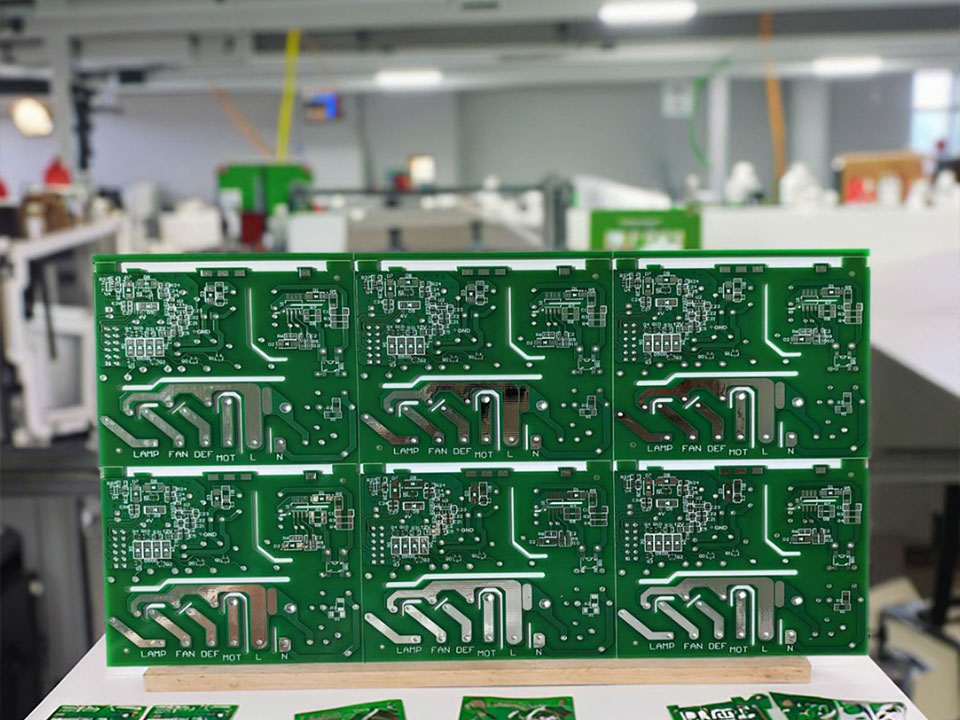
Factories don’t run your board one-by-one. They build panels. If your outline wastes panel space, you’re paying for unused real estate.
At low quantities, you may accept “good enough” panelization just to move fast. At higher quantities, panel yield becomes a serious lever. Better nesting, smarter breakaway tabs, and stable rails can cut waste and speed up handling. That’s one reason a larger order can quote much better without changing the circuit at all.
Prototype vs 100+ pricing behaves differently
Prototype orders favor speed and flexibility. You push quick turn, accept more manual touch points, and prioritize learning. Larger orders favor repeatability. Once the process is stable, the factory can plan material, schedule capacity, and run fewer exceptions.
That difference matters for B2B buyers like OEMs, EMS partners, design-and-build teams, and hardware service firms. You don’t just buy boards—you buy predictability.
Complexity choices can outweigh quantity savings
Quantity helps, but complexity still sets the floor.
Fine-pitch parts, tight impedance control, special materials, dense via structures, heavy copper, rigid-flex, and strict cosmetics can keep costs high even at a hundred boards. In other words, you can’t “bulk discount” your way out of a tough stackup or a risky assembly profile.
Assembly scales harder than fabrication at low volume
PCBA often shows a bigger gap between small and larger orders than bare boards. Assembly has more moving parts: stencil, paste print, pick-and-place program, reflow tuning, AOI, X-ray checks for hidden joints, rework loops, and test strategy.
If your build needs lots of line prep, the five-board batch feels “expensive per unit” because it’s paying for the whole party. A hundred boards splits that tab across a bigger group.
What changes from 5 boards to 100 boards
Cost driver keyword
What it looks like at five boards
What it looks like at a hundred boards
Why it matters
CAM and DFM
Fast checks, more manual judgement
Stable rules, fewer exceptions
Fewer surprises means less rework and less delay
Panelization
Basic panel plan
Yield-optimized panel plan
Better yield lowers waste and handling time
Material planning
Buy small lots
Plan material and substitutes
Better availability reduces schedule risk
SMT line setup
Full setup for a tiny output
Same setup spread across many units
Setup amortization drives unit price down
Inspection and QA
Higher touch per unit
Process control, sampling plans
Quality control shifts from “hands-on” to “systematic”
Test approach
Quick sanity checks
Repeatable test flow
Stable test reduces escapes and field returns
Real-world scenarios: when five boards makes sense, when a hundred boards saves pain
Five boards makes sense when you’re still learning:
A startup chasing fit and function before the next investor demo
A university lab validating a sensor front-end
A design studio proving a new enclosure and connector layout
A repair and spares team checking compatibility before stocking parts
A hundred boards makes sense when you’re ready to stop “babysitting builds”:
An OEM preparing pilot production for a new product line
An EMS partner who needs stable yield and predictable delivery
A solution house doing design + manufacturing and wants fewer build cycles
A distributor or local service team who wants stock for multiple customers
Here’s the buyer-side truth: the larger batch often costs less per board, but the bigger win is operational. You get fewer line stops, fewer “why did this happen again?” emails, and fewer surprises when you ship worldwide.
How to get a cleaner quote without changing the design
DFM and CAM checks
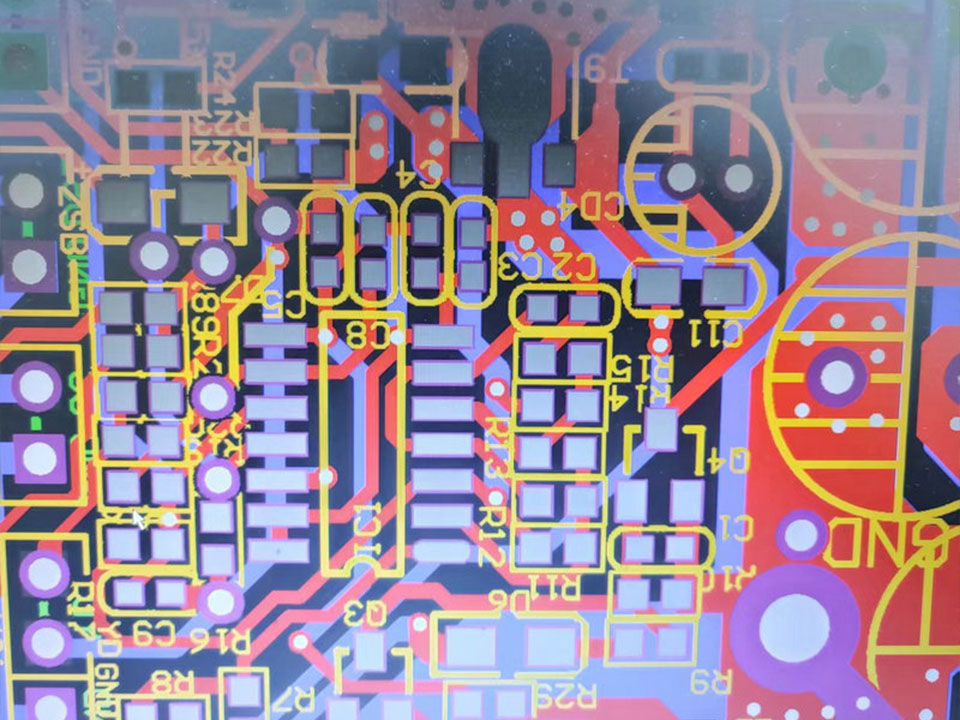
Ask for a DFM pass that focuses on risk, not just rule checking. You want clear flags on annular ring margin, solder mask slivers, drill-to-copper spacing, impedance notes, and assembly keepouts. That kind of feedback prevents respins, which is the fastest way to burn budget and schedule.
If you want to learn how a factory frames these checks, start from the Capabilities page and map your constraints to what the shop can hold.
Panelization and breakaway design
Bad panelization causes hidden costs: warped panels, tombstoning near edges, weak rails, and painful depanel. Good panelization improves placement stability and throughput.
If you already know your product’s mechanical limits, align them early with fabrication by using a partner that runs both fast prototyping and scaled manufacturing, like the process described under PCB fabrication services.
Test strategy: flying probe vs fixture thinking
Testing can quietly dominate total effort. For small runs, you may lean on quick checks and basic probing. For larger runs, you want a repeatable test plan that matches your risk profile. Even a simple functional test plan can reduce escapes, rework loops, and field failures.
Quality expectations should match your market—consumer, industrial control, automotive supply chain, medical devices, and so on. If you need stricter process discipline, align it with a supplier’s Quality approach early, not after a failure report lands.
BOM risk and alternates
Assembly cost doesn’t live in SMT only. It lives in sourcing pain. Shortages, end-of-life parts, and slow lead times can wreck your plan.
A practical move: submit approved alternates and define “no-substitute” parts. That keeps your build from stalling or turning into a last-minute redesign.
If you’re running assembly, keep your process under one roof when it makes sense. A one-stop flow reduces handoffs, finger-pointing, and missed revision notes. You can see the scope under PCB assembly services.
China PCB B2B factory workflow for fast prototyping and mass production
B2B buyers usually want two things at the same time: speed now and stability later. A China PCB B2B factory that supports quick-turn prototypes and scalable production can bridge that gap when it runs tight quality control and ships on time worldwide.
If your team includes OEMs, brand owners, EMS, contract manufacturers, solution companies, design houses, hardware development services, research institutes, university labs, startup teams, traders, distributors, local service teams, or maintenance and spares customers, you’ll feel these friction points:
revision control across builds
yield stability across batches
consistent assembly quality across shifts
clear ownership when issues happen
A clean way to reduce that friction is to choose a partner whose scope covers custom builds, wholesale batch purchasing, and OEM/ODM execution—then keep communication tight through a single channel like the Contact page.
If you want quick context on who you’re working with, point stakeholders to About us and the full Services list.
Quick checklist before you place the PO
Confirm your latest files and revision notes live in one place, then share the right package
Call out impedance rules, stackup intent, and any “do not change” dimensions
Decide what matters most: quick turn, lowest unit cost, or lowest schedule risk
Define assembly expectations: AOI, X-ray, rework limits, and acceptance criteria
Provide a clean BOM with alternates and clear sourcing rules
Ask how the factory will control quality on the run you’re placing
MC PCB.,Ltd, alongside Dongguan MaoChang Printed Circuit Board Limited,has focused on PCB manufacturing over 20 years. MaoChang Printed Circuit Board Limited, a professional PCB factory for Quick Turn PCB, Prototype PCB and High Mix Low Volume fabrication. With UL certification for Rigid FR-4 / High Frequency / Aluminum Based PCB production.
Company
About
Contact
Capabilities
Services
Application
Products
Quality
Blog
Products
Printed Circuit Boards
PCB Prototype
Flexible PCB
High Frequency PCB
Thick-Copper PCB
PCB Assembly
Metal core PCB
Thick-Copper PCB
Contact
0755-2889 4567
Room 1803, lA Building, Longwan, Nanhuai Road, Shajing, Bao'an District,Shenzhen City
No. 2, Lane 11, Wenming Road, Fourth Industrial Zone, Nanzha, Humen Town, Dongguan City