One-Stop PCB Factory: Prototype to Mass Production
For hardware startups and OEMs, getting high-quality PCBs quickly and reliably is critical. MC PCB is a one-stop contract PCB manufacturer supporting prototypes to volume builds—backed by experienced engineering support and rigorous QA.
MC PCB Co., Ltd.
Began in 2005
One-Stop PCB Factory: Prototype to Mass Production
For hardware startups and OEMs, getting high-quality PCBs quickly and reliably is critical. MC PCB is a one-stop contract PCB manufacturer supporting prototypes to volume builds—backed by experienced engineering support and rigorous QA.
MC PCB Co., Ltd.
Began in 2005
No. 2, Lane 11, Wenming Road, Fourth Industrial Zone, Nanzha, Humen Town, Dongguan City
How complex is the design process for rigid-flex compared to rigid boards?
Rigid-flex PCB design is harder than rigid boards because bends, stackup, transitions, assembly handling, and testing must be solved early to avoid rework.
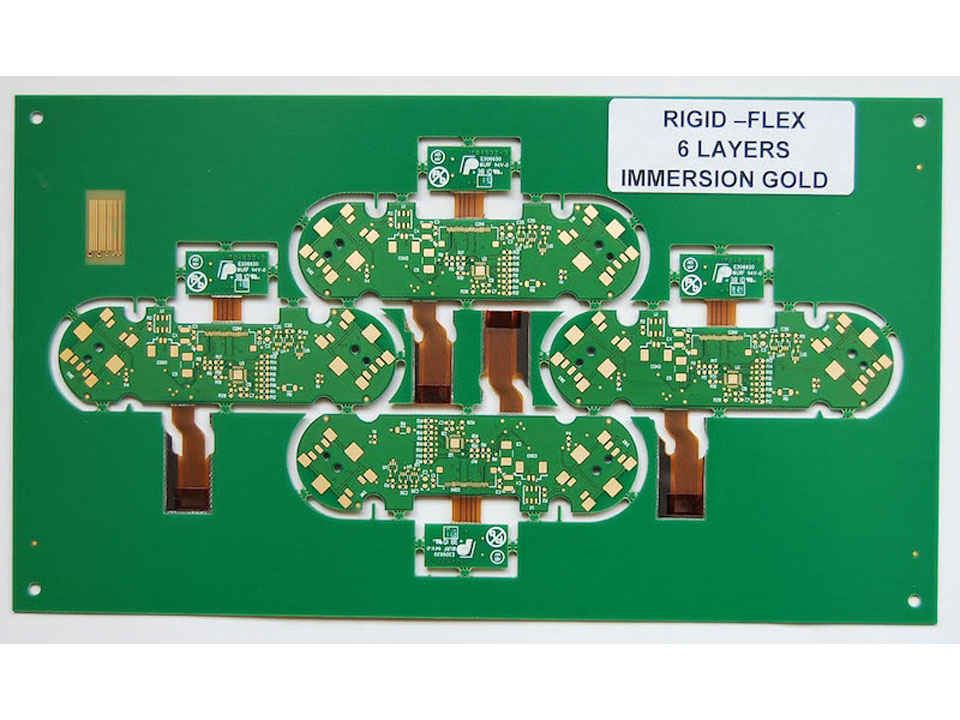
If you’ve only done rigid PCBs, rigid-flex looks familiar at first. Same schematics, same nets, same layout tools. Then reality hits: rigid-flex isn’t just “a board that bends.” It’s a mechanical part that also has to pass electrical rules, survive lamination, and behave during SMT assembly.
That’s why the design process feels heavier. You’re not only routing signals. You’re managing strain, stackup behavior, transition stress, test access, and build tolerances—early. If you push those decisions to the end, you usually pay with rework and schedule slips during NPI.
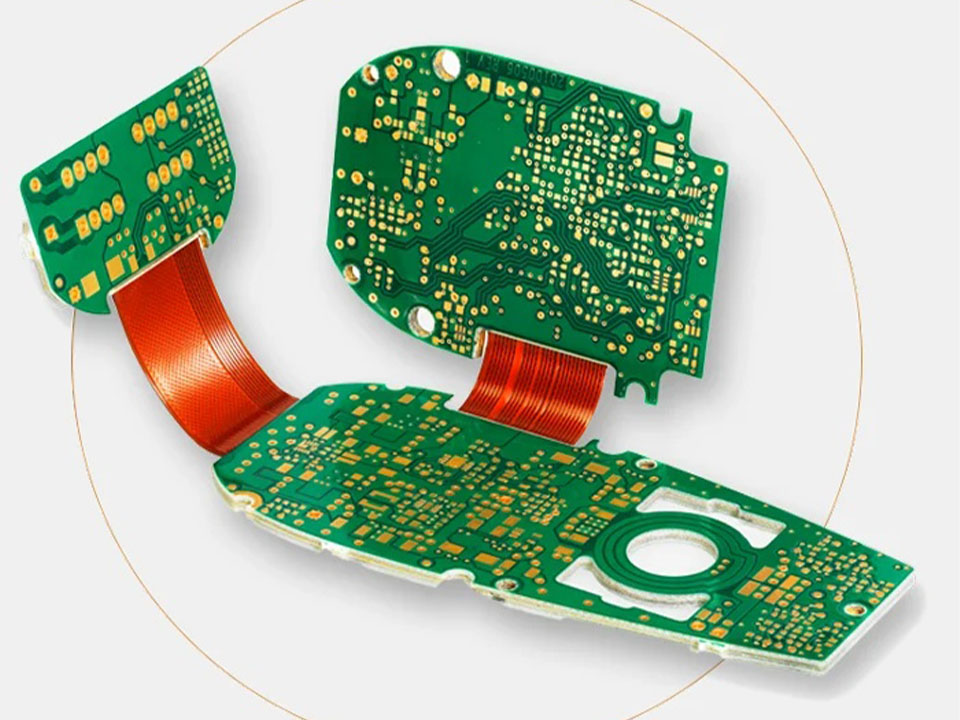
Rigid-flex design is more complex because it’s 2D layout plus 3D behavior. The flex section moves. The rigid section anchors parts. The transition zone takes the stress. Your CAD file might look clean, but the physical build can still fail if the mechanics and process weren’t baked in.
This is also why rigid-flex is popular with OEMs that hate connectors and cable harnesses. Fewer interconnects means fewer field failures, less assembly mess, and cleaner packaging. But you only get those wins if you design it like a system, not like a flat board.
Rigid PCB design can still be tough—HDI, fine-pitch BGAs, controlled impedance, heavy copper, RF. But the “shape” stays stable. The board doesn’t fold. Test fixtures are simpler. Assembly handling is predictable.
So in rigid design, teams often iterate faster because fewer variables change at once. For typical rigid workflows, see PCB fabrication and advanced PCB as the baseline scope.
Bend radius is where rigid-flex stops being “just routing.”
Dynamic flex
Dynamic flex means repeated motion. Think robotics joints, gimbals, foldable mechanisms, or any part that flexes every cycle. Here, the design goal isn’t only “fit in the box.” It’s “survive the life test.”
Common shop-floor rules that reduce pain:
Keep vias out of the bend. Vias don’t like strain.
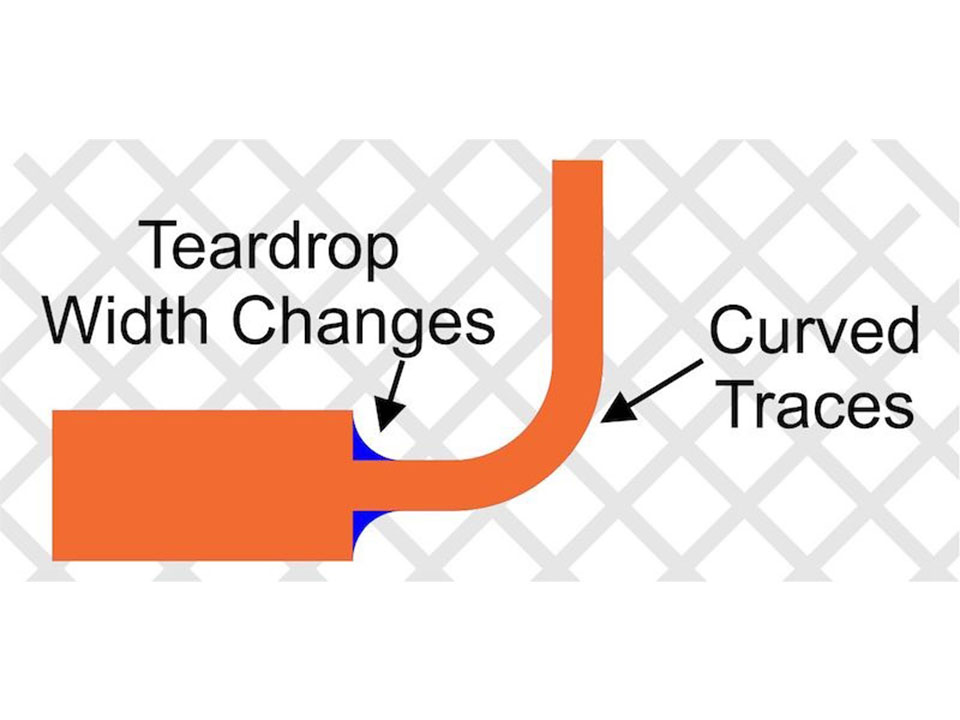
Route traces with smooth arcs, not sharp corners.
Watch copper density. Some teams use hatched copper to reduce stiffness in the bend.
Static flex
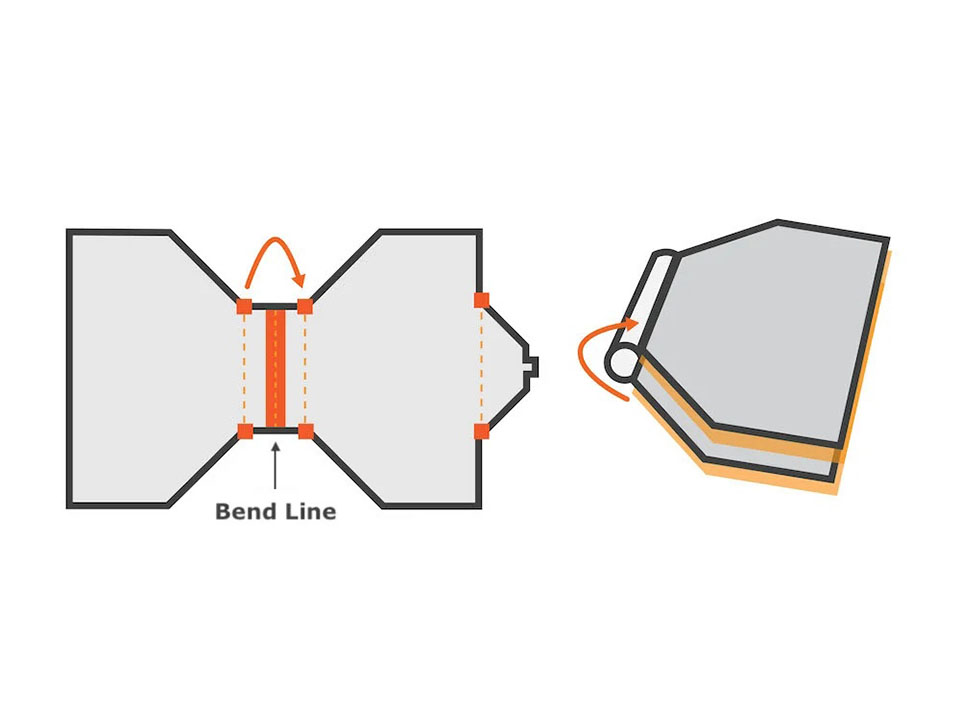
Static flex is bend-to-install. You fold it once, then it stays. This is friendlier, but you still need:
a clean bend line,
keepouts near the fold,
no components in the flex area unless you’ve planned stiffeners.
Rigid-flex stackup work feels like a negotiation between physics and process.
On rigid boards, stackup decisions usually focus on impedance and power integrity. On rigid-flex, you add:
adhesive layers and coverlay behavior,
thickness and stiffness control in the flex,
symmetry issues that can warp the rigid areas,
lamination sequencing.
This is why teams talk about stackup lock. Once you lock it, routing rules stop moving. If stackup keeps changing late, everything becomes an ECO storm.
If you want to set expectations early with buyers (OEM/ODM, bulk orders, wholesale programs), anchor the discussion on what your partner can do consistently: capabilities and quality.
Transition Zones
Transition zones are the “break here” spots if you treat them casually.
The rigid-to-flex edge concentrates stress. Add layer transitions, drills, and copper features too close to the edge, and you’ve built a crack starter.
Practical layout habits that reduce risk:
Add keepouts from the rigid edge into the flex entry.
Use teardrops and gentle neck-downs where traces enter the flex.
Avoid abrupt layer step-downs without a planned transition.
Don’t park pads and vias right at the start of the bend.
When customers complain “the first prototype worked, then failures show up after handling,” transition zone design is often the hidden reason.
Impedance Control
Controlled impedance in rigid-flex is still controlled impedance, but the geometry doesn’t stay constant.
Two gotchas show up a lot:
Rigid and flex sections often use different dielectric structures, so the same trace width won’t hold the same impedance everywhere.
The transition can introduce discontinuities that your SI tool didn’t model unless you set it up region-by-region.
If you’re running high-speed pairs across a fold, treat the transition like a connector: keep the reference plane story clean, keep geometry stable, and don’t “wing it” at the edge.
DFM
Rigid-flex punishes late DFM. So the best teams pull manufacturing feedback forward.
A solid DFM rhythm looks like this:
Confirm stackup and bend assumptions before final routing.
Review panelization and carrier strategy early, not after layout freeze.
Call out critical zones in fab notes: bend areas, keepouts, stiffener regions, region-based impedance.
If you want a straight path from design to build, keep the flow tight: services → fab → assembly, with clear ownership.
PCB Assembly
Rigid-flex assembly can go sideways if the flex is free to flop around during SMT.
Typical pain points:
flex distortion during pick-and-place,
uneven support during reflow,
mechanical stress during depanel and handling.
Common fixes:
add a stiffener under component zones,
use a carrier or rails for SMT,
design for a stable panelization plan.
If your buyer wants turnkey, don’t bury the lead—send them to PCB assembly and confirm what “one-stop” means for their BOM, stencil, and inspection plan.
Testing and Inspection
Rigid-flex testing isn’t only about test points. It’s about how the board sits.
If the unit can’t lay flat, bed-of-nails gets tricky. If flex sections bounce, contact becomes flaky. AOI can struggle with shadows and non-coplanar areas.
What works better:
define a test-point strategy while the outline is still flexible,
reserve stable probing zones on rigid areas,
plan fixture concepts early for volume builds.
If your customer is an EMS or a factory line owner, this is usually the first question they’ll ask once they see the shape.
IPC-6013
IPC-6013 is a common acceptance reference for flexible and rigid-flex circuits. If your project needs a specific class or reliability expectation, call it out clearly in the build notes. It avoids misunderstandings during incoming inspection and helps align quality control targets across OEM, design house, and manufacturer.
Rigid-Flex Applications
Rigid-flex earns its complexity when it removes bigger headaches upstream.
Common scenarios:
Wearables and medical modules: tight packaging, fewer connectors, high reliability pressure.
Robotics and drones: moving joints, vibration, compact folding.
Automotive control modules: connectors can be weak links under shock and thermal cycling.
Foldable consumer hardware: hinges, tight bends, dense routing in little space.
If the product needs folding and durability, rigid-flex can be the cleanest mechanical solution. If it doesn’t, a rigid PCB plus cable might ship faster with fewer variables.
Wrap-up checklist
Rigid-flex design is more complex than rigid boards because it forces you to solve mechanics, process limits, assembly handling, and testing earlier.
Quick checklist that reduces headaches:
Lock bend behavior (dynamic vs static) and keep vias out of the bend.
Lock stackup early and treat it as a process plan, not just an impedance chart.
Harden transition zones with keepouts and strain relief thinking.
Plan assembly support (stiffener/carrier/panelization) before layout freeze.
Plan test access based on real fixture constraints.
If you want help aligning DFM, fabrication, and assembly for OEM/ODM or volume programs, the fastest next step is simple: contact us.
MC PCB.,Ltd, alongside Dongguan MaoChang Printed Circuit Board Limited,has focused on PCB manufacturing over 20 years. MaoChang Printed Circuit Board Limited, a professional PCB factory for Quick Turn PCB, Prototype PCB and High Mix Low Volume fabrication. With UL certification for Rigid FR-4 / High Frequency / Aluminum Based PCB production.
Company
About
Contact
Capabilities
Services
Application
Products
Quality
Blog
Products
Printed Circuit Boards
PCB Prototype
Flexible PCB
High Frequency PCB
Thick-Copper PCB
PCB Assembly
Metal core PCB
Thick-Copper PCB
Contact
0755-2889 4567
Room 1803, lA Building, Longwan, Nanhuai Road, Shajing, Bao'an District,Shenzhen City
No. 2, Lane 11, Wenming Road, Fourth Industrial Zone, Nanzha, Humen Town, Dongguan City