One-Stop PCB Factory: Prototype to Mass Production
For hardware startups and OEMs, getting high-quality PCBs quickly and reliably is critical. MC PCB is a one-stop contract PCB manufacturer supporting prototypes to volume builds—backed by experienced engineering support and rigorous QA.
MC PCB Co., Ltd.
Began in 2005
One-Stop PCB Factory: Prototype to Mass Production
For hardware startups and OEMs, getting high-quality PCBs quickly and reliably is critical. MC PCB is a one-stop contract PCB manufacturer supporting prototypes to volume builds—backed by experienced engineering support and rigorous QA.
MC PCB Co., Ltd.
Began in 2005
No. 2, Lane 11, Wenming Road, Fourth Industrial Zone, Nanzha, Humen Town, Dongguan City
If you compare bare PCB price, rigid-flex almost always looks “too expensive.” But that’s the wrong scoreboard. You want the system scoreboard: connector parts, harness work, assembly touches, test loops, and field returns.
That’s why B2B OEMs, EMS lines, and design houses often switch to rigid-flex when the product starts getting real—tight packaging, vibration, high yield targets, and “don’t fail in the field” requirements.
If you’re sourcing from a China PCB B2B factory that supports quick-turn builds and stable volume ramp (like what we focus on at China PCB B2B factory: fast prototyping, reliable assembly ), this guide helps you decide when rigid-flex pays back without throwing cost numbers around.
Rigid-flex PCB vs connectors: what you’re really comparing
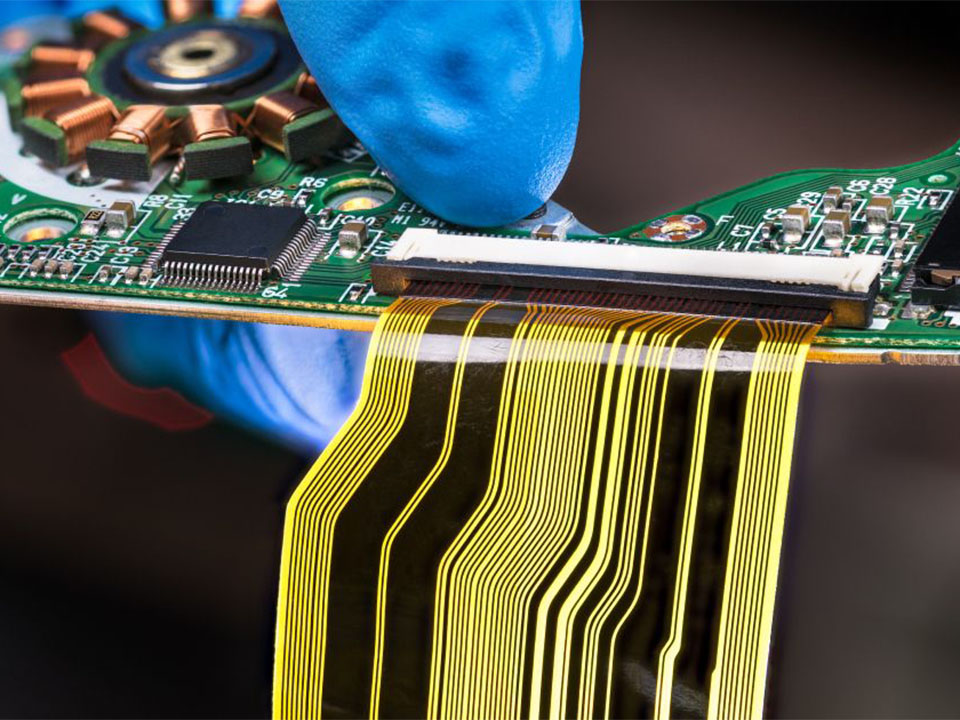
Rigid-flex replaces this whole chain:
Board A + connector
Flex cable or wire harness
Board B + connector
Alignment + insertion + locking + inspection
…and turns it into one integrated unit. That shift hits multiple pain points at once: Z-height, assembly time, kitting, and reliability.
If you want to see the manufacturing scope behind this kind of build, browse our capabilities and advanced PCB services to line up process reality with your design intent.
Connector reliability: vibration, motion, and intermittent faults
Connectors don’t usually fail in a clean lab. They fail in the real world: vibration, shock, thermal cycling, and repeated service.
Typical failure patterns you’ll hear from FA reports:
Intermittent open (the worst kind: passes test, fails at customer site)
Bent pin / half-insert during assembly or rework
Loose latch after shipping vibration
Rigid-flex can’t magically fix bad design, but it can remove one of the highest-risk nodes: the connector interface. If your product lives in industrial cabinets, vehicles, robots, or anything that shakes, rigid-flex starts looking less like a premium and more like cheap insurance.
Connectors eat Z-height. Then they push you into a bigger enclosure, a taller stack, or awkward cable routing. That’s how a “simple connector” becomes a mechanical redesign.
Rigid-flex helps when you need:
Folded geometry to match a housing
Clean clearance around batteries, cameras, or motors
A slimmer Z-stack without “connector towers”
This shows up a lot in handheld devices, wearables, smart displays, and compact control modules. If your mechanical team keeps saying “we’re out of space,” rigid-flex is often the straightest line to a stable layout.
Assembly throughput and operator error
On a busy SMT+assembly line, connectors are where mistakes hide.
You’ll see:
Wrong mating (same pitch, wrong keying)
Incomplete seating
Cable twist or strain that fails later
Extra inspection steps because the risk is known
Rigid-flex cuts the number of touch points. Fewer touch points usually means better first-pass yield (FPY) and less rework traffic.
If you build turnkey or need consistent line behavior across batches, align your design with your assembly flow early. Our PCB assembly capability is built around that “design → line → test” loop .
BOM count, sourcing, and line-side kitting
Connectors don’t just cost money. They cost attention:
extra part numbers
extra POs
extra incoming inspection
extra line-side inventory and kitting
If you’ve ever had a build stop because a single connector variant went out of stock, you already know the pain. Rigid-flex can simplify the BOM and reduce “small parts chaos.”
This matters a lot for OEM/ODM programs, wholesalers, and contract builds where you want fewer surprises during volume ramp.
Test strategy: ICT, functional test, and rework loops
With connectors and cables, you often end up testing in stages:
test board A
test board B
plug everything together
test again
debug the “no fault found” units when the intermittent shows up
Rigid-flex doesn’t remove the need for testing, but it can reduce the number of test handoffs and connector-related intermittents. That usually makes your debug loop shorter and your test coverage cleaner.
If your quality gate is strict (medical, automotive, industrial), bring QA into the design decision. Our quality expectations match that “build it right and prove it” mindset .
Manufacturing factors that drive rigid-flex cost
Rigid-flex costs more because it takes more control to build consistently. The premium usually comes from materials + process complexity, not because anyone wants to overcharge you.
Adhesiveless polyimide, no-flow prepreg, and controlled lamination
Rigid-flex often uses flex materials that behave differently from standard rigid laminates. Then you add controlled lamination steps, coverlay handling, and bend-area protection. Small process slips here can cause:
delamination risk
cracked copper in dynamic bends
resin squeeze into flex areas
impedance drift in sensitive routes
That’s why rigid-flex works best when you run it with strong DFM rules and stable fabrication control. If you’re also doing flex-only designs, compare with custom FPC flexible PCB to pick the simplest structure that meets the job.
Decision table: rigid-flex PCB vs connectors
Decision driver (keyword)
What to check in your product
Why it matters on the line
Internal reference
Vibration / motion
Shock, vibration, repeated service cycles
Connectors invite intermittents; rigid-flex removes one failure node
Total cost checklist: what to count (no numbers, just the levers)
Cost bucket (keyword)
Flex + connectors tends to add
Rigid-flex tends to reduce
Why buyers care
Parts & kitting
connector SKUs, cable SKUs, hardware
fewer line-side parts
fewer shortages and fewer “wrong part” incidents
Assembly labor
plug + route + strain-relief steps
drop-in integrated assembly
shorter cycle time and simpler training
Inspection
extra checks at plug points
fewer “human-error hotspots”
faster QA flow without blind spots
Testing & debug
more stages, more intermittents
fewer interconnect variables
fewer NFF loops and faster triage
Field failures
wear, fretting, half-insert
fewer mating interfaces
lower RMA pain and better brand trust
Practical scenarios: when rigid-flex wins, when connectors win
Foldables, hinges, and tight mechanical packaging
If the product folds, rotates, or snakes through a tight chassis, rigid-flex usually wins. The flex section becomes part of the mechanical plan, not an afterthought. That’s where you stop fighting with cable routing and start shipping stable builds.
A good visual match is the rigid-flex direction shown on our foldable circuits page .
Connector-rich control boards in industrial cabinets
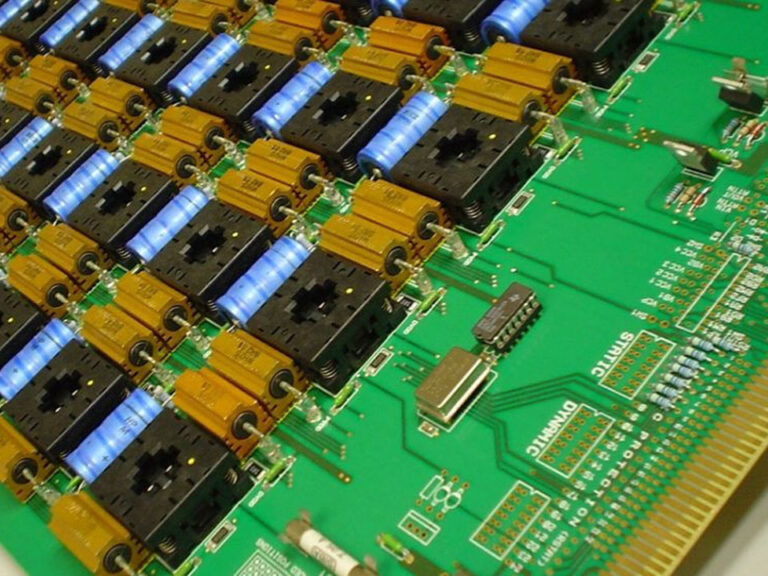
Sometimes connectors are the point. Think I/O-heavy control boards: terminal blocks, ports, serviceable modules, swappable daughtercards. In those setups, connectors keep things modular and field-friendly.
If your layout already depends on many connectors, it can still make sense to stay with connectors and optimize assembly + test around it. This product-style example fits that world: connector-rich layout control PCB .
Early prototypes and fast design iteration
During early revs, connectors can be your friend. They let you swap modules, isolate problems, and iterate faster. Once your architecture stabilizes and you care more about FPY, assembly speed, and field reliability, rigid-flex becomes the “production-ready” move.
If you need quick-turn samples before committing, start from a prototyping-friendly flow on the homepage: fast prototyping, reliable assembly .
How to decide fast (the buyer’s shortcut)
Rigid-flex usually justifies the premium when at least two of these are true:
You fight vibration/motion reliability.
You’re out of Z-height or routing space.
Your assembly has too many manual touch points.
Your BOM/kitting keeps causing line headaches.
Your test/debug loop gets messy because of interconnects.
If you only have one of them, connectors may still be the simpler, safer route.
When you’re ready to sanity-check your stackup, bend zones, and assembly plan, map your requirements to our capabilities and PCB assembly scope first . That small step saves a lot of back-and-forth once the project hits volume.
If you want, share your scenario in one line (product type, connector count, motion/vibration, target volume band). I’ll turn it into a tighter “rigid-flex vs connectors” recommendation using the tables above, in the same tone and format.
MC PCB.,Ltd, alongside Dongguan MaoChang Printed Circuit Board Limited,has focused on PCB manufacturing over 20 years. MaoChang Printed Circuit Board Limited, a professional PCB factory for Quick Turn PCB, Prototype PCB and High Mix Low Volume fabrication. With UL certification for Rigid FR-4 / High Frequency / Aluminum Based PCB production.
Company
About
Contact
Capabilities
Services
Application
Products
Quality
Blog
Products
Printed Circuit Boards
PCB Prototype
Flexible PCB
High Frequency PCB
Thick-Copper PCB
PCB Assembly
Metal core PCB
Thick-Copper PCB
Contact
0755-2889 4567
Room 1803, lA Building, Longwan, Nanhuai Road, Shajing, Bao'an District,Shenzhen City
No. 2, Lane 11, Wenming Road, Fourth Industrial Zone, Nanzha, Humen Town, Dongguan City