One-Stop PCB Factory: Prototype to Mass Production
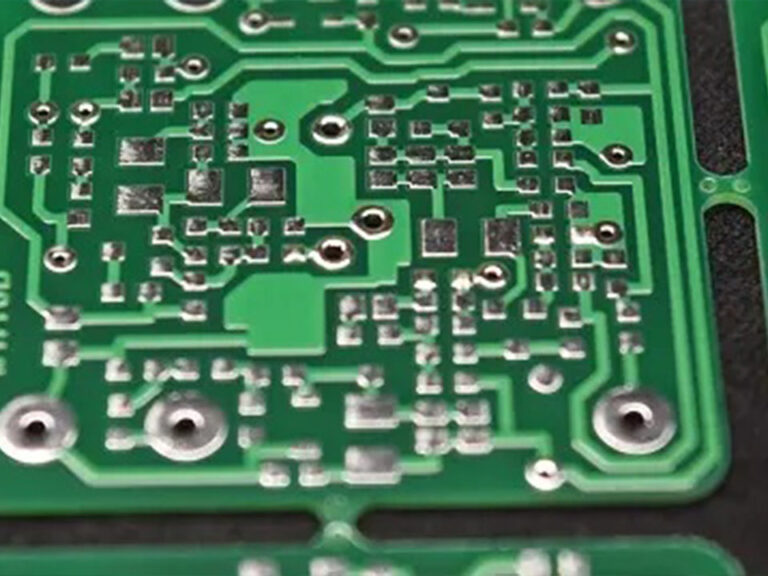
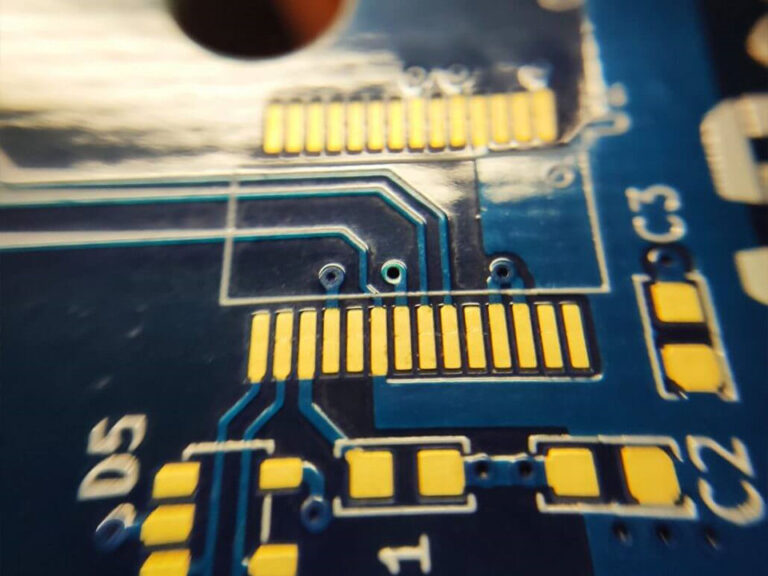
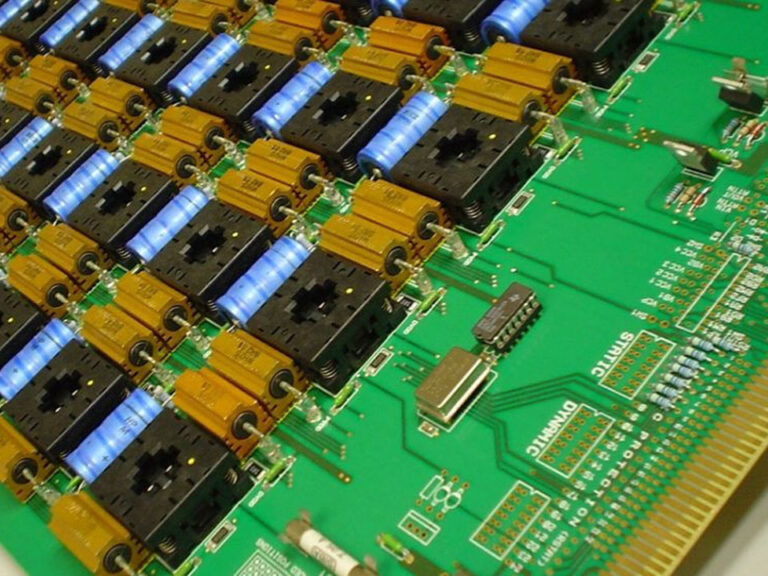
For hardware startups and OEMs, getting high-quality PCBs quickly and reliably is critical. MC PCB is a one-stop contract PCB manufacturer supporting prototypes to volume builds—backed by experienced engineering support and rigorous QA.
MC PCB Co., Ltd.
Began in 2005
One-Stop PCB Factory: Prototype to Mass Production
For hardware startups and OEMs, getting high-quality PCBs quickly and reliably is critical. MC PCB is a one-stop contract PCB manufacturer supporting prototypes to volume builds—backed by experienced engineering support and rigorous QA.
MC PCB Co., Ltd.
Began in 2005
No. 2, Lane 11, Wenming Road, Fourth Industrial Zone, Nanzha, Humen Town, Dongguan City
What’s the best way to reduce PCB fabrication costs for prototype orders of 100-500 units?
Cut PCB prototype costs at 100–500 units with standard specs, fewer layers, smart panelization, simpler drills, and assembly-ready files that speed quoting.
If you’re building 100–500 boards, you’re in a weird middle zone. You’re past the “one-off lab sample” stage, but you’re not at real mass production yet. That’s exactly where cost can swing hard—mostly because factories still see a lot of setup work, line changeover, and yield risk.
The best approach is simple: make your prototype run behave like a small production run. That means you standardize specs, avoid special processes, and design for smooth fabrication + assembly flow. If you do that, the quote usually drops without you begging for discounts.
If you’re sourcing from a China PCB B2B factory that supports fast prototyping, reliable assembly, and worldwide delivery (like what we focus on), you’ll get the most benefit when your data package is clean and your stack-up is practical. Internal links in this post come from our site structure.
Here’s the playbook.
Choose standard lead time
Rushed boards cost more because the factory has to jump your job ahead of others, shuffle production, and take on extra risk.
What to do instead:
Plan your prototype build like a pilot run. If you need speed, speed up your internal review, not the factory schedule.
Lock your Gerbers once. Re-spins inside the same week kill savings.
Layer count is one of the biggest cost drivers. Every added layer means more lamination steps, more drilling complexity, and more chances to lose yield.
Practical moves:
Don’t jump from 2L to 4L “just to be safe.” First ask: do you really need the extra planes?
If EMI is the problem, try smarter return paths, stitching vias, and ground strategy before adding layers.
If you must go multilayer, keep the stack-up standard and avoid exotic builds unless the design truly demands it.
A real-world scene:
Startup gateway board (Wi-Fi + MCU): teams often push 6 layers early because routing feels tight. In many cases, a cleaned-up placement + via strategy gets it back to 4 layers without performance loss.
For advanced builds (HDI, rigid-flex, RF), see: Advanced PCB
Control board size and panel utilization
Board size looks obvious, but the bigger issue is panel utilization. Two designs with the same single-board dimensions can price very differently if one panels cleanly and the other wastes material.
What works well:
Use a shape that nests nicely on a standard panel.
Keep edges clear for rails, tooling holes, and fiducials if you plan to assemble.
Avoid “cute outlines” unless the product requires it.
Keep the outline simple and avoid internal slots
CNC routing time adds up fast on 100–500 units, especially if you add internal cutouts, complex curves, or lots of edge features.
Do this:
Use a clean rectangle when you can.
If you need cutouts for connectors or shielding, keep them minimal and consistent.
Put mechanical requirements in a clear drawing so DFM can catch risks early.
A real-world scene:
Industrial controller boards often include multiple internal slots for terminal blocks and brackets. If you redesign the enclosure to reduce slots, you usually lower risk and shorten fabrication time.
Use panelization for 100–500 units
Panelization isn’t just for big production. At 100–500, it can be the difference between “constant line stops” and “smooth assembly.”
What to align with your supplier:
Ask the factory for a recommended panel based on their process.
Add breakaway tabs and mouse-bites only where needed.
Keep panel rails wide enough for SMT conveyors and tooling.
Drilling is a major time sink. Lots of holes, many different hole sizes, and very small drills all increase cycle time and tool wear.
Cost-friendly habits:
Standardize via sizes where possible.
Don’t sprinkle vias everywhere “just in case.” Place them with intent.
Avoid tiny mechanical holes unless the design truly needs them.
A real-world scene:
Design house doing an EVT run: you often see multiple via sizes because different engineers touched different blocks. A quick via-size cleanup before release can reduce complexity without changing function.
Avoid tight tolerances and impedance control unless required
Many quotes jump because the file package quietly forces extra control steps:
Very tight trace/space
Very tight finished thickness tolerance
Controlled impedance without clear targets
HDI features when a standard build would work
How to stay sane:
Only call out controlled impedance when your signal integrity budget actually needs it.
If you need impedance, define the target clearly and keep the stack-up stable.
Don’t write “tight tolerance everywhere.” Specify only the areas that matter.
If you’re not sure what your board can handle, check: Capabilities
Choose surface finish wisely (HASL vs ENIG)
Surface finish is one of those “small lines” on the quote that can quietly grow.
Rule of thumb:
Choose the simplest finish that meets your assembly needs.
Go for flatter finishes when you truly need fine-pitch performance or special reliability requirements.
A real-world scene:
Wearable board with fine-pitch parts: you might need a flatter finish for consistent soldering.
Basic control board: a simpler finish often works perfectly and keeps the build straightforward.
Design for assembly: single-side placement, common packages, clean BOM
For 100–500 units, assembly can cost as much as fabrication, sometimes more. The fastest way to burn money is to create avoidable manual work.
DFM habits that pay off:
Keep most SMT parts on one side if possible.
Use common footprints and avoid rare packages unless required.
Provide a clean BOM with manufacturer part numbers, alternates, and clear polarity notes.
Don’t forget assembly drawings and pick-and-place.
When you need strong QC and stable output, see: Quality control
Treat setup and NRE as the main enemy: don’t split the batch
In 100–500, you often pay more per unit because the factory still must do:
CAM engineering
Tooling and programming
Line setup and first-article checks
Stencil prep (for SMT)
Material staging
So don’t split your order into many micro-runs unless you have a clear reason. A single, well-planned batch usually wins.
A real-world scene:
OEM moving from EVT to DVT: teams often do 50 now, 50 later, then 100 later. If the design is stable, one consolidated run cuts repeated setup pain and keeps the line flowing.
If you want to align specs early, our custom prototype PCB service is built for that pilot-to-production bridge.
Cost-lever checklist (no math, just what moves the quote)
Cost lever (argument title)
What to change for 100–500
What it reduces
Typical pitfall
Choose standard lead time
Use standard schedule, lock files once
Priority fees, rescheduling risk
“Rush” to cover internal delays
Reduce layer count
Keep layers minimal, use standard stack-up
Lamination steps, yield risk
Adding layers instead of fixing placement
Control board size and panel utilization
Design for clean panel nesting
Material waste, handling time
Odd shapes that waste panel area
Keep the outline simple and avoid internal slots
Simplify routing and cutouts
CNC routing time
Too many internal slots
Use panelization for 100–500 units
Let factory propose panel
Changeover time, assembly throughput
DIY panels that don’t fit SMT process
Reduce drill count and avoid tiny holes
Fewer holes, fewer drill sizes
Drill cycle time
Many via sizes across blocks
Avoid tight tolerances and impedance control unless required
Specify only where needed
Extra control steps
Blanket “tight tolerance” notes
Choose surface finish wisely (HASL vs ENIG)
Use finish that matches pitch and reliability
Process complexity
Over-spec finish “just in case”
Design for assembly: single-side placement, common packages, clean BOM
Build for SMT efficiency
Manual labor, rework
Missing alternates and unclear polarity
Treat setup and NRE as the main enemy: don’t split the batch
Consolidate build when design is stable
Repeated setup and line stops
Multiple small runs for the same revision
Practical request package: what you should send to get a cheaper, cleaner quote
If you want pricing that makes sense and doesn’t come back with surprise add-ons, send:
Gerber + drill files (or ODB++)
Stack-up intent (or let the factory propose standard options)
BOM with alternates (AVL-friendly)
Pick-and-place + assembly drawing (if assembling)
Clear notes: finish, thickness, copper weight, impedance only if needed
Expected quantity: 100 / 250 / 500 tiers (so the factory can quote smart)
When you’re ready to run it, message us here: Contact us
If you want, I can also rewrite this into a tighter “procurement-style” version for OEM/EMS buyers, with a one-page checklist your sales team can reuse.
MC PCB.,Ltd, alongside Dongguan MaoChang Printed Circuit Board Limited,has focused on PCB manufacturing over 20 years. MaoChang Printed Circuit Board Limited, a professional PCB factory for Quick Turn PCB, Prototype PCB and High Mix Low Volume fabrication. With UL certification for Rigid FR-4 / High Frequency / Aluminum Based PCB production.
Company
About
Contact
Capabilities
Services
Application
Products
Quality
Blog
Products
Printed Circuit Boards
PCB Prototype
Flexible PCB
High Frequency PCB
Thick-Copper PCB
PCB Assembly
Metal core PCB
Thick-Copper PCB
Contact
0755-2889 4567
Room 1803, lA Building, Longwan, Nanhuai Road, Shajing, Bao'an District,Shenzhen City
No. 2, Lane 11, Wenming Road, Fourth Industrial Zone, Nanzha, Humen Town, Dongguan City