One-Stop PCB Factory: Prototype to Mass Production
For hardware startups and OEMs, getting high-quality PCBs quickly and reliably is critical. MC PCB is a one-stop contract PCB manufacturer supporting prototypes to volume builds—backed by experienced engineering support and rigorous QA.
MC PCB Co., Ltd.
Began in 2005
One-Stop PCB Factory: Prototype to Mass Production
For hardware startups and OEMs, getting high-quality PCBs quickly and reliably is critical. MC PCB is a one-stop contract PCB manufacturer supporting prototypes to volume builds—backed by experienced engineering support and rigorous QA.
MC PCB Co., Ltd.
Began in 2005
No. 2, Lane 11, Wenming Road, Fourth Industrial Zone, Nanzha, Humen Town, Dongguan City
How many prototype iterations should I plan for before going to production?
Plan prototype PCB iterations by complexity, set production readiness criteria, bring DFM early, and use pilot builds to de-risk assembly, yield, and ramp.
If you’re building hardware, you’ve probably asked the question the same way everyone does: “How many prototype spins until we’re ready?” Here’s the blunt truth: the right number isn’t a magic constant. It depends on complexity, risk, and how fast you can close the loop between design, build, test, and DFM feedback.
This guide keeps it practical for OEMs, EMS teams, design houses, labs, and startups who need fast prototyping, reliable PCB assembly, and a clean path to mass production—the exact workflow we support on our site (home page).
Prototype iterations by design complexity
Most teams plan too optimistically and then get hit by the first “re-spin tax”: impedance surprises, EMI noise, thermal issues, or assembly defects that only show up on real boards. A better way is to budget by complexity.
Design complexity
Typical prototype iterations (plan range)
What usually breaks first
What you should validate in each loop
Simple (2-layer, low-speed, wide pitch)
1–2
Connector pinout, power rails, silkscreen mistakes
If you can’t explain your top 3 unknowns, you’re not ready to promise “one spin.”
If you’re doing impedance control + BGA + tight mechanical stack, plan extra loops. Those risks don’t negotiate.
If you want a faster loop, build your quoting and manufacturing plan around services like quick-turn PCB fabrication and rapid assembly. Start here: PCB fabrication services and PCB assembly services.
Production readiness criteria
Don’t decide “we’re ready” because you ran out of patience. Decide it because your design hits production readiness criteria.
Use a checklist mindset. If you can’t tick these off, you’re still in prototype land:
Production readiness criteria
What “good” looks like
Common red flags
Test results stay stable across builds
Same pass/fail pattern on multiple units
“It works on my bench” syndrome
No critical DFM issues
Clearances, mask, drill, stackup all manufacturable
Random failures, flaky connectors, marginal margins
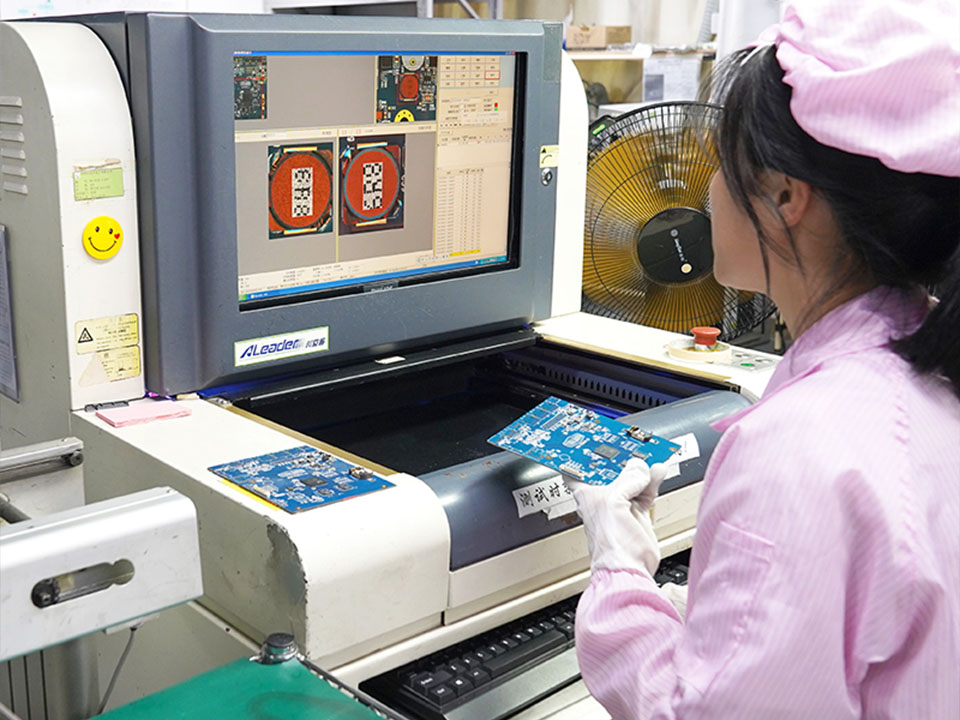
If you’re scaling beyond samples, quality gates matter. Your buyers and EMS partners will ask about inspection, traceability, and process control. Point them to your quality flow: Quality control.
Product iteration and factory learning (NPI)
Prototype iterations aren’t only about your circuit. They’re also how the factory learns to build your product without heroics.
Think in NPI terms:
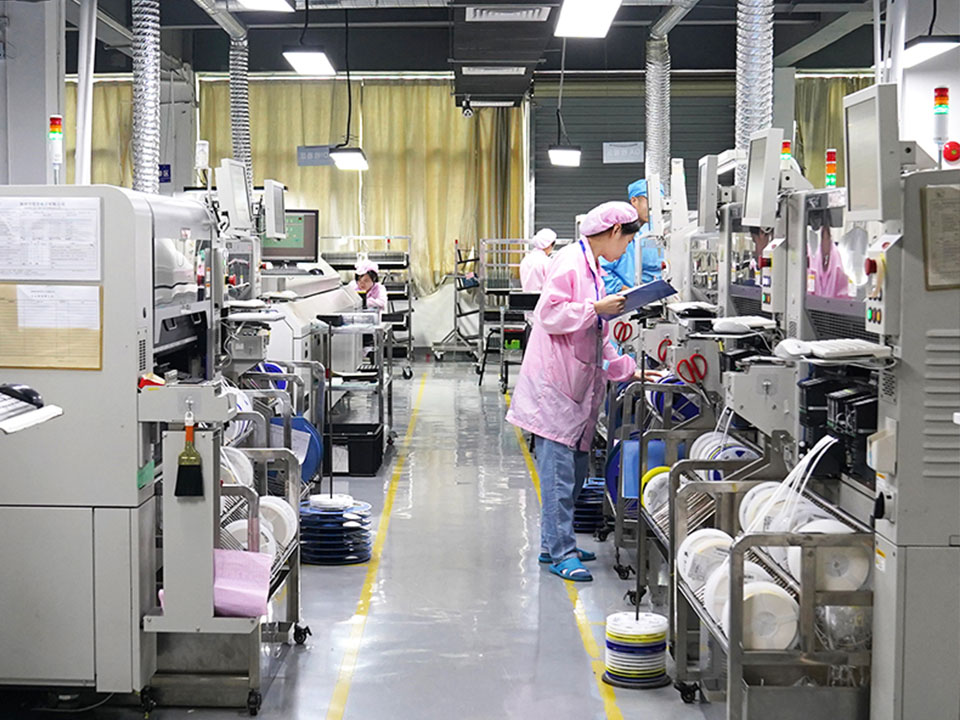
First build teaches the line how your design behaves (stencil, paste volume, reflow profile, placement constraints).
Second build should reduce rework and manual touch-ups.
Later builds lock down process windows so your yield doesn’t collapse during ramp.
If you’ve ever seen a board that “works” but can’t survive production, you’ve felt this pain:
Fine-pitch parts that barely print paste
BGAs that pass on one lot and fail on the next
Connectors that shift in reflow
Boards that warp and pop open solder joints
This is why capability alignment matters early. If your product needs HDI, tight impedance, rigid-flex, or specialty materials, check what the factory can consistently hold: Capabilities and Advanced PCB.
DFM early: design for manufacturability
DFM isn’t a “nice-to-have.” It’s how you avoid expensive re-spins caused by issues that were predictable.
Bring DFM into the loop before you place your first order:
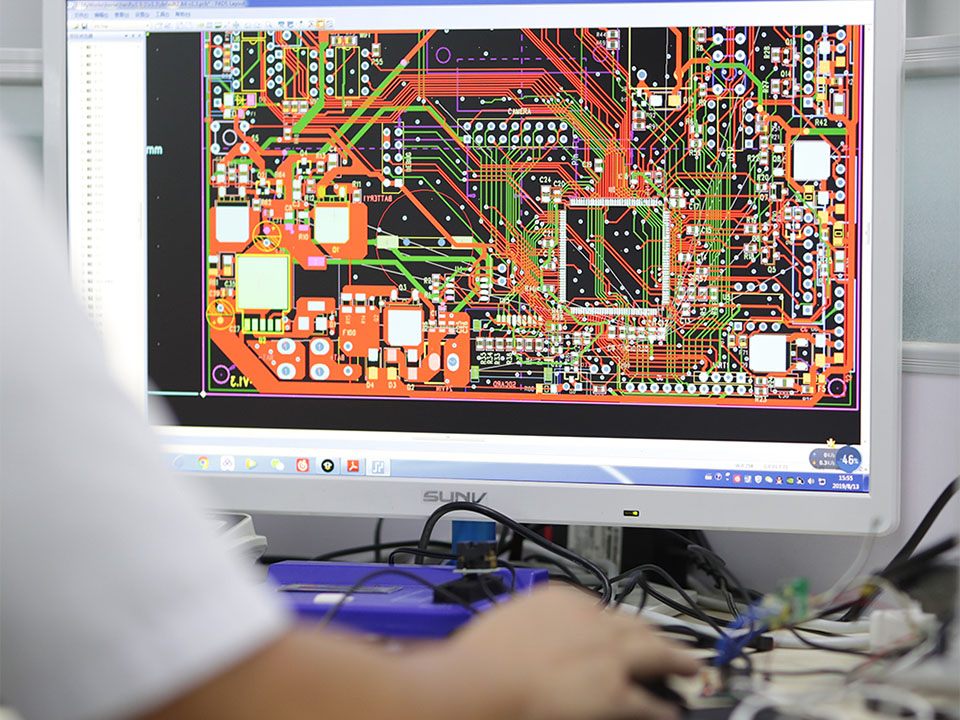
Confirm stackup matches your speed targets (and the shop can actually build it)
Lock impedance targets and reference planes early
Watch annular ring, solder mask clearance, and via tenting rules
Plan panelization and fiducials so assembly doesn’t turn into a hand-made craft project
Add test hooks for DFT (don’t wait until you need ICT)
If your customer is an OEM or brand owner, they’ll also care about consistency. DFM early makes your later compliance and reliability story easier.
For real-world examples across industries (industrial control, consumer devices, LED, RF), browse: Applications.
DFM questions that save you a full re-spin
Ask these before you hit “release”:
Can we assemble this without special handling, glue, or manual rework?
Does this layout need via-in-pad, and if yes, are we filling/capping correctly?
Are we depending on a super-tight solder mask dam that’s likely to break?
Do we have enough margin on power, thermal, and EMI, or are we living on the edge?
If any answer feels shaky, you just discovered why you should plan another iteration.
Prototype materials and processes vs production
A common trap: the prototype “proves the idea,” but it doesn’t prove production.
In early builds, teams often use substitutions:
Different materials
Different finish
Different assembly process assumptions
Hand-soldered patches that don’t scale
That’s fine for quick learning. But before production, you need at least one build that’s close to the real thing:
Same stackup intent
Same assembly flow
Same critical parts and footprints
Same test strategy
If you’re running controlled impedance, RF, or high-speed digital, don’t treat stackup as a suggestion. Lock it down once your measurements match your expectations.
Pre-series and low-volume build before mass production
You don’t have to jump from “prototype” straight into “big volume.” Many B2B programs do a pre-series build to de-risk ramp:
Pilot build to catch process limits
Field samples to gather real user feedback
Early production lots to stabilize yields and test coverage
This step matters even more if you sell to distributors or support spare parts and maintenance. Your after-sales team will thank you when failure modes don’t surprise them later.
If you want to map the whole flow—from sample runs to volume—your buyers can review your full offering here: Services and Products.
Practical scenarios: how iteration counts change in the real world
Here are a few common scenes that change the number of loops you should plan:
Scenario: Industrial control board with lots of connectors
You’ll often spend extra cycles on:
Mechanical fit and harness routing
Noise coupling from relays or motors
Connector alignment and strain relief Plan more spins if field wiring varies across customers.
Scenario: IoT gateway board with RF + modem
RF tuning, antenna layout, and ground strategy can force additional iterations. A “working” radio link on the bench might fail in the enclosure. Expect more loops if you change the housing late.
Scenario: LED or power board with thermal constraints
Thermal is unforgiving. A small change in copper balance or layout can shift temps and reliability. If you’re on MCPCB or heavy copper, build in extra validation.
A clean way to plan your iteration roadmap
If you want a simple plan that works across OEM/ODM and wholesale programs:
Iteration 1 (bring-up): prove power rails, programming, core function
Iteration 3 (reliability + repeatability): lock stackup intent, tighten test plan
Pre-series (pilot): prove yield trend and build consistency before ramp
You might stop earlier on simple designs. You might go longer on HDI, RF, or anything with tight mechanical integration. Either way, plan around risk, not wishful thinking.
If you want to speed up the loop or align prototyping with volume from day one, use a manufacturer that can support both fast builds and stable scale-up. When you’re ready to share files and targets, reach out here: Contact us.
If you want, tell me what you’re building (layer count, key IC packages, any RF/impedance, and your target volume band). I’ll suggest a realistic iteration range and the top DFM checks that usually prevent the next re-spin.
MC PCB.,Ltd, alongside Dongguan MaoChang Printed Circuit Board Limited,has focused on PCB manufacturing over 20 years. MaoChang Printed Circuit Board Limited, a professional PCB factory for Quick Turn PCB, Prototype PCB and High Mix Low Volume fabrication. With UL certification for Rigid FR-4 / High Frequency / Aluminum Based PCB production.
Company
About
Contact
Capabilities
Services
Application
Products
Quality
Blog
Products
Printed Circuit Boards
PCB Prototype
Flexible PCB
High Frequency PCB
Thick-Copper PCB
PCB Assembly
Metal core PCB
Thick-Copper PCB
Contact
0755-2889 4567
Room 1803, lA Building, Longwan, Nanhuai Road, Shajing, Bao'an District,Shenzhen City
No. 2, Lane 11, Wenming Road, Fourth Industrial Zone, Nanzha, Humen Town, Dongguan City