One-Stop PCB Factory: Prototype to Mass Production
For hardware startups and OEMs, getting high-quality PCBs quickly and reliably is critical. MC PCB is a one-stop contract PCB manufacturer supporting prototypes to volume builds—backed by experienced engineering support and rigorous QA.
MC PCB Co., Ltd.
Began in 2005
One-Stop PCB Factory: Prototype to Mass Production
For hardware startups and OEMs, getting high-quality PCBs quickly and reliably is critical. MC PCB is a one-stop contract PCB manufacturer supporting prototypes to volume builds—backed by experienced engineering support and rigorous QA.
MC PCB Co., Ltd.
Began in 2005
No. 2, Lane 11, Wenming Road, Fourth Industrial Zone, Nanzha, Humen Town, Dongguan City
High-power LEDs don’t usually die from bad soldering. They die from heat that never gets out. If your junction temperature keeps creeping up, you’ll see the same ugly stuff: lumen drop, color shift, early failures, and customer returns that hit like a boomerang.
So, when you’re picking an MCPCB (metal-core PCB), the big question shows up fast: aluminum core or copper core?
If you’re sourcing from a B2B manufacturer like China PCB B2B factory: fast prototyping, reliable assembly, you’ll probably want an answer that’s practical, not textbook. Let’s break it down with real production scenarios, a few hard numbers, and the same decision points OEMs and EMS teams use every week.
High-power LED thermal management
In a high-power LED stack-up, heat takes a short trip and then hits traffic:
LED junction → solder → copper circuit layer
copper layer → dielectric (insulating) layer
dielectric → metal core (aluminum or copper)
core → TIM → heat sink / housing
Most “my LED runs hot” cases aren’t about the metal core alone. They’re about the whole thermal path and where the thermal bottleneck sits.
Insulated Metal Substrate (IMS) and MCPCB basics
Most LED metal-core boards are IMS (Insulated Metal Substrate):
Copper foil on top for traces/pads
Dielectric layer for electrical isolation + heat transfer
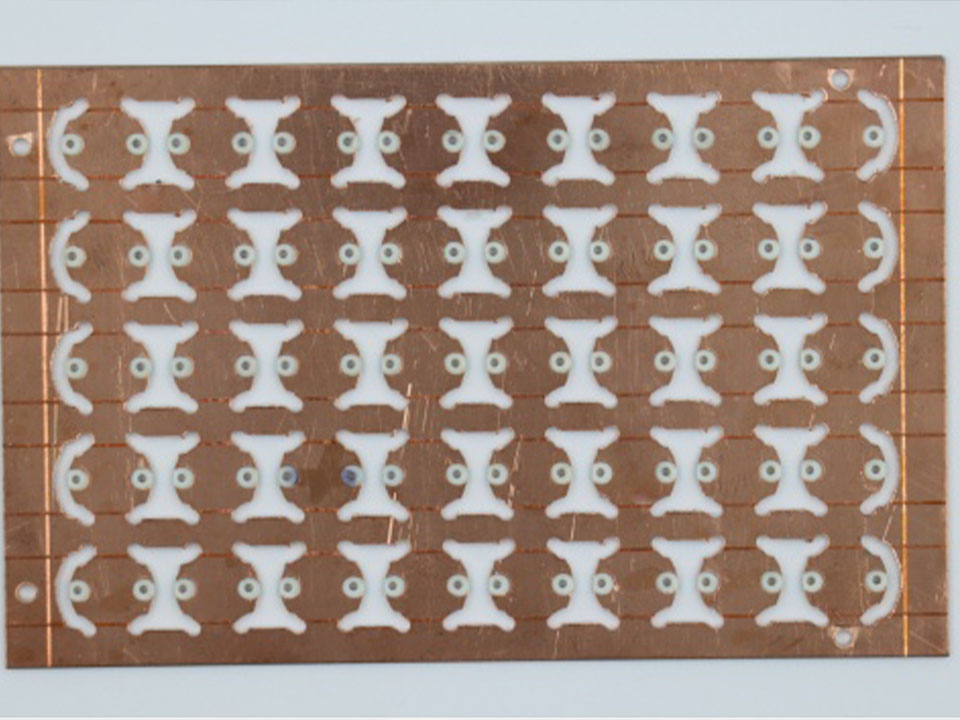
Metal core (aluminum or copper) for spreading heat
If you’re new to metal-core options, start from the product side first. Browse the board families under Products and you’ll see how vendors position aluminum MCPCB for mainstream lighting and higher-spec builds for tougher jobs.
Aluminum core MCPCB
Aluminum-core MCPCB is the default choice in a lot of lighting builds because it balances performance, supply chain stability, and manufacturing flow.
You’ll see it everywhere: bulbs, panels, downlights, strips, grow lights, and compact housings where airflow is limited.
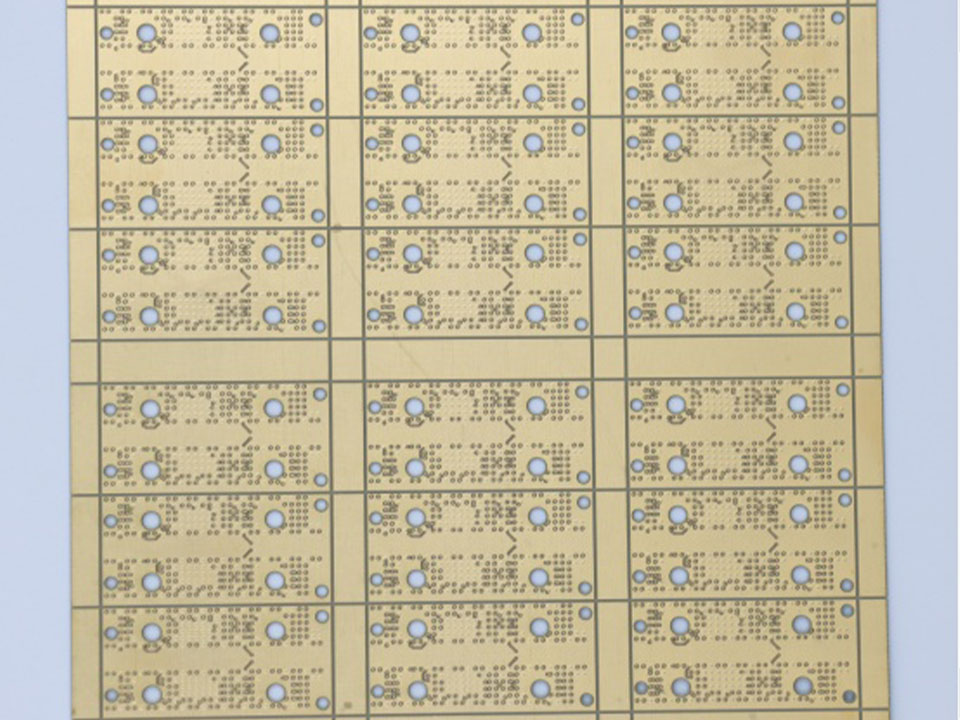
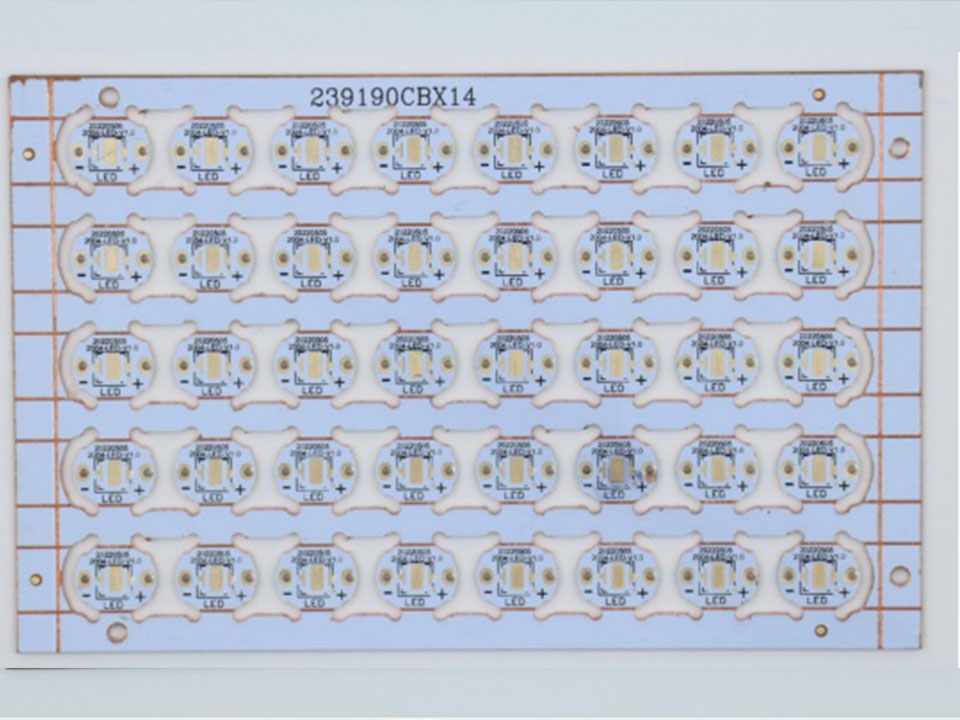
A good example of a typical production-ready layout is a multi-up LED panel like Aluminum LED SMT Panel PCB Board Module B2B OEM Supplier. Panelization matters more than people think. It drives reflow consistency, placement speed, handling damage, and yield.
Aluminum core is cost-friendly and scalable
If you’re running pilot → ramp → mass production, aluminum MCPCB usually keeps things smoother:
Easier sourcing at volume
More forgiving machining and routing in many factories
Lighter boards for shipping and mechanical integration
Good enough thermal spreading for many watt-class modules
If you mainly care about stable brightness and fewer early failures in normal power density designs, aluminum can do the job without forcing a complicated build.
Aluminum core fits common LED lighting scenes
Here are the scenes where aluminum tends to fit well:
Compact indoor luminaires where you still have a decent heat sink
Medium-power boards where your thermal budget isn’t razor-thin
Multi-up panels for fast SMT and consistent reflow
Designs that need tight delivery schedules and predictable QA flow
If your use case is automotive lighting with aluminum MCPCB, the mechanical detail usually tightens up fast. You’ll want clean routing, repeatable unit arrays, and stable thermal behavior. That’s exactly the kind of build you see in B2B OEM Aluminum MCPCB Panel For Automotive LED Lighting.
Copper core MCPCB
Copper-core MCPCB shows up when the heat is savage, the margin is thin, or reliability requirements are strict. It’s not “always better.” It’s more capable when you actually need it.
Copper thermal conductivity vs aluminum thermal conductivity
Here are typical thermal conductivity values engineers use as a baseline:
Material (core)
Typical thermal conductivity (W/m·K)
What you’ll feel in real builds
Aluminum
~205
Solid heat spreading for many LED modules
Copper
~385
Faster heat spreading, lower hot-spot risk
Copper spreads heat faster. That can reduce peak temperature near the LED and buy you extra reliability margin. In high-power builds, that margin often decides whether you pass a thermal soak test or fail it on day one.
Copper is heavier and harder to process
Copper-core boards usually bring trade-offs:
Heavier boards (watch your mechanical design and shipping constraints)
More demanding machining and process control
More sensitive to warpage risk if stack-up and copper balance aren’t handled well
You don’t pick copper because it sounds premium. You pick it because your thermal budget is already screaming.
Dielectric layer thermal resistance is the bottleneck
Here’s the part many teams miss: in IMS, the dielectric layer often dominates thermal resistance.
So you can pay for a copper core, then lose most of the benefit if your dielectric is thick, low-k, or poorly controlled in production. That’s why strong suppliers talk about the whole stack-up, not just “core material.”
If you want a quick sanity check, ask your vendor what dielectric options they support and how they control thickness and voiding. Then tie it to manufacturing and inspection through a service flow like PCB Fabrication and PCB Assembly, because a great stack-up on paper still fails if the process window is sloppy.
Coefficient of Thermal Expansion (CTE) and reliability
High-power LED boards live through cycles: on/off, winter/summer, vibration, long burn-in. That means CTE mismatch turns into stress at interfaces.
Typical CTE values (room-temp ballpark):
Material
Typical CTE (ppm/°C)
Reliability takeaway
Aluminum
~23
Higher expansion can raise cyclic stress in some stacks
Copper
~16–17
Often easier to manage in tight thermal cycling specs
This doesn’t automatically crown copper as the winner. It just explains why copper-core and well-chosen dielectrics show up more often in harsher duty cycles.
Real-world decision guide for OEM and EMS teams
You don’t need a long debate. You need a fast decision that survives DFM, QA, and field life.
When aluminum core MCPCB is usually the right call
Pick aluminum core when:
You’re building mainstream LED modules and want predictable scaling
Your enclosure has a decent heat sink path
You care about fast turns, stable supply, and consistent output
Your biggest risk is schedule, not extreme junction temperature
A practical path is to start with an aluminum family like Aluminum PCB, validate thermal performance with your real housing and TIM, then upgrade only if testing forces your hand.
When copper core MCPCB earns its spot
Step up to copper core when:
Your LED density is high and the hot spot keeps failing thermal tests
You can’t add more heat sink or airflow (mechanical lock-in)
You’re chasing long-life reliability under heavy cycling
Your spec punishes color shift and lumen depreciation hard
In these builds, you’ll often pair copper core with tighter stack-up control and more advanced process options. That’s where a capability-led service route like Advanced PCB can matter, because you’re managing process risk, not just ordering boards.
High-power LED MCPCB checklist before you place the order
Before you lock aluminum or copper, run this short checklist. It saves a lot of back-and-forth later.
Confirm your junction temperature target and thermal budget
Validate the dielectric spec (thermal performance + thickness control)
Check pad design for reflow and voiding risk (voids kill thermal path)
Review panelization for SMT throughput and yield
Verify mounting holes, flatness, and mechanical fit (warpage surprises hurt)
Align inspection points with your supplier’s process flow and QA gates
If you do those steps, the “aluminum vs copper” choice becomes obvious most of the time.
Bottom line
Aluminum core fits most LED lighting builds that need solid thermal spreading, smooth manufacturing, and reliable scale-up.
Copper core is for tighter thermal budgets, higher power density, and tougher reliability demands.
In both cases, the dielectric layer and the full heat path decide whether the LED runs cool or cooks itself.
If you want to move fast, start from your enclosure and thermal target, then choose the stack-up that gives you margin without adding process drama.
MC PCB.,Ltd, alongside Dongguan MaoChang Printed Circuit Board Limited,has focused on PCB manufacturing over 20 years. MaoChang Printed Circuit Board Limited, a professional PCB factory for Quick Turn PCB, Prototype PCB and High Mix Low Volume fabrication. With UL certification for Rigid FR-4 / High Frequency / Aluminum Based PCB production.
Company
About
Contact
Capabilities
Services
Application
Products
Quality
Blog
Products
Printed Circuit Boards
PCB Prototype
Flexible PCB
High Frequency PCB
Thick-Copper PCB
PCB Assembly
Metal core PCB
Thick-Copper PCB
Contact
0755-2889 4567
Room 1803, lA Building, Longwan, Nanhuai Road, Shajing, Bao'an District,Shenzhen City
No. 2, Lane 11, Wenming Road, Fourth Industrial Zone, Nanzha, Humen Town, Dongguan City