One-Stop PCB Factory: Prototype to Mass Production
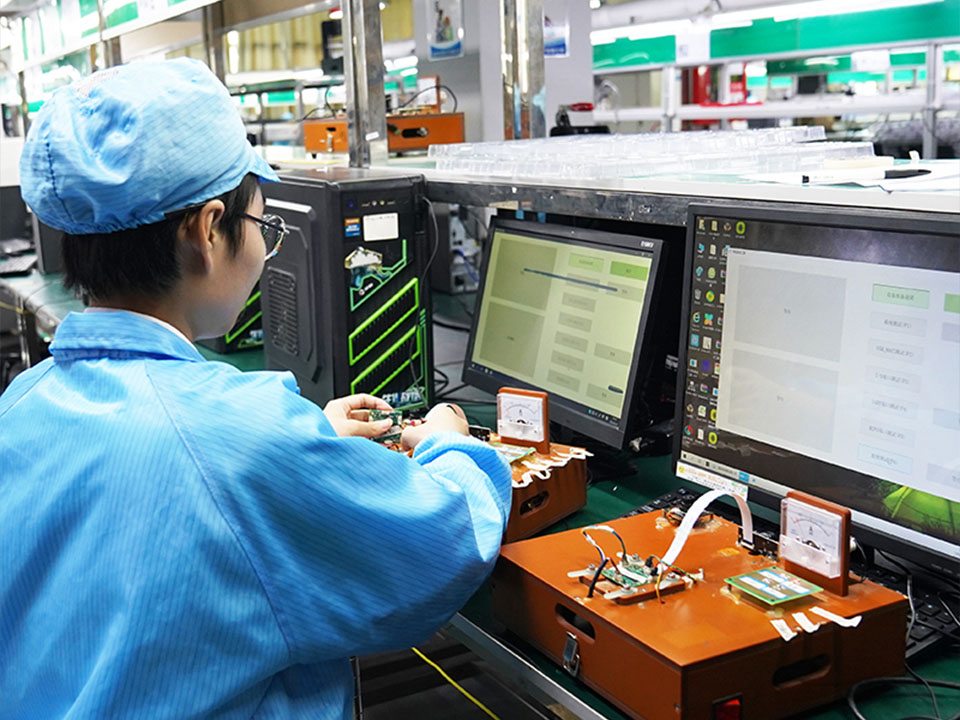
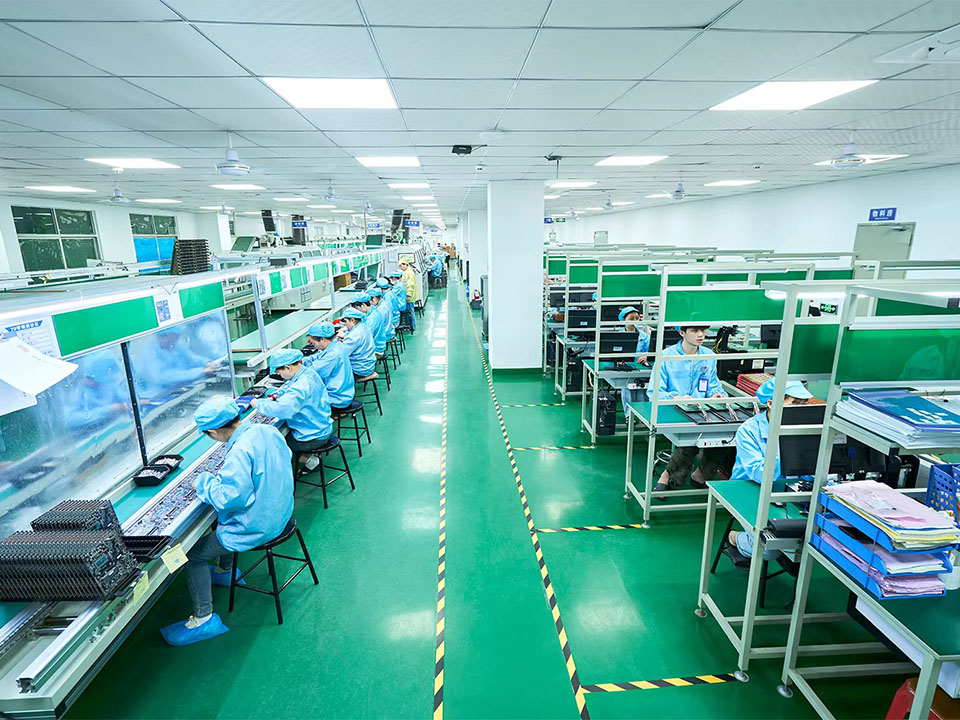
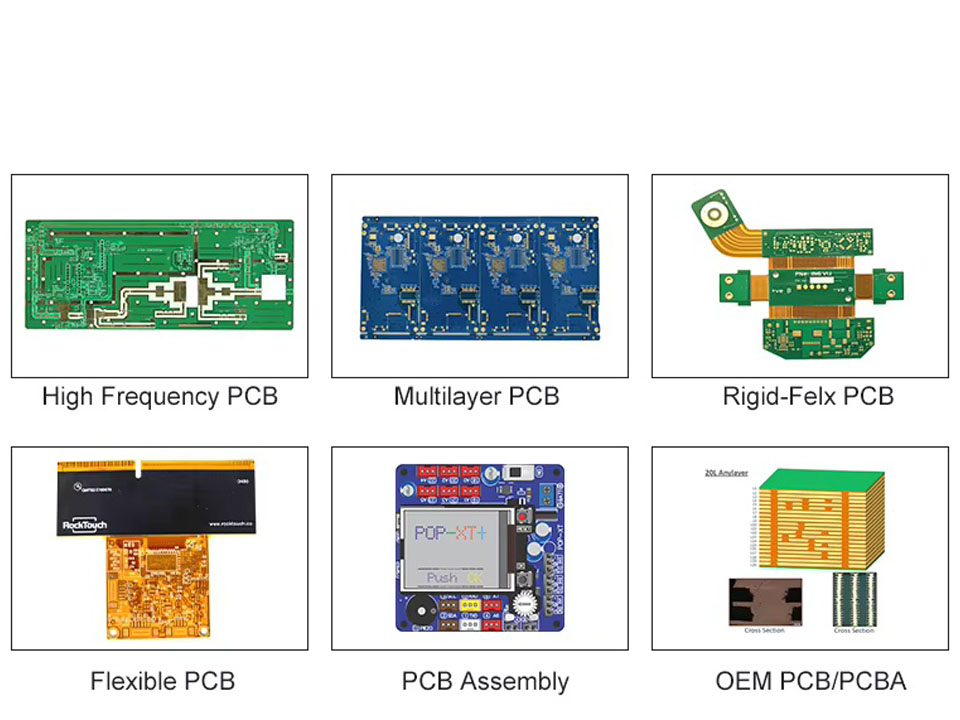
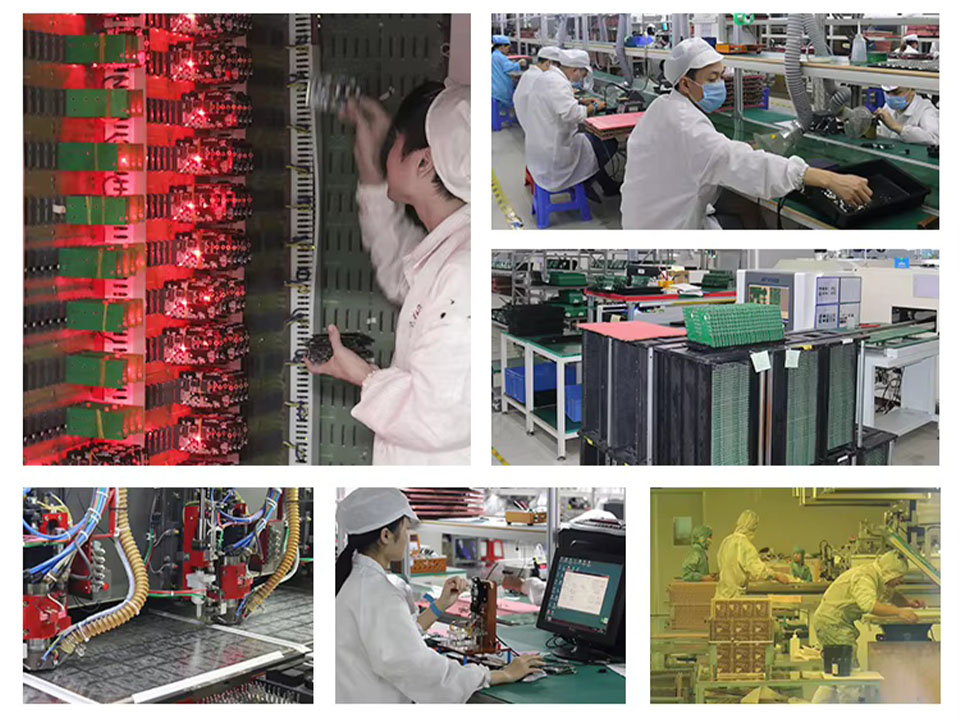
For hardware startups and OEMs, getting high-quality PCBs quickly and reliably is critical. MC PCB is a one-stop contract PCB manufacturer supporting prototypes to volume builds—backed by experienced engineering support and rigorous QA.
MC PCB Co., Ltd.
Began in 2005
One-Stop PCB Factory: Prototype to Mass Production
For hardware startups and OEMs, getting high-quality PCBs quickly and reliably is critical. MC PCB is a one-stop contract PCB manufacturer supporting prototypes to volume builds—backed by experienced engineering support and rigorous QA.
MC PCB Co., Ltd.
Began in 2005
No. 2, Lane 11, Wenming Road, Fourth Industrial Zone, Nanzha, Humen Town, Dongguan City
What’s the difference between proto-grade and production-grade PCB specifications?
Proto-grade vs production-grade PCB specs, explained in English: tolerances, IPC class, materials, QC, and when to shift from quick-turn to mass production.
If you’re buying PCBs for an OEM, EMS, design house, or a lab team, you’ve probably felt this pain: your prototype works, then the first production batch shows weird scrap, rework, or random failures. Most of the time, the root cause isn’t “bad luck.” It’s that your proto-grade PCB specifications didn’t translate into production-grade PCB specifications.
On our site, we focus on fast prototyping, mass production, and PCB assembly with strict quality control—so this topic comes up daily in RFQs and DFM calls. You can check our China PCB B2B factory homepage for the full scope of what we build.
Proto-grade PCB specifications
Proto-grade specs aim to answer one question: “Does the design work?” You want speed, quick feedback, and room to iterate. That usually means:
You keep the stackup and rules buildable instead of “perfect.”
You accept small cosmetic issues if they don’t break function.
You optimize for turn time and debug velocity.
Typical proto-grade buyers: startups, independent design studios, university labs, innovation teams, and hardware dev service shops.
Practical example: you’re spinning an IoT control board. You’d rather get boards in hand, find the noisy buck loop, and re-route. You don’t want to spend cycles locking down every tolerance like it’s a medical device launch.
If you’re in this stage, you’ll usually start with quick-turn fabrication and optional assembly. Our PCB fabrication service and PCB assembly service match that “move fast, learn fast” workflow.
Production-grade PCB specifications
Production-grade specs answer a different question: “Will every batch build the same way and survive the real world?” Now you care about:
Consistency across lots (same materials, same process window)
Clear accept/reject criteria so both sides avoid surprises
Typical production-grade buyers: OEM/brand owners, EMS/contract manufacturers, system integrators, distributors, after-sales spares, and industrial maintenance customers.
Practical example: an automotive LED board, an industrial controller, or a medical module. A field return costs way more than a slower NPI ramp. So production-grade specs put guardrails around the process.
For high-density or special structures, teams often route that work through an advanced PCB service once the design stabilizes.
PCB tolerances and manufacturability
Here’s the simple rule: tight specs squeeze the process window. That can raise rework risk, slow quoting, and make delivery harder—especially for HDI, fine pitch, and impedance-controlled designs.
Drill, plating, and annular ring
Proto-grade mindset: “Hit the nets, keep it manufacturable.” Production-grade mindset: “Control the hole wall, plating thickness, and ring so assembly and reliability stay stable.”
Where this bites people:
Via barrels crack after thermal cycling
Pads lift during rework
Fine-pitch BGAs need cleaner registration to keep escape routing sane
Solder mask and silkscreen
Proto-grade: minor mask slivers or silkscreen shifts might be acceptable if assembly still works. Production-grade: you lock down mask clearance, dam rules, and legends because AOI and pick-and-place vision systems hate ambiguity.
If your EMS runs high-speed SMT, they’ll push you to clarify these rules early. That saves you from line stops later.
IPC Class 2 vs Class 3
Even if you don’t name it in your PO, most serious factories and EMS teams think in IPC class language.
IPC Class 2 usually fits general electronics where you want solid quality without extreme screening.
IPC Class 3 targets high-reliability builds (medical, aerospace-style expectations, harsh industrial environments). It tightens defect tolerance and often drives stricter inspection discipline.
A helpful way to think about it:
Proto-grade often behaves like “Class 2-ish” expectations.
Production-grade for mission-critical products often aligns closer to “Class 3” behavior.
You don’t need to overcomplicate this. Just decide what failure would mean for your product. If a failure is “annoying,” Class 2 expectations may fit. If a failure is “unsafe,” you’ll want Class 3-style discipline.
PCB materials and stackup control
Proto-grade commonly uses standard, widely available materials and a simple stackup, because you want predictable builds and fast lead times.
Production-grade cares about repeatability:
Lock the material family (not just “FR-4”)
Control Tg, thickness tolerances, and copper distribution
Freeze the stackup once SI/PI looks clean (especially on DDR, USB, RF, or long cable runs)
If you’re doing impedance control, don’t treat stackup as “just a note.” Treat it like a contract. Your signal integrity depends on it.
You can review what we typically support on our PCB capabilities page.
Inspection and quality control
Proto-grade testing focuses on fast feedback:
Basic electrical test to catch opens/shorts
Quick checks to prevent obvious build issues
Production-grade expands the gate:
Tighter incoming checks on materials
More disciplined in-process controls
Stronger final inspection routines (think AOI-driven decisions and clearer accept/reject rules)
Better traceability for lot control and failure analysis
If you’re scaling, your biggest enemy is “unknown unknowns.” Strong QC shrinks that space. That’s why many B2B buyers care about the factory’s quality system as much as the board itself—see our quality control overview.
Quick-turn prototyping vs mass production
People treat this like a speed question. It’s really a risk question.
Proto-grade quick-turn is perfect when:
You’re still changing the schematic or layout
You want to validate footprints, thermals, and EMI fixes
You’re doing EVT-style learning
Production-grade mass production makes sense when:
The design is frozen (or close)
You’ve run at least one stable pilot
Your BOM and assembly process are under control
You want stable yield and predictable delivery
If you’re not sure where you are, here’s a good gut check: If you still say “we’ll probably move that connector,” you’re proto-grade. If you say “we need 3 months of stable output,” you’re production-grade.
Proto-grade vs production-grade PCB specifications table
Spec area
Proto-grade PCB specifications (focus)
Production-grade PCB specifications (focus)
What to write in RFQ/PO
Goal
Fast validation, iterate quickly
Consistent output, stable reliability
State “prototype” vs “mass production” explicitly
Tolerances
Keep them manufacturable
Tighten where it protects yield/reliability
Call out only the critical-to-function limits
IPC expectations
Often “Class 2-like”
Often Class 2 or Class 3, depending on risk
Specify IPC class target if needed
Stackup
Standard build, flexible
Locked stackup and controlled materials
Provide stackup, impedance targets, and constraints
Surface finish
Pick what’s easy for the build
Pick what supports storage, assembly, and field life
Specify finish and any shelf-life constraints
Inspection
Basic checks, fast gates
Stronger QC gates and clearer accept/reject
Define inspection/test requirements and reports
Change control
Frequent ECOs
Controlled ECOs and version discipline
Use revision control and approval flow
DFM checklist for RFQ
If you want fewer back-and-forth emails and fewer “surprise holds,” include these up front:
Gerbers + drill + netlist (or ODB++)
Stackup notes (or “factory standard stackup” if you truly don’t care yet)
Over-specifying is a quiet budget killer. It also slows everything down.
A better approach:
Mark what’s CTQ (critical to quality): impedance, fine-pitch BGA area, high-current copper, creepage/clearance zones
Keep everything else standard unless you have a clear reason
That keeps your supplier options wide and your yield healthy.
Want help mapping your spec to your stage?
If you tell us your product stage (EVT/DVT/PVT, pilot, or full ramp), we can translate your current notes into a clean, buildable spec set—without turning your prototype into a production monster. Use our contact page when you’re ready to share files.
MC PCB.,Ltd, alongside Dongguan MaoChang Printed Circuit Board Limited,has focused on PCB manufacturing over 20 years. MaoChang Printed Circuit Board Limited, a professional PCB factory for Quick Turn PCB, Prototype PCB and High Mix Low Volume fabrication. With UL certification for Rigid FR-4 / High Frequency / Aluminum Based PCB production.
Company
About
Contact
Capabilities
Services
Application
Products
Quality
Blog
Products
Printed Circuit Boards
PCB Prototype
Flexible PCB
High Frequency PCB
Thick-Copper PCB
PCB Assembly
Metal core PCB
Thick-Copper PCB
Contact
0755-2889 4567
Room 1803, lA Building, Longwan, Nanhuai Road, Shajing, Bao'an District,Shenzhen City
No. 2, Lane 11, Wenming Road, Fourth Industrial Zone, Nanzha, Humen Town, Dongguan City