One-Stop PCB Factory: Prototype to Mass Production
For hardware startups and OEMs, getting high-quality PCBs quickly and reliably is critical. MC PCB is a one-stop contract PCB manufacturer supporting prototypes to volume builds—backed by experienced engineering support and rigorous QA.
MC PCB Co., Ltd.
Began in 2005
One-Stop PCB Factory: Prototype to Mass Production
For hardware startups and OEMs, getting high-quality PCBs quickly and reliably is critical. MC PCB is a one-stop contract PCB manufacturer supporting prototypes to volume builds—backed by experienced engineering support and rigorous QA.
MC PCB Co., Ltd.
Began in 2005
No. 2, Lane 11, Wenming Road, Fourth Industrial Zone, Nanzha, Humen Town, Dongguan City
How does board size affect PCB manufacturing cost and lead time?
Board size impacts PCB cost and lead time through panel yield, routing, and SMT handling. Learn practical ways to speed builds without changing circuits.
If you’ve ever sent the same Gerber set to two fabs and got wildly different quotes, board size is usually hiding in the background. Not just “bigger board = higher price.” It’s more like a domino chain: board outline changes panel yield, panel yield changes throughput, throughput changes queue time, and queue time becomes your lead time.
On our side, we run as a China PCB B2B factory focused on fast prototyping and reliable assembly, supporting OEM/ODM, bulk wholesale, and repeat orders for EMS teams, brand owners, design houses, labs, and startups. If you want the high-level picture of what we build and how we control quality, you can skim our homepage and then drill into PCB fabrication or PCB assembly.
Before we get into the details, here’s the “shop-floor truth”: board size affects cost and lead time mostly through panelization and line capacity, not just raw material.
Raw material scales with area
Laminate and copper usage
A larger outline consumes more laminate and copper foil per piece. That part is obvious. What’s less obvious is that it also increases how much “unpaid” scrap you create at the edges and in routing gaps, especially if the shape is irregular.
What it usually means for you
Bigger outline → higher material usage per unit
Irregular outline → more waste, more routing time, more headaches in depanelization
Process time per board
Even if your stack-up stays the same, a bigger PCB can add time across multiple steps: imaging, plating, etching, solder mask, and final routing. Each step has equipment limits and preferred working sizes. When you push close to the limits, the line slows down.
Real scenario A control board grows because mechanical adds mounting points at the last minute. Suddenly, the fab can’t fit as many units per panel, and routing time jumps. The BOM didn’t change, but your schedule did.
Panel yield drives per-board price
Panel yield and “step-and-repeat”
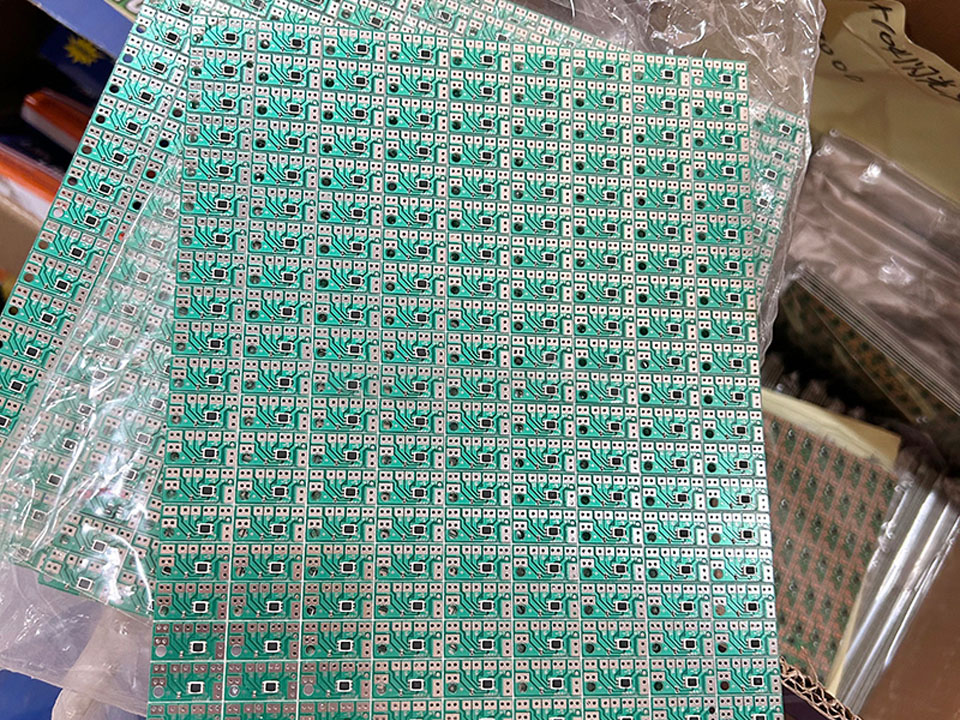
Most factories don’t manufacture “one PCB.” They manufacture panels and then route your boards out. If your board is bigger, you fit fewer units per panel (lower yield). That’s where unit cost often spikes.
Factory slang you’ll hear
Panel yield: how many boards fit on a panel
Step-and-repeat: repeated copies of your circuit on one panel
Rails: extra strips added for handling during SMT
Why yield hits lead time too
Lower yield doesn’t only affect price. It affects capacity planning. A big board can eat the same press time or drill time that could have produced many small boards. If the line is busy, bigger boards feel the squeeze first.
Pain point we see a lot Design teams optimize electronics first, then “discover” mechanical constraints later. That’s when cost and lead time creep up.
Panel size choice can reduce or increase waste
Standard vs custom panel layouts
Panel layout is a balancing act:
A panel that packs well reduces waste and improves throughput.
A panel that packs poorly burns material and increases routing time.
Practical tip If you can adjust the outline even slightly (think connector overhangs, corner radii, keepouts), you may unlock a better nest on the panel.
Odd shapes and routing overhead
Circles, long thin boards, or “L-shapes” often create routing-heavy panels. More routing means more tool wear and slower cycle time. In production, that can become a bottleneck.
Common fix Use tabs + mouse-bites or V-score (if geometry allows) and design for stable depanelization.
Standard panel sizes matter
Why “standard” moves faster
Factories tune tooling, conveyor widths, and handling for standard working sizes. When your board fits those norms, it flows. When it doesn’t, operators handle it more, and the line slows down.
Non-standard size → more manual handling, more waiting in queue
If you want to see what we typically support across different build types, start at Capabilities and Services.
Assembly gets faster with the right panelization
SMT throughput is about handling
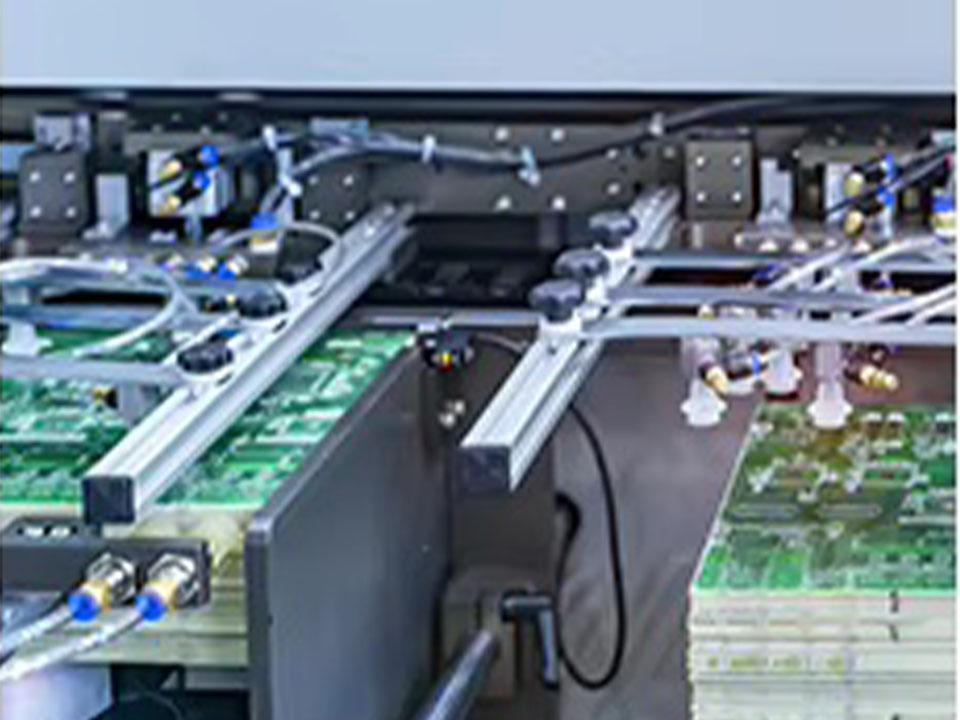
In SMT, handling time kills speed. If you run single units, operators load/unload more, and the line stops more. A well-designed panel runs like a tray of parts: stable, predictable, fast.
Assembly keywords that matter
Pick-and-place: faster when the panel is stable and consistent
AOI: easier when fiducials and rails are standardized
Depanelization: faster when breakaway features are clean
Don’t forget test and rework
Big boards can be harder to test and rework:
More probing distance in flying probe
More warpage risk during reflow
More time per unit in repair stations
If your project needs turnkey build support, point your team to PCB Assembly and our Quality overview so expectations are aligned early.
Oversized boards trigger special constraints
Equipment limits and manual handling
Once you cross certain size thresholds, shops may need different racks, different conveyor setups, or extra hands. That’s when you see “special handling” in the quote discussion—even if nobody writes it as a line item.
What oversized often changes
More manual handling → higher risk of scratches and delays
More packaging constraints → longer prep time for shipping
Higher warpage sensitivity → more process tuning
Real scenario A large backplane is mechanically perfect but becomes a “slow board” in production. Press and drilling capacity become the gating step. The schedule slips, then assembly scrambles, then you pay rush fees elsewhere in the supply chain.
For advanced builds (HDI, rigid-flex, impedance control), this gets more sensitive. If that’s your world, browse Advanced PCB to align requirements before layout is frozen.
Quick-turn works best with compact, panel-friendly designs
Quick-turn isn’t magic. It’s queue priority plus streamlined processing. Smaller, standard-friendly boards are easier to slot into a busy line without breaking the day’s plan.
Larger outline → fewer per panel → more capacity consumed → longer waits
The “ECO loop” tax
Prototypes often change. If your board is big and complex, each ECO can force new panel planning, new tooling choices, and sometimes new assembly fixtures. That adds calendar time even if the fab is fast.
If you’re iterating prototypes, keep a direct channel open via Contact Us so DFM feedback doesn’t get stuck in email ping-pong.
Summary table: what board size changes in cost and lead time
Driver (board size impact)
What happens on the factory floor
Typical cost direction
Typical lead time direction
Best lever you control
Raw material usage
More laminate/copper per unit, more scrap
Up
Slightly up
Reduce outline, simplify shape
Panel yield
Fewer units per panel, higher panel cost per unit
Up
Up when capacity is tight
Optimize dimensions for panel packing
Routing & depanelization
More routing length, more tool time
Up
Up
Use V-score/mouse-bites when possible
SMT handling
Single-board handling slows the line
Up
Up
Add rails, fiducials, stable panel design
Oversized constraints
Manual handling and special process steps
Up
Up
Confirm fab size limits early
ECO churn
Re-panelization and process resets
Up
Up
Lock mechanical early, use DFM checks
Practical scenarios: how to think about size decisions
OEM/Brand mass production
If you’re shipping thousands of units, you care about panel yield and throughput more than anything. A small outline tweak can change your long-term unit economics without touching the circuit.
EMS and contract manufacturing
EMS teams want stable panels, predictable depanelization, and clean test access. Big boards aren’t “bad,” but they need process discipline: rails, fiducials, consistent breakaways, and a test plan that doesn’t become the bottleneck.
Labs, universities, and R&D teams
R&D often needs speed and iteration. Keep early prototypes compact and panel-friendly, then grow the outline only when the mechanical design is stable.
If you want more manufacturing notes and examples, check our Blog and Applications.
Fast checklist: reduce cost and lead time without changing the circuit
Keep the outline compact and avoid weird geometry unless you truly need it.
Design with panelization in mind: rails, fiducials, and consistent spacing.
Ask for a DFM check early, before the layout “hardens.”
Avoid last-minute mechanical growth that kills panel yield.
Plan your test strategy (AOI, flying probe, ICT) so it scales with board size.
If your board is large, treat warpage and handling as first-class constraints.
If you want, share your board outline (L×W), quantity tier (prototype vs pilot vs mass), and whether you need assembly. I’ll map the best size and panelization strategy for your use case without throwing cost numbers around.
MC PCB.,Ltd, alongside Dongguan MaoChang Printed Circuit Board Limited,has focused on PCB manufacturing over 20 years. MaoChang Printed Circuit Board Limited, a professional PCB factory for Quick Turn PCB, Prototype PCB and High Mix Low Volume fabrication. With UL certification for Rigid FR-4 / High Frequency / Aluminum Based PCB production.
Company
About
Contact
Capabilities
Services
Application
Products
Quality
Blog
Products
Printed Circuit Boards
PCB Prototype
Flexible PCB
High Frequency PCB
Thick-Copper PCB
PCB Assembly
Metal core PCB
Thick-Copper PCB
Contact
0755-2889 4567
Room 1803, lA Building, Longwan, Nanhuai Road, Shajing, Bao'an District,Shenzhen City
No. 2, Lane 11, Wenming Road, Fourth Industrial Zone, Nanzha, Humen Town, Dongguan City