One-Stop PCB Factory: Prototype to Mass Production
For hardware startups and OEMs, getting high-quality PCBs quickly and reliably is critical. MC PCB is a one-stop contract PCB manufacturer supporting prototypes to volume builds—backed by experienced engineering support and rigorous QA.
MC PCB Co., Ltd.
Began in 2005
One-Stop PCB Factory: Prototype to Mass Production
For hardware startups and OEMs, getting high-quality PCBs quickly and reliably is critical. MC PCB is a one-stop contract PCB manufacturer supporting prototypes to volume builds—backed by experienced engineering support and rigorous QA.
MC PCB Co., Ltd.
Began in 2005
No. 2, Lane 11, Wenming Road, Fourth Industrial Zone, Nanzha, Humen Town, Dongguan City
When you’re building a PCB prototype, you’re not trying to ship a perfect board. You’re trying to get answers fast: does it boot, does it pass the noise test, does it survive thermal soak, can the line assemble it cleanly, and can your team debug it without ripping pads off the board.
That’s why “prototype-only” features matter. They act like scaffolding on a new building. You need them while you’re learning. Then you remove them before mass production.
If you’re sourcing from a partner like China PCB B2B factory: fast prototyping, reliable assembly, this approach fits how OEMs, EMS teams, design houses, labs, and hardware startups actually work: quick-turn prototypes first, then stable volume builds with tight quality control.
Prototype-only PCB design features
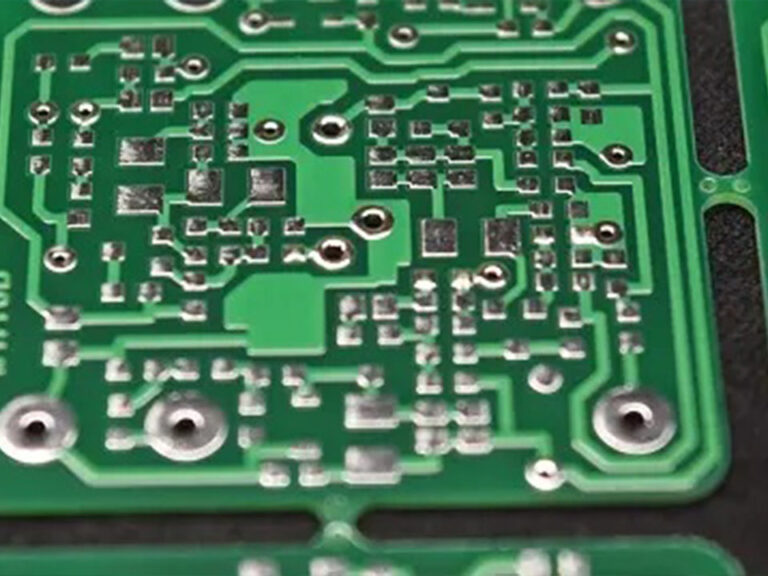
Test points
Test points are your fastest path from “it’s dead” to “here’s the root cause.”
Add pads for every power rail, key clocks, reset lines, and critical buses.
Put ground test pads near analog nodes so your scope doesn’t lie to you.
Keep them probe-friendly. Tiny pads look neat, but they slow debug.
In production, you often reduce them to what ICT/FCT needs. On prototypes, more access beats prettier layout.
Debug headers
A debug header is the difference between a one-hour bring-up and a two-day mystery.
SWD/JTAG for MCU debug
UART console for boot logs
A footprint for USB-to-UART, even if you DNP it
Later, you can shrink to pads or a bed-of-nails interface. For early spins, headers keep firmware moving.
Jumpers and configuration straps
Jumpers are a cheap way to try options without another re-spin.
Boot mode straps
Address selection
Feature toggles for optional blocks (RF front end, sensors, power modes)
You’ll remove most straps in production because they add assembly steps and field risk. During EVT, they’re gold.
DNP footprints and 0Ω options
This is the classic “leave yourself an exit.”
DNP footprints for ferrites, EMI filters, RC damping, snubbers
0Ω resistors for routing swaps and split options
Alternate footprints when supply risk is real
Once the design stabilizes and the AVL is locked, you trim these down. Until then, they help you fix issues with a soldering iron instead of a purchase order.
Oversized footprints for rework
Rework happens. Plan for it.
Avoid ultra-tiny passives early if you can.
Give tight ICs room for hot air and tweezers.
Leave keepouts around parts that will get touched.
In production, you may shrink packages for density and cost control. Prototypes need to be rework-friendly, period.
Extra fiducials and tooling holes
Your SMT line wants stable references. Give it what it needs.
Add global fiducials and local fiducials near fine-pitch parts.
Add tooling holes to improve handling and registration.
You can optimize panel efficiency later. Right now, you want placement accuracy and fewer “why is this rotated” surprises.
Handling rails and panelization
Prototype builds often run through different fixtures and conveyors than your final panel set.
Add handling rails if your board edges aren’t conveyor-safe.
Use breakaway tabs (mouse-bites) where it helps.
Put board ID and revision on the rails so the line can track it.
When you move to volume, you’ll rework panelization for throughput and yield. On prototypes, rails keep assembly smooth.
Current measurement shunts and Kelvin pads
If power performance is part of the spec, don’t guess.
Add current shunts on rails you care about.
Add Kelvin pads for accurate readings.
Leave pads for thermal probes near hot parts.
In production, you may switch to integrated sensing or different measurement points. In prototypes, fast, clean data saves weeks.
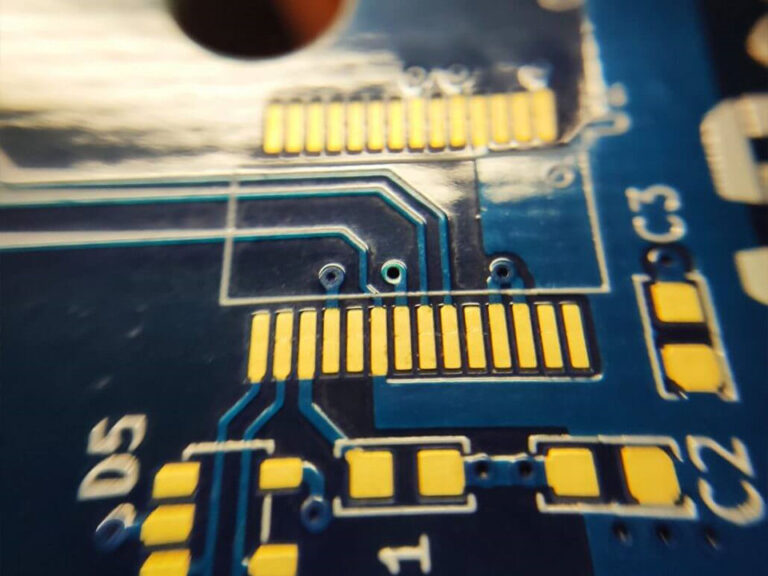
Engineering silkscreen labels
Silkscreen is cheap. Debug time isn’t.
Label connectors clearly (pin 1, polarity, net name when useful).
Mark test points (TP_3V3, TP_RST, TP_CLK).
Print revision, build ID, and date code for traceability.
You’ll keep the critical marks in production, but you can cut the “extra commentary” once the design matures.
PCB fabrication
Prototype-only features work best when you stay DFM-aware. If you build a board that’s “great for debug” but messy for fabrication, you’ll burn time fixing manufacturability issues instead of product issues.
A practical rule: learn fast, but don’t ignore the process window.
Use impedance coupons when you’re doing RF or high-speed.
Specify clear requirements up front so the fab doesn’t have to guess.
If you need a clean place to align fab expectations with your team or buyer, point them to your PCB fabrication service page.
PCB assembly
A lot of prototype pain isn’t electrical. It’s assembly friction: swapped footprints, tight pick-and-place clearances, unclear polarity, or connectors that don’t match the real cable.
Prototype-only features can reduce that risk:
Extra fiducials and better silkscreen make AOI and manual checks faster.
Handling rails make SMT setup less error-prone.
DNP footprints let you tune without ripping up the layout.
If your customer is an EMS partner or an OEM line team, they’ll care about how the design behaves on the line. For that conversation, use your PCB assembly service page as the shared reference.
Prototype-only feature checklist
This table is built for layout review, supplier kickoff, or internal handoff. It also helps when different teams pull in different directions (EE wants more access, ME wants less space, sourcing wants fewer variants).
Prototype-only feature
What it helps you verify
Why it usually won’t ship
Who benefits most
Test points
Rail stability, signal checks, fault isolation
Consumes area, adds exposed copper
EE, validation
Debug headers
Firmware bring-up, recovery, logs
BOM/space impact, field risk
Firmware, EE
Jumpers/straps
Fast experiments, option control
Extra assembly steps
EE
DNP footprints + 0Ω
EMI tuning, routing swaps, component alternatives
Unneeded once stable
EE, sourcing
Rework-friendly footprints
Patch fixes, component swaps
You’ll shrink later for density
EE, prototype tech
Extra fiducials/tooling holes
Placement accuracy, fewer SMT defects
Panel strategy changes in volume
EMS, process
Handling rails/panelization
Conveyor handling, depanel reliability
Different panel for throughput
EMS, process
Shunts/Kelvin pads
Current spikes, efficiency, thermal behavior
Alternate sensing in final design
Validation, EE
Heavy silkscreen labels
Faster debug, fewer assembly mistakes
You’ll trim noncritical notes
Everyone
If your team wants a “one-stop” snapshot of what you can build across technologies, share Capabilities during kickoff.
EVT bring-up scenarios
Prototype-only features aren’t “nice to have.” In these common scenarios, they’re the difference between momentum and stall.
OEM product team running EVT
They’re under schedule pressure, and the roadmap won’t wait. Give them debug headers, test points, and DNP tuning options so the first spin teaches the right lessons. Then strip the scaffolding before DVT.
EMS/ODM trying to stabilize early yield
They’ll push for fiducials, rails, clear polarity marks, and cleaner assembly access. That’s not bureaucracy. It’s how you avoid repeat defects across small prototype lots.
RF or high-speed board that needs tuning
You can’t “feel” your way through RF. Plan for measurement: impedance control, tuning footprints, and clean ground probing. Keep the debug path short and obvious.
Industrial control board with lots of connectors
Connector-rich layouts fail in annoying ways: reversed cables, swapped pinouts, borderline ESD behavior. Clear silkscreen, config straps, and test access make validation much faster.
If your buyer wants a clear prototype service entry point, link them to PCB prototype manufacturing service and keep the request structured: stackup, finish, assembly notes, and test expectations.
Quality control
Fast prototypes are only useful when the build is trustworthy. If you’re chasing random opens, weak joints, or inconsistent plating, your lab results turn into noise.
That’s why prototype-only features should support quality gates instead of bypassing them. Good labeling, traceability, and assembly-friendly design make inspections easier and the feedback loop tighter.
For your customer-facing stance on consistency and delivery discipline, reference Quality.
Services
If you’re selling to OEMs, distributors, or local service partners, the simplest message is this: prototypes are for learning, production is for yield. Your process should cover both without drama.
Use Services as the hub in your quote flow so customers don’t bounce between random pages.
Contact us
Prototype-only features are a tool, not a habit. Add what speeds bring-up, de-risk assembly, and clarifies measurement. Then remove what doesn’t help yield.
If you want help picking the right prototype-only set for your board type (HDI, RF, rigid-flex, power, connector-heavy control), send your Gerbers and build notes through Contact us and keep the goal simple: fewer re-spins, faster validation, cleaner ramp to volume.
MC PCB.,Ltd, alongside Dongguan MaoChang Printed Circuit Board Limited,has focused on PCB manufacturing over 20 years. MaoChang Printed Circuit Board Limited, a professional PCB factory for Quick Turn PCB, Prototype PCB and High Mix Low Volume fabrication. With UL certification for Rigid FR-4 / High Frequency / Aluminum Based PCB production.
Company
About
Contact
Capabilities
Services
Application
Products
Quality
Blog
Products
Printed Circuit Boards
PCB Prototype
Flexible PCB
High Frequency PCB
Thick-Copper PCB
PCB Assembly
Metal core PCB
Thick-Copper PCB
Contact
0755-2889 4567
Room 1803, lA Building, Longwan, Nanhuai Road, Shajing, Bao'an District,Shenzhen City
No. 2, Lane 11, Wenming Road, Fourth Industrial Zone, Nanzha, Humen Town, Dongguan City