One-Stop PCB Factory: Prototype to Mass Production
For hardware startups and OEMs, getting high-quality PCBs quickly and reliably is critical. MC PCB is a one-stop contract PCB manufacturer supporting prototypes to volume builds—backed by experienced engineering support and rigorous QA.
MC PCB Co., Ltd.
Began in 2005
One-Stop PCB Factory: Prototype to Mass Production
For hardware startups and OEMs, getting high-quality PCBs quickly and reliably is critical. MC PCB is a one-stop contract PCB manufacturer supporting prototypes to volume builds—backed by experienced engineering support and rigorous QA.
MC PCB Co., Ltd.
Began in 2005
No. 2, Lane 11, Wenming Road, Fourth Industrial Zone, Nanzha, Humen Town, Dongguan City
Should require 100% burn-in testing or is sample testing acceptable?
100% burn-in catches early failures in high-risk builds. Sample burn-in works after process stability, with clear escalation rules and strong traceability.
If you build electronics for OEMs, EMS partners, and brand owners, you’ve heard this debate a thousand times: “Do we really need to burn-in every unit?” The honest answer is: it depends on risk, maturity, and what kind of failures you’re trying to catch—not on habit.
At a China PCB B2B factory focused on fast prototyping and reliable assembly, you’ll usually see both modes in the wild: 100% screening for high-risk builds and sample-based screening once the line is stable. That’s how teams protect field reliability without turning production into a bottleneck.
Burn-in is a controlled run (often at elevated stress) to expose early-life failures—things like marginal solder joints, weak components, flaky connectors, or process escapes that slip past ICT/FCT. It doesn’t “create” reliability. It screens out weak units before they reach your customer and become RMAs.
Where burn-in fits in a modern flow:
DFM/DFT up front (reduce easy-to-make mistakes)
Process controls during SMT and assembly
ICT/FCT to verify electrical behavior
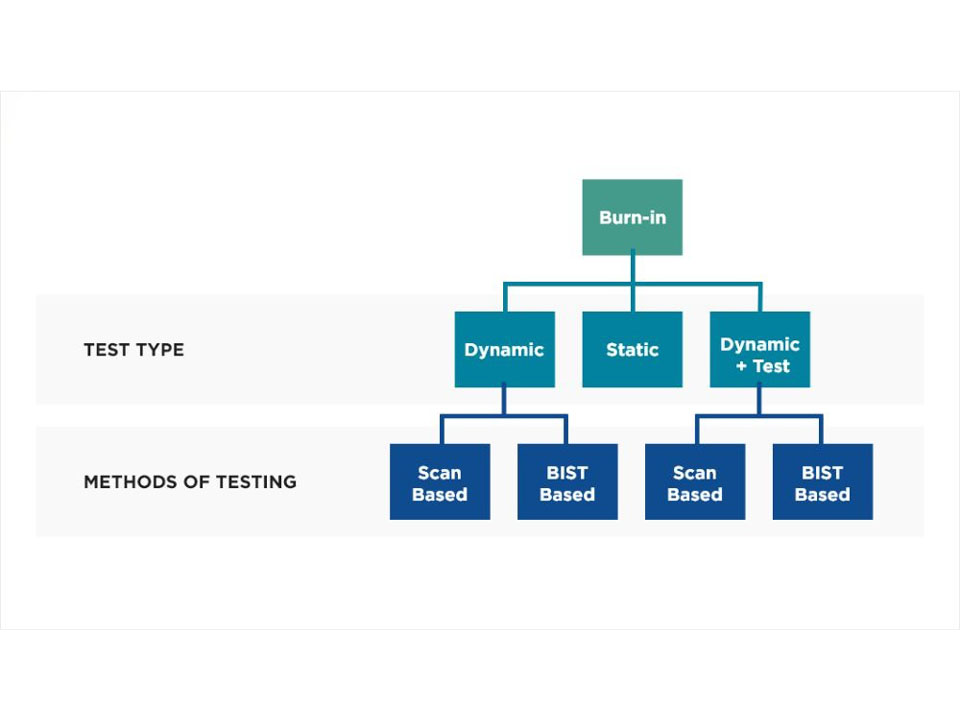
Burn-in / ESS to catch early-life and intermittent issues
OBA (outgoing quality audit) to keep the line honest
If you want to align burn-in with manufacturing capabilities, browse the production scope here: Capabilities
100% burn-in screening
Teams choose 100% burn-in when one bad unit can ruin the whole party. Think: safety, warranty blowups, brand damage, or mission-critical uptime.
You should seriously consider 100% burn-in when:
You’re in NPI / EVT-DVT and still chasing weird intermittent bugs.
Your board has high power density (hot spots, tight thermal margins).
You’re dealing with fine-pitch / BGA / HDI where marginal assembly defects can hide.
Your product sits in harsh environments (heat, vibration, humidity) and you can’t afford “infant mortality” in the field.
Your customer spec or compliance package explicitly calls for screening.
This is also where tight manufacturing discipline matters. A factory that runs consistent controls can make 100% screening feel less painful because it reduces retest loops and “mystery failures.” If your buyer asks how you control escapes, point them to your Quality control page.
Sample testing and AQL sampling
Sample burn-in can work well—when you treat it like a process-control tool, not a shortcut.
Sampling makes sense when:
Your production is stable and you’ve already cleaned up early defects.
You’ve got strong traceability by lot, plus quick containment when a sample fails.
Your product can tolerate limited field failures (replaceable modules, controlled installs).
You’re using sampling as an audit while relying on ICT/FCT + SPC to carry most of the load.
The trap is obvious: sampling only works if you have a clear escalation rule. If a sample fails, you don’t shrug. You quarantine lots, trigger FA (failure analysis), and temporarily step up screening until the root cause is fixed.
If you support both prototyping and volume builds, keep the narrative consistent: quick-turn doesn’t mean careless, and mass production doesn’t mean blind repetition. That positioning matches a shop that offers PCB fabrication and PCB assembly under one roof.
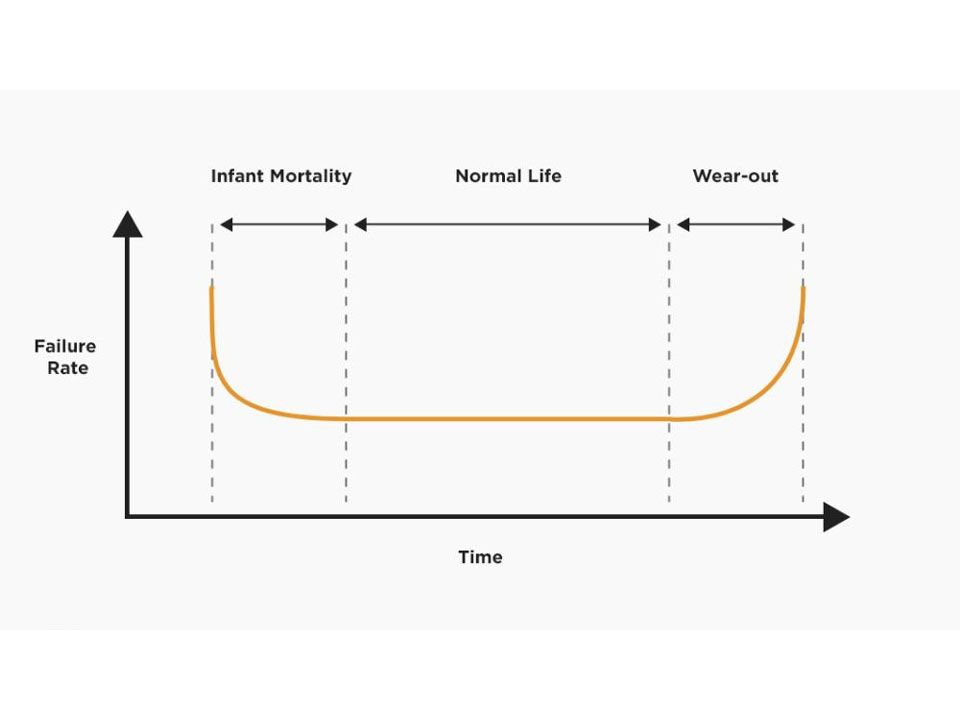
Early-life failures (infant mortality)
Burn-in mainly targets the “infant mortality” slice of the bathtub curve—failures that show up early because something was weak from day one.
Power path issues (hot MOSFETs, stressed inductors, marginal creepage/clearance design)
Firmware timing edge cases that only show up after hours of run time
Thermal expansion stress that reveals borderline assembly workmanship
Here’s the key: if your dominant risk is early-life issues, burn-in helps. If your dominant risk is random life failures (component wear-out or long-term drift), burn-in won’t magically fix that. You’ll need better component selection, derating, and reliability testing.
Process maturity and NPI
Most teams don’t start with sampling. They earn it.
Pilot builds: 100% burn-in while closing Pareto defects
Ramp: shift to sample burn-in once yield and FA stabilize
Mass production: sample burn-in as an audit, with fast escalation rules
If your buyer wants a factory partner for that whole journey—prototype to MP—send them to Services and let them self-qualify.
Environmental stress screening (ESS), HASS, HASA
People mix these terms, so here’s the plain-English version:
ESS (Environmental Stress Screening): screening with environmental stress (temp cycling, vibration, etc.) to catch workmanship issues.
HASS (Highly Accelerated Stress Screening): aggressive screening, usually during ramp, to flush weak builds fast.
HASA (Highly Accelerated Stress Audit): sampling-based audit after the process stabilizes.
You don’t need fancy acronyms to make the decision. You need discipline:
Define failure modes you want to catch
Pick stress that accelerates those modes without damaging good units
Decide the screening rate (100% vs sample)
Write down what happens when failures appear (containment + FA + corrective action)
Practical scenarios in PCB assembly
Medical electronics PCBA
If you ship medical boards, your buyer hates surprises. They care about traceability, consistent workmanship, and controlled screening. 100% burn-in often wins early, then selective sampling may follow once data proves stability. For medical-focused builds, you can reference a relevant product category like medical HDI PCB to keep the conversation grounded in real deliverables.
Automotive electronics control boards
Automotive buyers speak in PPAP, control plans, and “no escape” language. They’ll push hard for robust screening during ramp, especially for power and safety-related control boards. If you’re positioning for that crowd, a page like automotive electronics control PCB prototype makes your burn-in stance feel concrete, not theoretical.
Industrial control and embedded systems
Industrial customers want uptime. They don’t want a tech climbing a cabinet at 2 a.m. Burn-in helps when failures are intermittent or thermal-related, especially on multilayer control boards. Sampling can work once the line is stable, but you must keep tight lot control and quick containment.
Decision table: 100% burn-in vs sample testing
Keyword decision point
Choose 100% burn-in screening when…
Choose sample testing when…
Practical evidence you should collect
Standards / guidance you can cite (no external links)
Product risk level
One field failure is unacceptable (safety, major warranty, brand risk)
Failures are manageable and replacements are controlled
Field return rate trend, criticality analysis
NASA screening guidance (burn-in as screening), reliability handbooks
Early-life failures
Your FA shows infant mortality patterns
Failures rarely occur early
Time-to-fail distribution, FA categories
MIL-STD-883 burn-in concepts, reliability practice
Process maturity
NPI / ramp, supplier changes, new layout, new BOM
Stable MP with proven yield and stable FA Pareto
Yield stability, defect Pareto, SPC signals
IPC-9592 style approach: 100% early then audit sampling
If you want this decision to feel clean inside procurement and quality meetings, keep it simple:
Define the objective: catch early-life issues, reduce RMAs, protect a launch.
Pick a stress profile that matches your risks: thermal soak for power boards, run-time cycles for firmware-heavy devices, load testing for power rails.
Choose the screening rate: 100% during NPI/ramp, then sample audit once yields and FA stabilize.
Write the escalation rule: “If a sample fails, do X within Y hours.” That rule is the difference between sampling and gambling.
Align it with your manufacturing flow: DFM, test coverage, traceability, and outgoing audits.
If you want a direct line for burn-in requirements, test fixtures, and lot traceability, point readers to Contact us.
Summary
You don’t need a one-size policy. You need a risk-based screening strategy:
Use 100% burn-in when risk is high, the process is still settling, or the customer demands it.
Use sample testing when your line is mature, your data supports it, and you’ve got fast containment and FA.
That approach fits OEM/ODM buyers, EMS teams, design houses, labs, and startups alike—especially when they want quick-turn prototyping today and stable mass production tomorrow.
MC PCB.,Ltd, alongside Dongguan MaoChang Printed Circuit Board Limited,has focused on PCB manufacturing over 20 years. MaoChang Printed Circuit Board Limited, a professional PCB factory for Quick Turn PCB, Prototype PCB and High Mix Low Volume fabrication. With UL certification for Rigid FR-4 / High Frequency / Aluminum Based PCB production.
Company
About
Contact
Capabilities
Services
Application
Products
Quality
Blog
Products
Printed Circuit Boards
PCB Prototype
Flexible PCB
High Frequency PCB
Thick-Copper PCB
PCB Assembly
Metal core PCB
Thick-Copper PCB
Contact
0755-2889 4567
Room 1803, lA Building, Longwan, Nanhuai Road, Shajing, Bao'an District,Shenzhen City
No. 2, Lane 11, Wenming Road, Fourth Industrial Zone, Nanzha, Humen Town, Dongguan City