One-Stop PCB Factory: Prototype to Mass Production
For hardware startups and OEMs, getting high-quality PCBs quickly and reliably is critical. MC PCB is a one-stop contract PCB manufacturer supporting prototypes to volume builds—backed by experienced engineering support and rigorous QA.
MC PCB Co., Ltd.
Began in 2005
One-Stop PCB Factory: Prototype to Mass Production
For hardware startups and OEMs, getting high-quality PCBs quickly and reliably is critical. MC PCB is a one-stop contract PCB manufacturer supporting prototypes to volume builds—backed by experienced engineering support and rigorous QA.
MC PCB Co., Ltd.
Began in 2005
No. 2, Lane 11, Wenming Road, Fourth Industrial Zone, Nanzha, Humen Town, Dongguan City
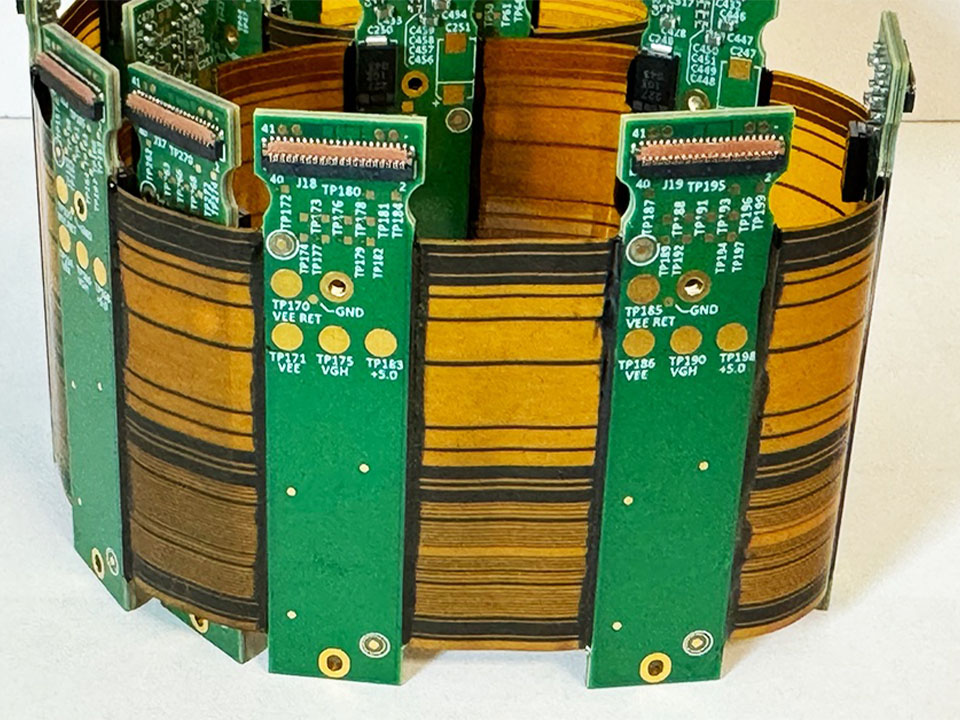
Rigid-flex is awesome right up until the first field return shows up with an open trace right at the bend. Most of the time, it isn’t “mystery damage.” It’s strain piling up where the board can’t handle it: copper, plating, and sharp stiffness changes.
If you build rigid-flex for foldable products, moving harness replacements, or tight enclosures, this guide will help you keep the bend area alive through prototype spins and mass production. If you also need a manufacturer that can run quick-turn builds and stable OEM/ODM volume, start from the specs and DFM flow on our China PCB B2B factory homepage.
Rigid-flex bend areas: why cracking happens
Cracking usually starts as micro-fractures in copper or plating. Then vibration, heat cycles, or repeated folding turns micro-fractures into real opens.
Common root causes you’ll recognize:
Bend radius is too tight for the stack thickness.
Vias, pads, or plated features sit inside the flex zone.
The rigid-to-flex transition acts like a hinge.
Trace routing makes the flex stiffer than you think.
Surface finish or material choice doesn’t match the bend cycle.
If you want a high-level view of what we can build (stackups, flex options, and process limits), check Capabilities.
Bend radius
Pick a safe bend radius first, then route
Start with bend radius. Everything else depends on it.
What to do
Lock the bend radius early, before you “finish routing.”
Tell your fab the bend is static (bend once, stays put) or dynamic (bends many times).
Rule of thumb (starting point)
Static bend: many teams start around ~10× the flex thickness.
Dynamic bend: go larger. The more cycles, the more radius you need.
Real-world scene A foldable module looks fine in CAD, but the hinge forces the flex to wrap tighter than planned. That’s when copper fatigue shows up. If your mechanical team can’t guarantee the radius, add a hard stop in the enclosure or redesign the fold path.
A plated through hole in a bend area is like drilling a hole in a paperclip and then bending it. It won’t love you back.
What to do
Keep PTH, microvias, test pads, and components out of the flex bend zone.
If you must transition layers, do it in the rigid section or in a no-bend “landing” zone.
Real-world scene You’re routing a tight connector breakout, and the only clean escape path puts vias right where the cable folds. Prototype might pass. Then one drop test later, that via barrel becomes the failure point.
If you need support for fab rules and DFM checks on complex layouts, our PCB Fabrication service is a good starting point.
Rigid-to-flex transition keepout
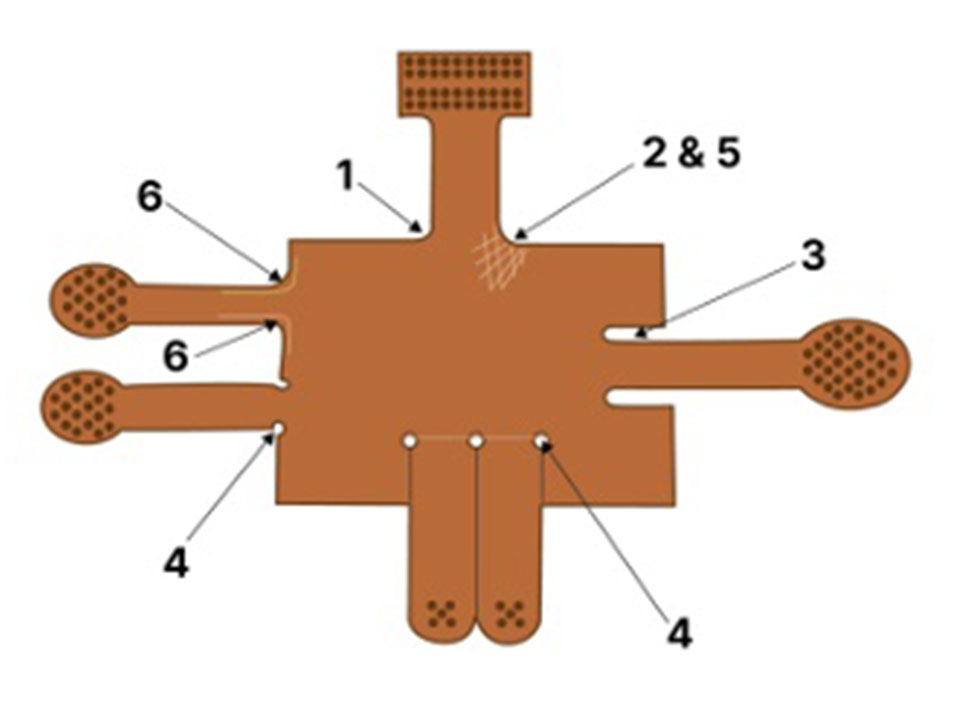
Add a keep-out near the rigid-to-flex boundary
The rigid-to-flex boundary is a stiffness cliff. If the bend happens too close, the flex “creases” right at the edge.
What to do
Define a keep-out zone around the boundary for vias, copper changes, and component pads.
Make the bend happen in the middle of the flex span, not at the transition.
Rule of thumb (starting point)
Many shops use a keep-out distance on the order of ~1 mm+ depending on build, copper weight, and stiffener design. Treat this as a DFM item, not a guess.
Stiffener edge
Control vias near stiffeners
Stiffeners are useful, but their edges are stress risers. Vias “just outside” a stiffener edge often crack first.
What to do
If you use stiffeners, keep sensitive features away from the stiffener edge.
Avoid putting dense via fields right next to the stiffener boundary.
Real-world scene A camera module flex uses a stiffener under the connector. The connector survives reflow, but the flex cracks during assembly because the bend starts right at the stiffener edge. Moving the bend line a few millimeters and adding a wider strain spread fixes it.
Route traces with the bend in mind: orthogonal/perpendicular + avoid “I-beam” stiffness
Routing style can accidentally turn your flex into a beam.
What to do
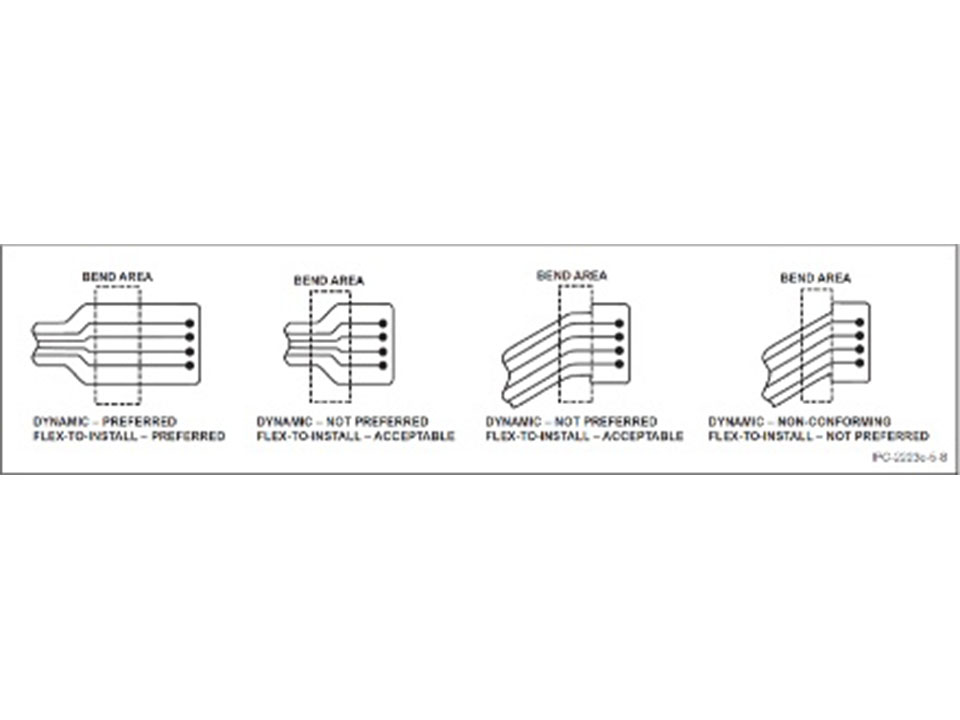
In the bend zone, route traces perpendicular to the bend line when possible.
If you have multiple flex layers, stagger traces between layers through the bend. Don’t stack them perfectly on top of each other. That stacked copper behaves like an “I-beam.”
Use curves, not 90° corners; add teardrops/fillets at pads and vias
Sharp corners concentrate stress. Smooth geometry spreads it.
What to do
Use arcs and gentle curves in the flex zone.
Add teardrops where a thin trace meets a pad or via land.
Avoid sudden width jumps in the bend area.
Real-world scene A wearable sensor flex fails at the same pad every time. The fix wasn’t thicker copper. It was teardrops plus a smoother entry angle into the pad, which reduced the peak stress.
Treat copper planes carefully in flex: prefer hatched/cross-hatched when flexing matters
Solid planes add stiffness fast. That can be good in rigid areas. In the flex zone, it can be a reliability trap.
What to do
Use hatched ground in the bend area if your signal integrity budget allows it.
Keep large copper pours out of the bend zone unless you truly need them.
If you must carry current, consider multiple narrower conductors instead of one huge slab.
Coverlay and strain relief
Reinforce pads/features correctly with coverlay and anchoring
Peel and lift failures are common when pads sit in a moving region.
What to do
Use coverlay openings that don’t expose more copper than needed.
Add anchoring features where pads or vias sit near movement zones.
Keep solder joints out of the flexing section whenever possible.
Add strain relief near the rigid-flex interface when bends occur nearby
Strain relief spreads force. Think of it as removing the “hinge point.”
What to do
Add strain relief in the transition when your enclosure forces a bend close to the rigid edge.
Avoid abrupt thickness changes through the bend span.
If your build also needs assembly support (SMT, mixed tech, turnkey), see PCB Assembly.
Surface finish ENIG
Don’t bend ENIG-plated contact/finger areas
If your bend zone includes plated fingers or heavy nickel layers, cracking risk goes up.
What to do
Keep ENIG fingers and gold contact zones in non-bending sections.
If you need gold fingers, design the mechanical so those areas never flex.
Material choice rolled-annealed copper
Choose materials for the motion profile: RA copper for repeated flexing
Copper type matters more than people expect.
What to do
For dynamic flex, use rolled-annealed (RA) copper when possible.
Keep the flex stack thin and consistent through the bend span.
Design guidelines table
Design guideline (argument title)
What you’re preventing
Practical DFM check (no guessing)
Source for the argument (non-link)
Pick a safe bend radius first, then route
Copper fatigue, trace fracture
Define bend radius + static/dynamic in fab notes before routing
IPC-2223 style practice + fab DFM
Keep vias / PTH / components out of the bend zone
Barrel cracks, pad lift
Bend-zone keep-out layer in CAD; DRC blocks vias/components
Fab DFM + field failure patterns
Add a keep-out near the rigid-to-flex boundary
Creasing at transition
Keep-out around boundary for vias/copper changes
Rigid-flex mechanical reliability practice
Control vias near stiffeners
Stress riser failures
Stiffener edge spacing rule in drawings
DFM from stiffener builds
Route traces with the bend in mind: orthogonal/perpendicular + avoid “I-beam” stiffness
Stiff flex, concentrated strain
Bend-zone routing rule set + layer-to-layer staggering
Flex routing best practice
Use curves, not 90° corners; add teardrops/fillets at pads and vias
Stress concentration at corners
Teardrops on pad entries; no sharp corners in bend region
Layout reliability practice
Treat copper planes carefully in flex: prefer hatched/cross-hatched when flexing matters
Over-stiff flex, early fatigue
Hatch planes in bend; avoid solid pours there
Flex stackup best practice
Reinforce pads/features correctly with coverlay and anchoring
Pad peel, copper lift
Coverlay opening review + anchor features near pads
Flex DFM + assembly feedback
Don’t bend ENIG-plated contact/finger areas
Nickel layer cracking
Keep plated fingers out of bend zones
Finish selection reliability practice
Manufacturing and QC
You can design a perfect bend zone and still lose reliability if process control is sloppy. For B2B builds, you want consistent lamination, clean coverlay registration, and stable drill/plating quality.
If you want to see how we control that across prototype and volume, go to Quality. If you’re ready to send a stackup, bend notes, and Gerbers for DFM feedback, reach out through Contact Us.
MC PCB.,Ltd, alongside Dongguan MaoChang Printed Circuit Board Limited,has focused on PCB manufacturing over 20 years. MaoChang Printed Circuit Board Limited, a professional PCB factory for Quick Turn PCB, Prototype PCB and High Mix Low Volume fabrication. With UL certification for Rigid FR-4 / High Frequency / Aluminum Based PCB production.
Company
About
Contact
Capabilities
Services
Application
Products
Quality
Blog
Products
Printed Circuit Boards
PCB Prototype
Flexible PCB
High Frequency PCB
Thick-Copper PCB
PCB Assembly
Metal core PCB
Thick-Copper PCB
Contact
0755-2889 4567
Room 1803, lA Building, Longwan, Nanhuai Road, Shajing, Bao'an District,Shenzhen City
No. 2, Lane 11, Wenming Road, Fourth Industrial Zone, Nanzha, Humen Town, Dongguan City